
The Scroll of Taiwu hits 1.0 after 8 years, adds English to unlock a 5M-word world
An 8-year Steam indie journey ends with version 1.0 and new English localization, aiming to ride Western momentum.
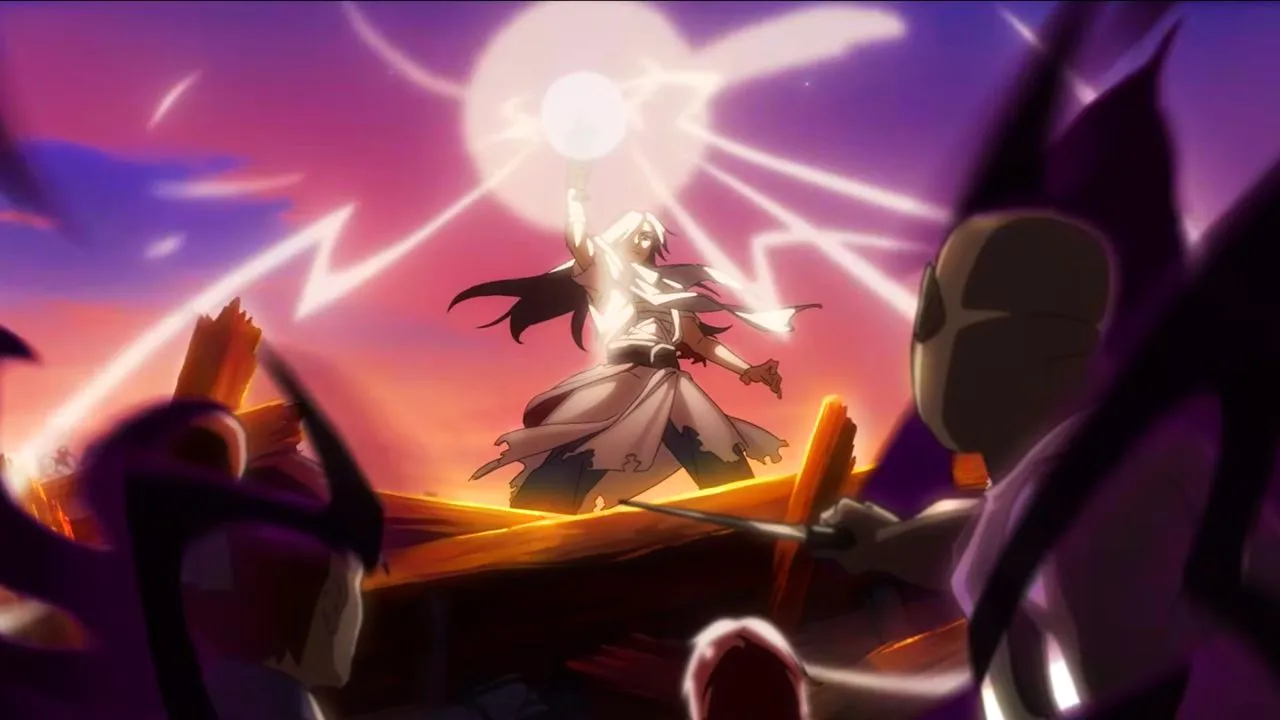
Leye "Yager" Yu and ConchShip Games just released The Scroll of Taiwu at full version 1.0, eight years after early access began on Steam in 2018. The English localization shift, after a script measured in more than 5 million words, could change who gets access to a Wuxia-heavy game ecosystem.
The Scroll of Taiwu finally hit 1.0, eight years after debuting in early access on Steam in 2018. It is not a quick smash-and-grab release either. This is a long build to a full, playable version, and it matters now because the game is also adding English localization after years of being effectively invisible to most Western players.
The real unlock is not just “a new version.” Yager, a publishing advisor for the game, explains that the script is over 5 million words. That sheer volume is why full translation was so hard, and why the first two hours of gameplay could feel “kind of boring” even to people who might eventually fall in love with the deeper systems. The headline stake is simple: if you could not reach the text and tone, you could not reach the game. Now, ConchShip Games is trying to remove that bottleneck while the Western interest in Chinese-developed games is surging after Black Myth: Wukong’s explosive success and a recent flood of Chinese games landing on Steam.
So what is The Scroll of Taiwu, exactly, that took eight years to arrive at 1.0? It is not an action game in the way most Steam audiences expect when they click “indie RPG” or “Chinese mythology.” It is closer to a simulation with a martial arts spine. You move through an open world, learning martial arts, meeting people, managing towns, and resolving conflicts that can alter the future. The mix is so system-heavy that Yager compares it to Crusader Kings 2, Kenshi, and Baldur’s Gate, which is a fancy way of saying: expect layered strategy, long arcs, and consequences rather than a single loop.
That depth is also why Yager says early gameplay can underwhelm. If you are not already invested in Chinese mythology, the opening hours are basically a trust exercise. But once players get hooked, Yager claims they are “in for life.” His point is backed by the community structure: there is a Discord where players share strategies and advice. That is what you look for when a game has a steep learning curve. It means players are investing time not just to beat it, but to understand it, refine it, and teach it.
Now, zoom out to why this release is arriving at exactly this moment. The source frames it as momentum: Black Myth: Wukong’s breakout success plus more Chinese-developed games showing up on Steam created a window where Western players are more open to exploring beyond the usual Japanese dominance. The Scroll of Taiwu has not “taken over the Steam charts” so far, but it is joining that wave. For decision-makers in publishing and product, the implication is obvious: discoverability is not only about algorithmic luck. It is about timing, audience curiosity, and barriers being lowered.
For ConchShip Games, the English localization is the barrier that used to be structurally hard to overcome. Yager notes that devoted fans struggled to translate the entire script, and with over 5 million words, full translation was almost impossible. With 1.0, the developers added English localization that remains a work-in-progress, but it is enough to shift the game from “mostly for Chinese-speaking players” to “potentially for everyone who can read it.” Even in a best-case scenario, that does not mean instant mainstream success. It means the funnel finally exists.
That funnel was also a problem on the publishing side. Yager says he initially refused to help publish the game because it was “hard to pitch” due to the overwhelming number of systems. That comment is less about ego and more about the reality of how games get sold: complex products with too many interacting mechanics are harder to summarize in a single sentence without losing the thing that makes them special. Yager, who has personally spent over 1,200 hours with the game, also says he had to hold the development team back from delaying release by adding more stuff. In other words, the delay risk was real, but the release at 1.0 signals they decided the time was right.
The second-order implication is about what boards and operators should notice in a world chasing the next “trend” game. Yager says creator Zheng Jie is a “stubborn guy,” and that only a stubborn type could make a game that unique, with that many mechanics, that much text, gameplay, and joy for players. That kind of execution is rare, and it creates an ecosystem effect: Yager argues the game did not just inspire indie developers in China. It gives them the idea that doing something deep and concentrated can still reach success.
Looking ahead, the developers are already fixing bugs and improving the English localization even now that it has hit 1.0. Yager also wants to spread awareness through streamers and word-of-mouth, expecting it will take time for English-speaking players to notice it. If you are in the business of investing, building, or scaling interactive media, the strategic stakes are clear: The Scroll of Taiwu is betting that cultural texture, system depth, and reduced language friction can convert a wave of attention into durable discovery. The question for everyone watching is whether Western momentum will translate into sustained player curiosity once the text wall comes down.
This story's Key Insights and Take-aways are locked.
Create a free account to unlock Executive Actions for one credit.
Register to UnlockAlways free for Executives Club members. Join the Club
More in Business
BioWare shuts down, Mass Effect 5 dead after $55B EA buyout
The legendary RPG studio's closure lands months after a $55 billion investment group buyout of EA, raising tough questions for gaming's biggest acquirers.

Musk barred from the room as Tesla, SpaceX boards weigh $3.5 trillion merger
The CEO of both companies is a 'conflicted party' watching independent directors negotiate a tie-up that would create a $3.5 trillion giant he would own about a third of.

Elon Musk just showcased a flying car - and it wasn't at Tesla
The Tesla CEO's latest reveal came at SpaceX, not Tesla, signaling where vertical mobility is headed.