
The secret U.N. vote that legitimized carbon capture and skewed climate policy
How a 2005 anonymous survey by IPCC scientists became the shaky foundation for billions in CCS subsidies and global net-zero pledges.
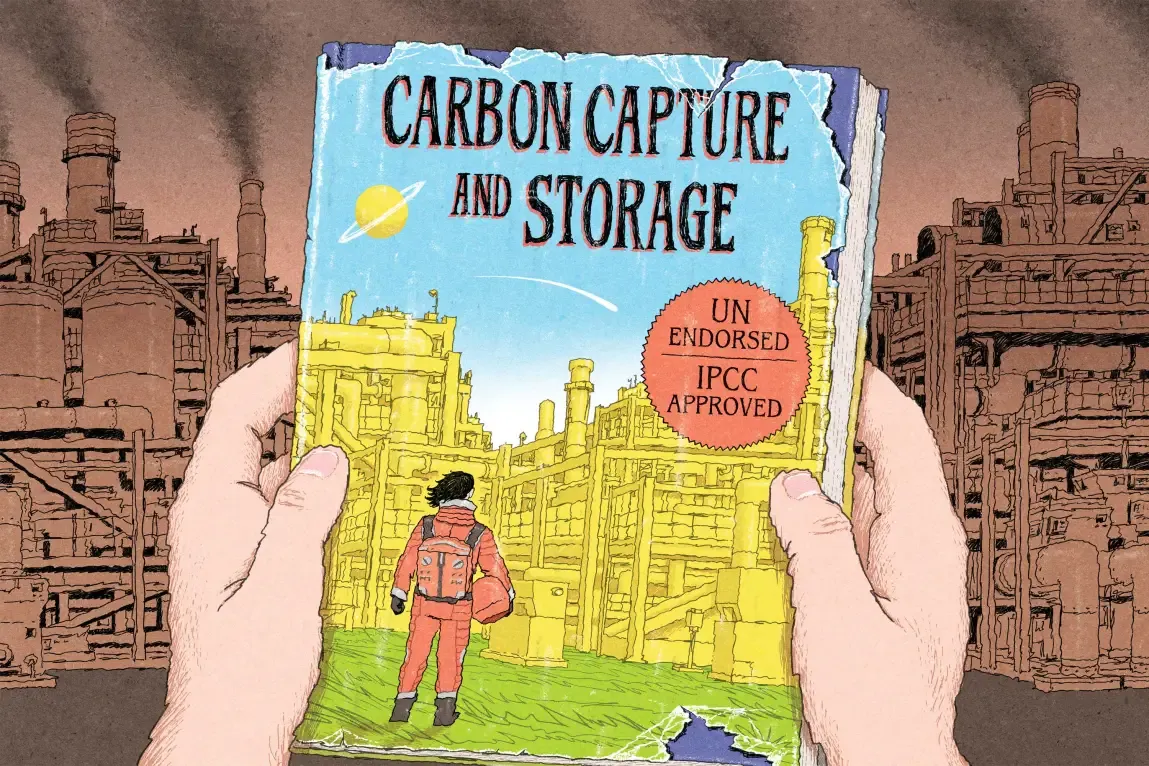
A secret 2005 vote by IPCC scientists, pushed by oil-exporting nations and industry researchers, turned carbon capture into a cornerstone of climate policy. The resulting report's unverified estimates now underpin billions in subsidies and global net-zero pledges.
In the spring of 2005, more than 100 of the world's top climate scientists gathered in Oviedo, Spain, to finalize a U.N. report on carbon capture and storage. Facing a scarcity of evidence, they took an anonymous survey - a secret vote - about what they expected the science to eventually show. That vote, kept off the record and "burned afterward," became the basis for the IPCC's landmark conclusions that carbon capture could work at scale. The report legitimized CCS for a generation, and its unverified estimates now underpin billions in government subsidies and the net-zero pledges of corporations and nations.
The survey was proposed by David Keith, a Canadian physicist, as a workaround when scientists clashed over how to state hard numbers. The IPCC's procedures required assessments based on peer-reviewed literature, but the group was under pressure to produce definitive figures. So they agreed to an "expert elicitation" - an anonymous poll of their educated guesses. The results: the planet had vast CO2 storage capacity, and well-selected sites would retain 99% of injected carbon for at least 1,000 years. These numbers, not from any published study, were written into the report's summary as if they were settled science.
The report was no accident. Saudi Arabia and other oil-exporting countries had pressured the U.N. to write it, according to U.N. officials and records. The fossil fuel industry, which had spent years casting doubt on climate change, saw CCS as a way to keep burning fossil fuels while burying the pollution. The IPCC, for the first time, invited a large contingent of industry researchers to co-author the report, including representatives from Shell, Chevron, and Saudi Aramco. The U.N. hoped the report would draw oil-producing nations into climate solutions, but the result was a document that gave the industry a powerful tool.
The report's conclusions were sweeping. It stated that CCS could lower the cost of stabilizing CO2 concentrations by at least 30% and, if fully supported, could account for as much as 55% of global climate mitigation efforts this century. Its summary declared "there are no major technical or knowledge barriers" to storing captured CO2. These assertions were cited in thousands of academic papers, legislative testimony, and media coverage. Climate forecasters built models assuming CCS would work. Governments and corporations made net-zero pledges that depended on it. Policymakers handed energy companies billions in public funds for "clean coal."
The consequences have compounded for two decades. This spring, California embarked on one of the world's largest carbon burial projects. President Donald Trump, while eviscerating most climate programs, has expanded subsidies for CCS. There are more than 100 applications for storage sites pending in the U.S. alone. U.N. analyses suggest that meeting environmental goals would require a CCS industry the size of the entire global oil production industry - a scale that remains far off.
The problem is that the foundation is shaky. The scientists themselves acknowledged in early drafts that broad statements about leakage risk would be "almost meaningless." But the final report buried those caveats. The secret vote meant that policy was built on educated guesses, not evidence. The world's discourse shifted from how to limit carbon pollution to how to remove it after the fact - a shift that has benefited fossil fuel interests.
For executives and boards, this is a cautionary tale about consensus that masks uncertainty. CCS is now a multibillion-dollar industry, but its credibility rests on a process that even its participants knew was not "hard science." Bert Metz, one of the highest-ranking U.N. officials at the meeting, later admitted: "It's not the hard science that you would prefer, obviously." Decision-makers should scrutinize the evidence behind any climate technology claim, especially when industry players are at the table.
This story's Key Insights and Take-aways are locked.
Create a free account to unlock Executive Actions for one credit.
Register to UnlockAlways free for Executives Club members. Join the Club
More in Business

Binance scrambles to claw back $6.3B stolen in North Korea-linked hack
The world's largest crypto exchange faces the biggest heist on record, and the recovery effort will test the limits of blockchain forensics.

North Korea's TraderTraitor unit blamed for Binance's record $6.3bn heist
The largest crypto theft on record has rattled markets, slashed billions from token values, and put Binance's security revamp under the spotlight.

Binance freezes $3B of record $6.3B hack, but $3.3B is already gone
The world's largest crypto exchange halted all withdrawals after a suspected North Korean heist, and analysts say most of the stolen funds are already beyond reach.