
The Uniform renews for Season 2, then exposes Denmark’s police-academy cracks
Miso Film and Fremantle’s drama returns, adding BBC iPlayer and BBC Four UK launch after its 2026 debut.
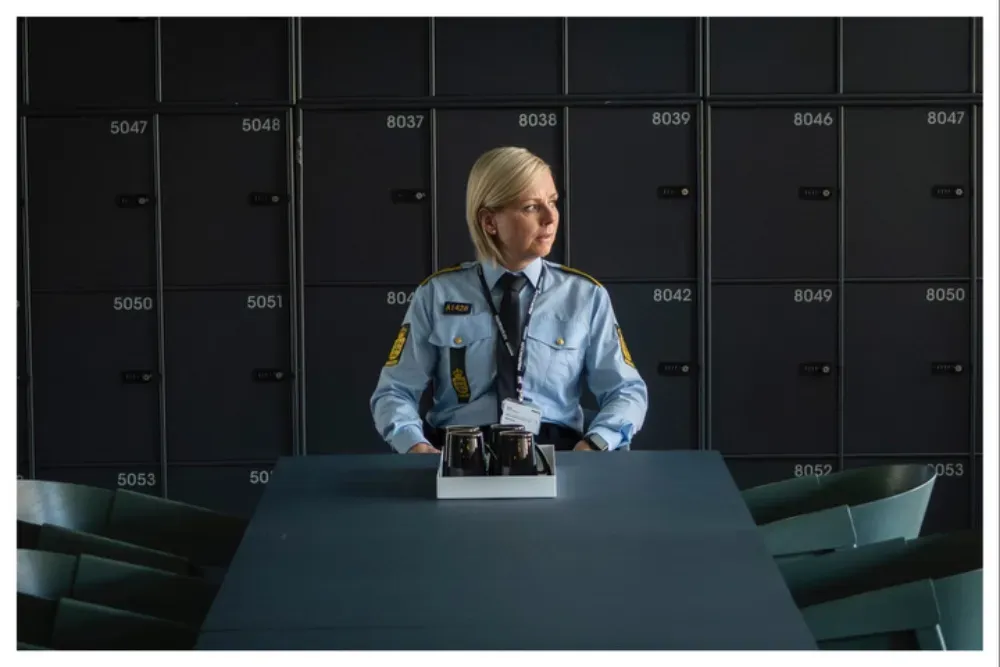
The Uniform, created by Miso Film with Fremantle, has been renewed for a second season after its first season premiered on DRTV in 2026. The series will launch in the U.K. on BBC iPlayer and BBC Four, bringing its Denmark police-academy setting and internal pressure points to a bigger audience.
“The Uniform” is coming back for Season 2, and it is doing it with something many shows never get: momentum across markets. Variety reports the series returns for a second season, after showcasing at the Monte-Carlo Television Festival and premiering its first season on DRTV in 2026. That timeline matters because it tells you the production is not just hoping, it is building a distribution runway.
The second season is also tied to a specific distribution upgrade. Following a deal with Fremantle, “The Uniform” is set to launch on BBC iPlayer and BBC Four in the U.K. That means a show originally broken out through a narrower first release path now gets a mainstream public-broadcast landing zone. In plain English: more viewers, higher visibility, and more pressure to perform, episode after episode.
So what is the bet? The series is set within a competitive police academy in Denmark, and the premise dives into the cracks within the police force. That kind of setting is not just a backdrop. It is built for drama that travels, because academy systems concentrate power, hierarchy, and scrutiny into one contained environment. When a show is “fiercely competitive,” character decisions turn quickly into stakes, and those stakes map neatly onto themes that broadcast audiences reliably respond to: institutional stress, performance under pressure, and the personal cost of getting selected or rejected.
From a production-and-distribution perspective, the distribution strategy makes sense. Fremantle is bringing the show into the BBC ecosystem, which is a very particular machine. BBC iPlayer is a modern on-demand layer, while BBC Four is positioned for more niche or artsy viewing cohorts. Pairing them is effectively a two-channel play: capture both the people who binge and the people who browse with intent. That matters because a police-academy drama can earn differently depending on who is watching. If viewers find it via iPlayer recommendation habits, you get speed and scale. If they encounter it through BBC Four programming culture, you can get deeper engagement and stronger word-of-mouth within specific communities.
There is also the festival-to-platform path. The fact that “The Uniform” is currently showcased at the Monte-Carlo Television Festival signals a familiar industry pattern: use festival visibility as credibility, then convert that credibility into commissioning and platform distribution. The first season premiere on DRTV in 2026 gives you a concrete proof point that the show is not stuck in development limbo. It already exists in the world, and now it is being expanded.
Why should executives and board members care beyond entertainment curiosity? Because this is how reputations are built in a crowded content market. Police dramas are a crowded lane. So the differentiation is not just “more episodes.” The differentiation is narrative focus: the show explicitly “dives into the cracks within the police force,” and it does so through the pressure cooker of a Denmark police academy. That is a positioning lever. If the show’s second season sharpens that angle, it can deepen loyalty with viewers who want institutional drama, not just crime procedural mechanics.
There is also an economic subtext. Renewals are one of the cleanest signals that stakeholders think the show has cleared a bar. The bar can be audience reception, distributor confidence, or a demonstrated ability to land in new territories. By tying Season 2 renewal to a new U.K. launch via BBC iPlayer and BBC Four, Fremantle and its partners are essentially saying: the story has legs, and we are ready to let larger platforms test it.
For peers navigating similar decisions, the strategic takeaway is about the sequencing of risk. “The Uniform” premiered in 2026 on DRTV, then earned visibility at Monte-Carlo, then secured a Fremantle deal for the U.K. BBC rollout. That sequencing reduces uncertainty in stages. It is not a single bet; it is a set of measurable steps that can justify renewed investment and broaden revenue potential through licensing and reach.
And if you are sitting on a board reviewing whether to greenlight another season, this is the kind of case that gets attention internally. A second season plus a credible U.K. launch partner is a compound signal: creative continuity, distribution amplification, and a chance to convert festival-grade interest into sustained platform performance. “The Uniform” is not just returning. It is widening the room where its central question can play out: what cracks appear when the police academy, and the system behind it, demands excellence and conformity at the same time.
This story's Key Insights and Take-aways are locked.
Create a free account to unlock Executive Actions for one credit.
Register to UnlockAlways free for Executives Club members. Join the Club
More in Entertainment

Russell Brand's accuser 'bewildered and confused' as he denies 7 sex charges
The criminal case against the comedian is a live test of how media companies manage talent risk when serious allegations go public.

'It's a Magic Trick': Ballet Experts Say Rosalía's SNL Pose Is Impossible
Three ballet experts tell Rolling Stone Rosalía's gravity-defying SNL stillness shouldn't be possible - and why the debate is now part of the show.

Activision CMO: GTA 6 Will Boost Call of Duty, Not Bury It
Activision's top marketer says Rockstar's blockbuster will drive players back to consoles and into Modern Warfare 4, even as the company admits its recent strategy failed.