

The wildfire detection race finally has enough tech to matter before flames explode
Why decades of sensing, computing, and decision tools are converging just as wildfire risk keeps climbing.
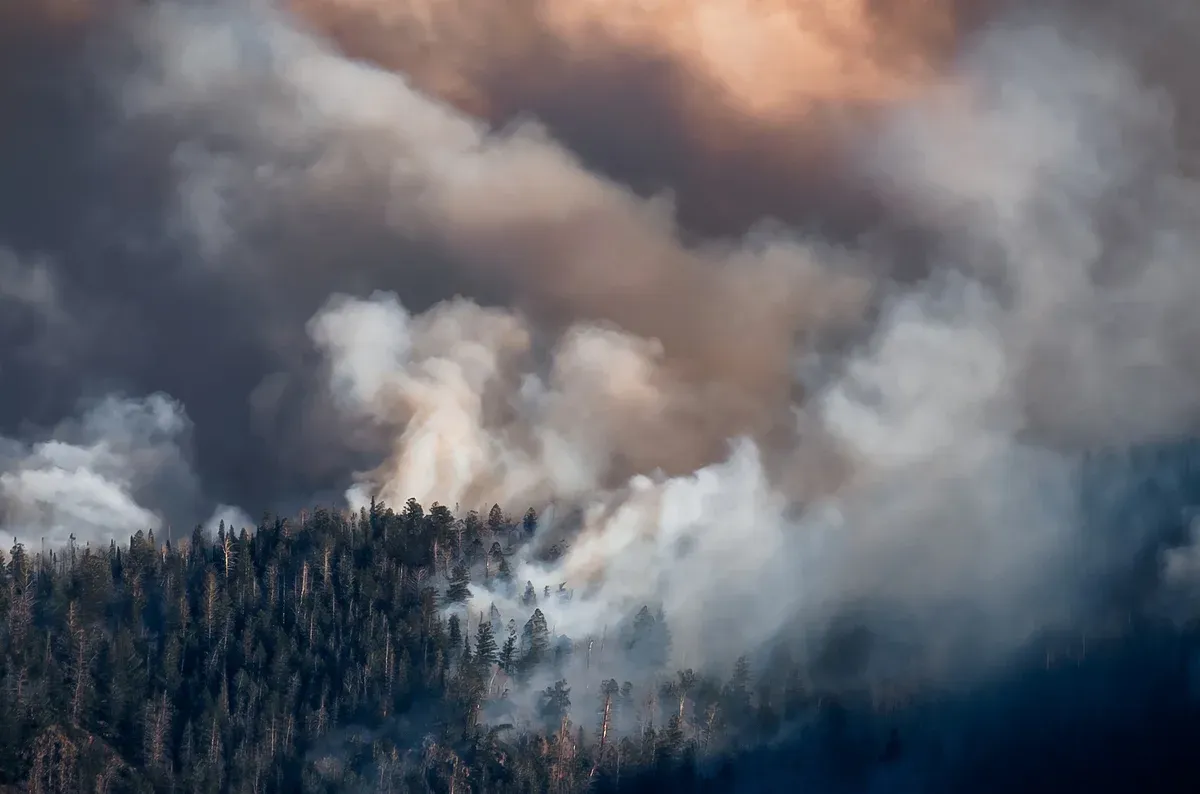
Scientific American reports that finding wildfires before they explode in size could save countless lives each year, and that decades of technology development may finally make this possible. For decision-makers, the shift from after-the-fact response to earlier detection changes where resources, budgets, and operational readiness should go.
Wildfires do not just burn. They accelerate. Once a fire grows beyond a manageable size, the options narrow fast, costs jump, and the timeline for evacuations and containment can become brutally short. That is why the core goal behind the “race” to detect wildfires early is so high-stakes: spotting a fire before it spirals out of control could save countless lives each year. Scientific American’s premise is straightforward, but it carries real operational weight. For years, the limiting factor has not only been firefighters and emergency management, it has been the ability to reliably see a fire early enough to change outcomes.
The key development the piece points to is that decades of technology development may finally make earlier wildfire detection practical at scale. In other words, the leap is not just a better gadget, it is the possibility of a full pipeline: detecting something small and early, verifying it quickly, and pushing actionable information to the right people before conditions let the fire expand. That kind of pipeline is where many promising experiments historically stalled. A system can be “accurate” in a lab setting, but unusable in the real world because it is too slow, too noisy, too expensive, or too hard to integrate into operations.
To understand why this could be a watershed, it helps to remember what “early” really means. Wildfire growth can be rapid. When winds, heat, and dryness align, a fire can move from a localized event to a regional threat. That creates a brutal asymmetry: prevention and early intervention generally cost less than emergency response at scale, but early intervention requires detection systems that are dependable enough to trust and fast enough to act on. If a detection system triggers too late, it becomes essentially an expensive notification after the critical window has already passed. If it triggers too often with false alarms, it becomes politically and operationally toxic, consuming attention and resources without improving safety.
This is also where incentives start to matter for executives and boards. Organizations involved in wildfire preparedness, public safety, insurance, utilities, and infrastructure all face a similar pressure: stakeholders increasingly expect proactive risk management, not reactive crisis handling. Early detection is a lever that sits upstream of many downstream decisions, from where to stage crews to how quickly agencies can coordinate evacuations and route support services. If technology finally makes early detection feasible, it changes the value proposition of preparedness budgets. Instead of funding only firefighting capacity and post-event recovery, decision-makers can justify investments in detection reliability, data integration, and rapid operational response.
Regulatory and governance frameworks also shape how quickly these tools can move from “promising” to “used.” Public safety decisions often need evidence, auditability, and clear responsibility chains. Early detection systems require trust in the signal and clarity about who acts on it. That matters because wildfire risk is not just a natural disaster story, it is an accountability story. When detection technology influences decisions that affect evacuation timing, resource allocation, and public warnings, governance cannot be an afterthought. Boards and executives need to understand that adopting early detection is not only a technical upgrade. It is an operational and compliance upgrade, including how alerts are validated and how organizations document response.
There is also a second-order implication that executives should not ignore: early detection can shift competitive dynamics across the ecosystem. When the bottleneck moves, the players who win tend to be those who integrate sensing with operational workflows. That means partnerships and platform strategies become more valuable. Systems that connect detection outputs to command and control, mapping, communications, and incident management can create disproportionate impact because they turn data into decisions. The “race” referenced by Scientific American is therefore not only about sensing a fire. It is about reducing time-to-decision, which is where the lives-and-assets stakes concentrate.
For leaders in adjacent domains, the strategic takeaway is that wildfire technology is moving toward an earlier, more proactive posture. If decades of work are finally converging into usable capabilities, the organizations that plan for earlier intervention will have a structural advantage during the next high-risk period. Those who wait for perfection may find themselves back in the same old timeline: detection late, escalation fast, and response driven by damage already done. In contrast, decision-makers who treat early detection as an operational capability, not a standalone product, can align funding, governance, and readiness so the technology actually changes outcomes when it counts.
This story's Key Insights and Take-aways are locked.
Create a free account to unlock Executive Actions for one credit.
Register to UnlockAlways free for Executives Club members. Join the Club
More in Science

Alaska's 1,580-foot tsunami had warning signs. Scientists just found them.
Rapid glacier retreat, heavy rainfall, and thousands of tiny tremors preceded Alaska's 1,580-foot tsunami, a warning for every coastal community in a warming world.

The rare mutation that lets high-risk brains dodge Alzheimer's
Scientists found a natural defense against protein buildup, opening a new path to preventive treatments.

3,000 steps a day may halve Alzheimer's decline, study finds
New research links a modest daily walk to less tau buildup and nearly half the cognitive and functional decline, even for those with early signs.