
ThinkLabour’s JP Spencer urges mayors to control social care, childcare, and skills
A devolution paper aligned with Andy Burnham proposes shifting power from Whitehall to mayors across key public services.

JP Spencer, head of devolution policy at ThinkLabour, argues in a paper that England’s mayors should gain control over large parts of public service provision. For decision-makers, the proposal signals how devolution could be used to restructure central government authority.
England’s devolution debate just got sharper, and it is not only about transport budgets or local planning. In a paper written by JP Spencer, the head of devolution policy at ThinkLabour, the proposal is explicit: mayors should be given power over a wide range of public services, including social care, childcare, and skills. That is a big expansion from the usual headline-grabbing version of devolution, which often focuses on narrower operational areas. This one matters because it would change who decides, who pays, and who is accountable when services fail or improve.
Spencer’s argument sits in a very specific political context. The paper is described as being aligned with Andy Burnham’s devolution plans, and it is framed as an indication of how the probable next prime minister could seek to shift power out of Whitehall. In other words, this is not a vague wish list for local empowerment. It is a blueprint-ish signal aimed at the people watching the next national leadership move, and it suggests a mechanism for recasting the state: move authority downward, then measure performance through a different governance structure.
To understand why this is such a high-stakes shift, zoom out to how public services typically work in England. Central government departments in Whitehall generally set policy frameworks and funding rules, while local bodies deliver services under those national constraints. That tends to produce a familiar incentive mismatch. Local leaders can be held responsible for outcomes, but they may not control the levers that most directly influence them, like service design, staffing models, or budget allocation rules. If mayors gained authority over social care, childcare, and skills, the incentive alignment could improve, but only if the money and decision rights move with it. Otherwise, accountability without control becomes a political and operational trap.
There is also a governance and capacity question lurking underneath the policy language. Social care and childcare are not single-program “on and off” services. They involve complex contracting, workforce planning, safeguarding responsibilities, and coordination across agencies. Skills policy adds another layer, connecting training providers, employers, and education pathways. When devolution expands into these areas, it is not just a political rebranding. It demands new systems for commissioning, performance reporting, and risk management. Boards, if they exist in the relevant delivery structures, would have to understand how commissioning decisions translate into outcomes, and how failures will be audited.
Regulatory framing matters too, because devolution does not erase national constraints. Even if mayors have control over service provision, national oversight and statutory duties still shape what local leaders can do. That means the real battle is often not whether a mayor can act, but how far national policy gives them room to customize approaches. In practice, the devolution “spread” would be limited by whatever national rules remain. Spencer’s paper, as described, is therefore interesting not only as a policy claim but as a test of negotiability: can a next prime minister and central departments tolerate broader local discretion without losing the regulatory consistency Parliament expects?
Second-order implications for decision-makers are immediate. If mayors take on more responsibility for these services, budgets, funding formulas, and performance metrics become central to governance. Politically, mayors would gain both visibility and scrutiny, because results in social care and childcare are felt in everyday life, not only in long-term infrastructure outcomes. Operationally, the transition would require coordination across local government, health-adjacent bodies, education pathways, and employers. Financially, expanded powers usually bring governance costs too, because more control often means more reporting requirements, more contracting expertise, and more program management.
For peers and political strategists watching this, the bigger message is about state power architecture. The paper is explicitly positioned as a clue to how national leadership could shift authority out of Whitehall. That suggests that devolution may be used as an organizing principle for government, not merely a local add-on. If the next administration treats these proposals as an actionable direction, other regions and mayorship structures would likely face intensified negotiations about scope, funding, and accountability.
In short, Spencer’s devolution prescription is a move toward giving mayors control over the parts of government that most directly touch households: social care, childcare, and skills. That is consequential because those areas are costly, complex, and politically unforgiving. If the proposal gains traction, it will force leaders to answer the uncomfortable question that always follows devolution: if you control the levers, you also own the outcomes. And when the next prime minister is considering how to shift power out of Whitehall, this paper offers a concrete map of where that power could go.
This story's Key Insights and Take-aways are locked.
Create a free account to unlock Executive Actions for one credit.
Register to UnlockAlways free for Executives Club members. Join the Club
More in Politics

Glacial collapse, not rain, killed 180 in Nepal's Himalayan flood
The Himalaya's extreme geography hid the true cause of Nepal's catastrophic flood, a glacial collapse that turned a geological battleground into a mass-casualty zone.

Iran’s Esmail Baghaei says Oman talks start shipping via Hormuz, not US talks yet
Temporary route plans with Oman aim to restart commerce while Tehran says Washington dialogue is not on the table.
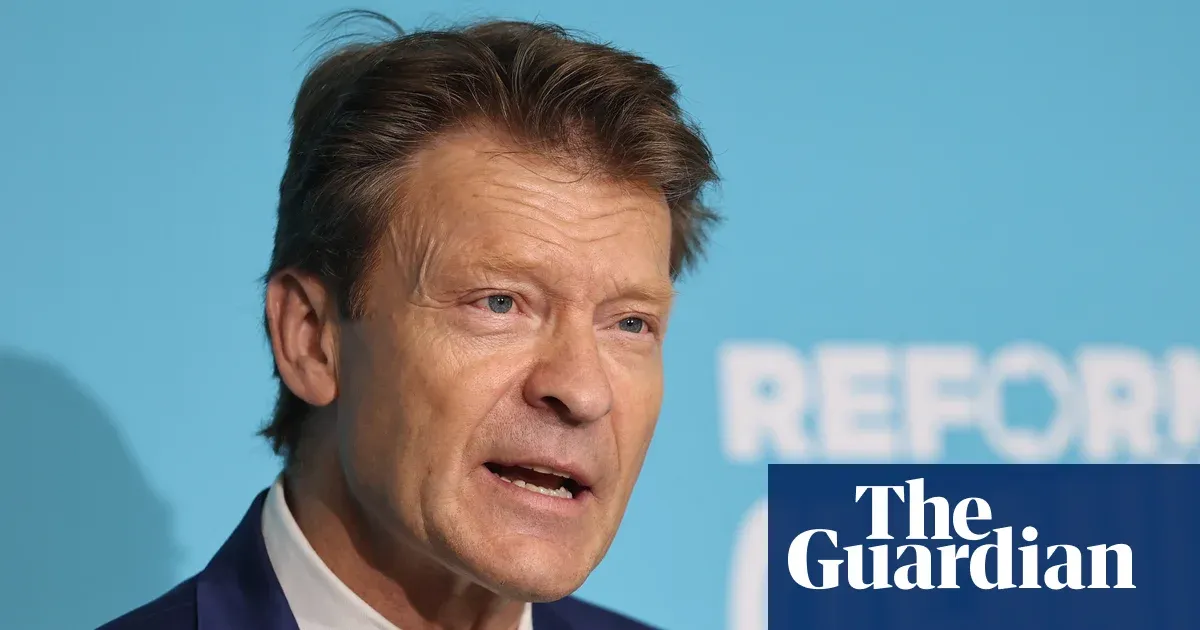
Standards watchdog opens probe into Reform UK deputy leader Richard Tice over interests
The parliamentary standards commissioner says it began an investigation on 28 July into a possible undeclared interest.