

Thom Yorke brings Hamlet Hail To The Thief to London at Barbican, Oct 31
The Radiohead-2003 album is reworked live for stage, with a cast led by Samuel Blenkin.
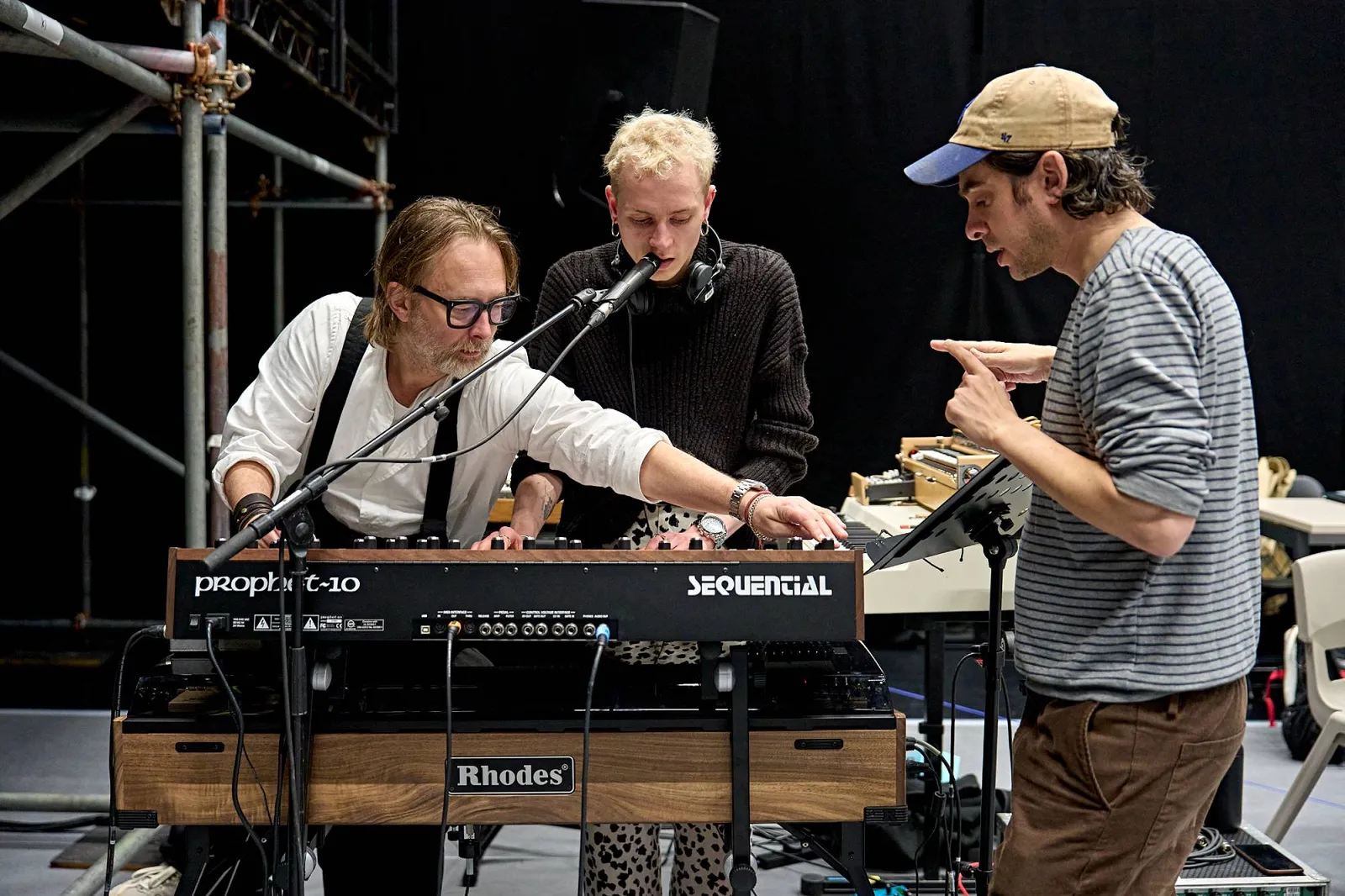
Thom Yorke and directors Steven Hoggett and Christine Jones are bringing Hamlet Hail To The Thief to London, opening at the Barbican Theatre on October 31. The move matters for executives watching how major music properties are being repackaged into high-attention live experiences.
Thom Yorke’s Shakespeare-meets-Radiohead stage show Hamlet Hail To The Thief is finally landing in London. It opens at the Barbican Theatre on October 31 and runs until January 23, 2027, with tickets going on sale at 10am on June 26.
Yorke did not just lend songs to a production. He personally reworked and orchestrated tracks from Radiohead’s 2003 album Hail To The Thief for a live stage cast of over 20 musicians and actors, performing the music live in each show. The result is a contemporary adaptation of Shakespeare’s Hamlet, and the London run follows a path that already tested the concept: it premiered at Aviva Studios in Manchester in April last year, then moved to the Royal Shakespeare Theatre in Stratford in the summer.
If you are an executive who thinks live entertainment is either “content” or “events,” this show is a reminder that it is also product design. Radiohead’s brand is built around recordings, but this project treats the album like raw material for a live, orchestrated experience. That is a different kind of consumption. Instead of streaming the same thing at scale, you get a performance where the soundtrack is performed live by the ensemble. That changes both the audience promise and the operational reality, because the show has to deliver the music every night, in sync with dramatic staging.
The show is not a solo auteur detour either. It is credited as a collaboration between Yorke and the Tony and Olivier Award-winning directors Steven Hoggett and Christine Jones. In other words, the creative pipeline is not “popular artist licenses Shakespeare,” it is a three-way construction: Yorke’s musical reworking, Shakespeare-as-a-framework, and stage direction by people who have done awards-level theater work.
The London venue choice is part of the pitch. Christine Jones said that bringing this “brutal play into the Barbican’s brutalist space seems fated,” adding that she feels “fiercely fortunate” to work with these “incisive collaborators” and push the work further. Yorke, meanwhile, framed the experience as strange in a good way, saying he is “into finally bringing ‘Hamlet Hail to The Thief’ to London, and to the Barbican of all places,” and describing how the project revealed itself “over time.” He also highlighted the intensity of the space and his surprise at how the work took shape, even noting he had never had “this kind of experience before.”
The casting underscores the “serious theater, serious music” signal. The original cast are returning for the Barbican run: Samuel Blenkin (Alien: Earth, Black Mirror) plays Hamlet; Ami Tredrea is Ophelia; Paul Hilton is Claudius; and Claudia Harrison is Gertrude. Other returning performers include Alby Baldwin, Brandon Grace, Felipe Pacheco, Romaya Weaver, and Marienella Phillips. For executives, that matters because it reduces uncertainty. When a live show moves from a world premiere to a major London run, continuity can protect quality, especially when music is part of the production engine and not just an accompaniment.
The plot framing is also built for modern audiences who already understand the language of surveillance and paranoia. The synopsis says: “Elsinore has become a surveillance state and hectic runs in the blood of its citizens.” It centers on Hamlet and Ophelia’s awakening to “the lies and corruption in Denmark,” gradually revealed by “ghosts and music.” The synopsis continues: “Paranoia reigns and no one is spared a tragic unraveling.” This is where the show’s Radiohead connection earns its keep. It is not simply Hamlet with songs swapped in. It is a contemporary adaptation that uses the album as a tonal and narrative partner.
For context, the project also spilled into audio beyond the theater. It led to a live album being released last year, after Yorke requested live recordings of Radiohead playing songs from Hail To The Thief while putting the show together. Yorke said he was shocked by the energy in those recordings, adding, “I barely recognised us,” and that it helped him find “a way forward.” He also described the decision to mix and release the live recordings: “We decided to get these live recordings mixed and released (it would have been insane to keep them for ourselves).” The source also notes that Radiohead have not released an album since 2016’s A Moon Shaped Pool, but they played a well-received comeback tour last year. Guitarist Ed O’Brien, who released a solo album Blue Morpho last month, told NME that Radiohead have “not even talked about” making a new album.
Second-order implication: when an artist is not actively rolling out a new studio album, they can still stay culturally present by converting existing IP into adjacent formats. For boards and dealmakers, this is a model that can change forecasting. Instead of treating music IP as “album cycles,” you can treat it as a multi-asset portfolio: recordings, live theater, and companion releases. And because live productions are harder to replicate than streaming catalogs, the competitive moat shifts from “release frequency” to “experience fidelity.” Hamlet Hail To The Thief is launching in London with a defined schedule, a returning cast, and music performed live by an ensemble built around Yorke’s reworked orchestrations. That combination is the real story executives should watch. If this run lands, it will look less like a one-off experiment and more like a blueprint for how legacy music properties can be monetized and re-contextualized without waiting on the next album cycle.
This story's Key Insights and Take-aways are locked.
Create a free account to unlock Executive Actions for one credit.
Register to UnlockAlways free for Executives Club members. Join the Club
More in Entertainment

Russell Brand's accuser 'bewildered and confused' as he denies 7 sex charges
The criminal case against the comedian is a live test of how media companies manage talent risk when serious allegations go public.

'It's a Magic Trick': Ballet Experts Say Rosalía's SNL Pose Is Impossible
Three ballet experts tell Rolling Stone Rosalía's gravity-defying SNL stillness shouldn't be possible - and why the debate is now part of the show.

Activision CMO: GTA 6 Will Boost Call of Duty, Not Bury It
Activision's top marketer says Rockstar's blockbuster will drive players back to consoles and into Modern Warfare 4, even as the company admits its recent strategy failed.