

THQ Nordic’s Reinhard Pollice explains Gothic Remake’s immersion, not quest markers
A 25-year-old open world gets expanded NPC routines, in-world tutorials, and a customizable difficulty system.
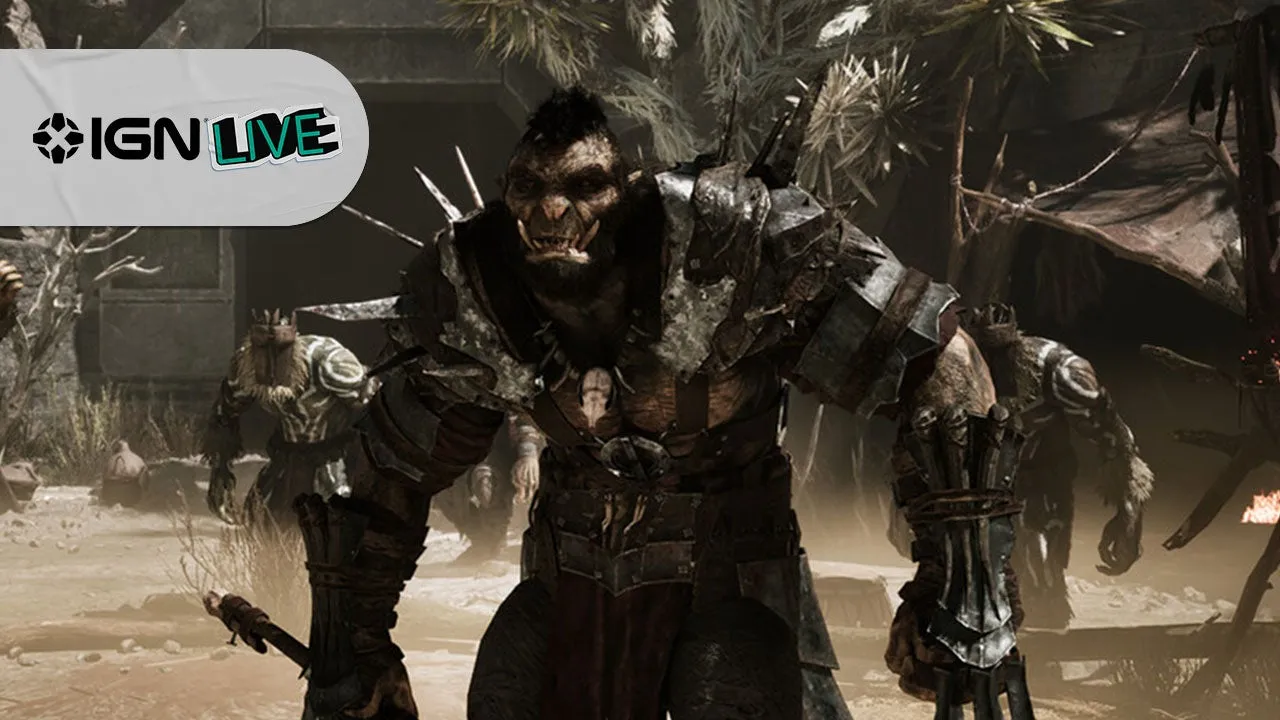
At IGN Live 2026, THQ Nordic’s Reinhard Pollice discussed the newly released Gothic remake and why it has “remains a very unique game” even today. For decision-makers, the big lesson is how to modernize accessibility without breaking systemic immersion.
At IGN Live 2026, THQ Nordic’s Reinhard Pollice did not pitch the Gothic remake like a modern open-world checklist. He framed it as a system-first RPG that avoids “quest marker after quest marker,” even while expanding what players experience day to day in the world.
The stakes of that choice are obvious if you care about retention, player trust, and the durability of big RPG brands. Pollice said Gothic, which they now refer to as “Gothic Classic,” celebrates its 25th anniversary this year, and he argued the original’s longevity still holds up: “even by today’s standards, it’s still a very unique game with a lot of game mechanics that really hold up.” He added that it is “not the biggest open world,” but it is “the most immersive and the most alive.” The remake, available to the public now, is basically THQ Nordic trying to preserve that “alive” feeling while smoothing out one of the original’s biggest friction points: the difficulty and learning curve.
Here’s what Pollice says they changed, and why it matters for how players form emotional buy-in to a world. In the original version, NPCs had a multistage daily routine, including, as Pollice humorously pointed out, “even going for a piss.” For the remake, that routine has been “greatly expanded upon,” with NPCs reacting more frequently to changes around them. They also expanded routines to the creatures, so the world is not just populated, it is scheduled and responsive.
That matters because immersion is not a graphics slider. Pollice described Gothic’s recipe as being “immersive, so simulated, and so deep with what you can experience there.” The core behavioral mechanic, in his telling, is discovery. He emphasized that the game world should offer a “natural way to discover it and find clues,” where players listen to people, collect clues, and piece together what is going on. It is not a design that hands you the answer with icons. No constant pointing. Instead, the game encourages an internal map of the world, so understanding locations and environments becomes part of the journey, not a side effect of UI.
But immersion can be a double-edged sword. Pollice acknowledged that this approach can make Gothic “quite difficult for some,” and he described a desire to make the remake “more widely accessible.” That is the tension every RPG publisher eventually faces: how do you welcome new players without sanding down the mechanics that make veterans stick around?
His compromise is a good case study in not breaking your own contract. Pollice said they never wanted the game to feel “too bluntly direct or handholding,” and he laid out a rule of thumb: “If the game needs tutorials, we’ve done something wrong. It should be explained in the dialogue.” Instead of removing the learning through play, they added a tutorial book designed to stay in-world. Pollice explained that a “character gives you a book,” keeping the guidance embedded in narrative rather than delivered as a separate, overbearing system.
Then they adjusted the difficulty without turning every challenge into a settings menu apology. Pollice said players like a good challenge “if it’s not unfair,” and for the remake “We added a much easier difficulty level, which is still challenging.” He also described customization options that let players tune “combat and exploration,” with each choice affecting how players experience the game end to end. In other words, the remake tries to preserve systemic discovery while giving players control over what kind of stress they want.
If you want to understand the rollout logic, Pollice gave a glimpse of how THQ Nordic is thinking about reception in the early stages. He said they are “obviously watching the reception,” and that because Gothic is a “big RPG,” they are only seeing “the first third of the game content.” That creates a common measuring problem for live reception: early impressions can misread the full curve, especially when immersion and AI behavior continue to unfold. Pollice said they are seeing “every house gamers discovering something cool or something we’ve hidden new ways of solving quest, cool ways of solving quests, new ways of interacting with the AI.” The underlying promise is that the systems are still there, just expanded.
From a boardroom perspective, the second-order implications are less about Gothic specifically and more about what this remake signals about modern RPG design philosophy. When you expand NPC and creature routines, you increase the amount of believable behavior in the simulation. When you keep quest progression discoverable through dialogue and clue work, you protect player agency. When you add an in-world tutorial book and a less punishing difficulty, you reduce dropout risk without replacing the core loop.
For peers making or funding narrative-heavy open worlds, the real question is whether accessibility changes can be made without turning the game into a guided tour. Pollice’s framing suggests the answer THQ Nordic is betting on: immersion is the product, tutorials are a last resort, and control sits with players through difficulty customization, not constant direction. If that works at scale, it is a roadmap for how legacy worlds can be modernized without becoming generic.
This story's Key Insights and Take-aways are locked.
Create a free account to unlock Executive Actions for one credit.
Register to UnlockAlways free for Executives Club members. Join the Club
More in Entertainment

Entertainer Russell Brand denies 7 sex charges amid accuser's 'couldn't breathe' claim
The alleged victim's account sharpens the reputational and legal stakes for Brand, his platforms, and any business tied to a public figure under criminal scrutiny.

Russell Brand's accuser 'bewildered and confused' as he denies 7 sex charges
The criminal case against the comedian is a live test of how media companies manage talent risk when serious allegations go public.

'It's a Magic Trick': Ballet Experts Say Rosalía's SNL Pose Is Impossible
Three ballet experts tell Rolling Stone Rosalía's gravity-defying SNL stillness shouldn't be possible - and why the debate is now part of the show.