

TikTok Shop AI videos are flooding feeds, and side hustlers are feeling it
Generative AI is automating shoppable influencer content on TikTok Shop, and it can look uncanny, underperform, and raise legal risk.
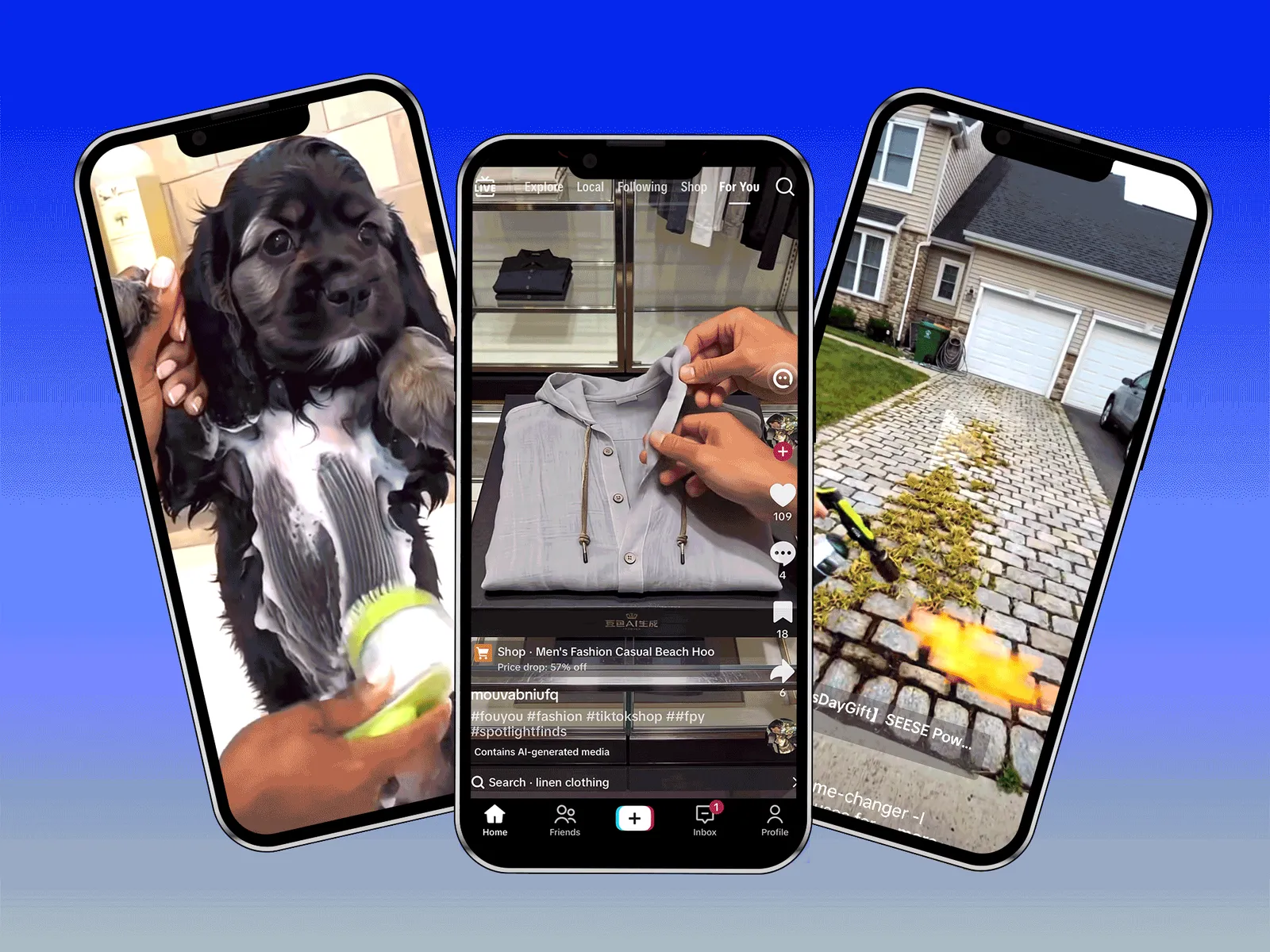
TikTok Shop creators and brands are using generative AI to churn out shopping-focused videos faster, while TikTok's automated ads system is surfacing more AI-generated product imagery and synthetic influencers. The result is a reshaping of TikTok Shop economics and compliance risk that could squeeze the lowest-cost “side hustle” creators.
TikTok Shop’s shopping-influencer economy is getting automated in public, and the consequences are starting to show up in the feed. Marketers told Business Insider that brands and creators are using generative AI to churn out lots of videos quickly, targeting the kind of content that is built to sell products through TikTok’s e-commerce affiliate program. The promise is speed and volume. The risk is that the videos can look uncanny, and often underperform compared with human influencer content.
That mismatch is exactly why TikTok Shop side hustlers should watch their backs. The article describes AI as imitating and iterating on the “gimmicky” shoppable formats that side hustlers often use during high-stakes commerce moments like the Black Friday-Cyber Monday rush, when creators posted about 10 million shoppable videos. If your business model is “post fast, sell hard, repeat,” AI can now produce those same scripts at scale, and it does not need to build an audience like a human creator does.
To understand how this threatens smaller sellers, zoom in on what a TikTok Shop side hustle actually is. These creators are not household names like MrBeast, and they are often not “micro influencers” with years of trust-building and a loyal following. Instead, they focus on a single goal: selling you products. Their videos can loom large on the feed, particularly in peak shopping windows, where the algorithm rewards what gets clicks and purchases. Business Insider quotes founder Fabian Ouwehand, of the social-commerce firm Socialscale.ai, who likened the content to “little billboards you see along the road out of the side of your eye.” In other words, the product pitch is the point, and volume is the weapon.
Generative AI is now turning that weapon into something cheaper. The source says AI-generated product videos are increasingly showing up in the feed as TikTok’s automated ads system, GMV Max, surfaces them. In at least one case, an AI-video maker drove tens of thousands of dollars in product sales, according to a screenshot of their affiliate profile that Business Insider viewed. The key point for decision-makers: the AI content is not just “weird filler.” It can generate real commerce outcomes, which makes it a serious competitive input, not a sideshow.
Some brands are going beyond single videos and moving toward rapid variation testing. The article says that some Shop marketers told Business Insider they are using generative AI to recreate multiple versions of an influencer’s post that performed well. Others use the tech to post hundreds of times a month without paying creators or sending free samples, which is a direct economics change for anyone competing on low cost plus momentum. TikTok Shop’s own internal attention also shows the perceived threat level. A TikTok Shop employee told Business Insider it had become a “hot topic” internally.
But AI videos bring their own problems, and that is where the market starts to split. The source says AI influencers can provoke backlash, leading some brands to opt out of using generative AI entirely. It points to reporting from The Wall Street Journal that the vacuum and smoothie-machine maker SharkNinja barred creators from using AI for its affiliate program. Meanwhile, Ashley Wright, CEO of the TikTok Shop agency Social Tale, said some brands are “happy” to use AI if it brings them more sales, while others worry it could damage reputations. The industry is basically running two experiments at once: does synthetic content convert, and does it dilute trust.
Even when brands do use AI, a common approach in the story is “test, then hire humans for what works.” Anish Dalal, an executive at the social commerce and marketing firm Third, told Business Insider: “We use the AI tools to basically test to see what works and what doesn't, and then we double down with a real creator for the concepts that are working.” He adds that if it works well with a synthetic creator, “it’s going to work even better with a real creator.” That distinction matters for boards and leadership teams: AI is being positioned as a workflow accelerant and concept validation layer, not necessarily a full replacement for human credibility.
Beyond performance, the article explains why compliance and platform quality become harder as AI scales. The source notes that TikTok’s ability to keep its feed compelling is important to its long-term success as it fights for sales in the highly competitive US e-commerce industry. Since TikTok’s 2023 US launch, it has grown into a formidable e-commerce player, tracking toward over $23 billion in US sales this year, according to an EMARKETER forecast. Yet the advantage over incumbents like Amazon or Walmart is its army of influencers. Marketplace quality is central, and the AI age complicates it.
The story ties that complication to two major risk categories. First is deception and fraud. In November, Nicolas Waldmann, who leads TikTok Shop’s governance and experience external affairs team, told Business Insider that some fraudulent sellers were using generative AI to make fake storefronts for products that didn’t actually exist. Second is legal exposure for brands selling real products. The article cites attorney Robert Freund, an advertising and e-commerce lawyer, who said AI-generated videos could create legal problems by being easier to make deceptive content “at scale, intentionally or not.” He also flags FTC requirements: advertising spokespeople in testimonials must offer “honest opinions.” With AI, synthetic influencers could claim they used a product, potentially running afoul of that standard.
Regulators are already moving, and that affects what leadership teams can safely greenlight. The source says recently the European Union and New York state developed laws requiring brands to disclose when synthetic characters are used in ads. TikTok itself, which did not respond to requests for comment, wrote in seller documentation that generative AI is permissible as long as videos are labeled, don’t misrepresent a product, don’t imitate a real person, and respect intellectual property rights.
The uncomfortable bottom line is that AI can make marketplace quality problems easier to generate. The article describes how viewers still notice when content crosses into the uncanny valley, with synthetic characters using tinny computer-generated voices. It also notes examples viewed by Business Insider over the last few months where synthetic avatars used power washers and propane torches, pet brushes, and microfiber dusters to clean driveways, pets, and air conditioner vents in seconds. Some viewers called it out in comments, including “Never seen green grass burn like that. Stupid AI” and “It's good, but not that good.” Even when videos are not labeled, the audience is watching.
Why this matters now: TikTok Shop is still early compared with Amazon and Walmart in sheer sales scale, with EMARKETER projecting Amazon will surpass $500 billion this year, but TikTok is competing on feed-driven commerce and influencer volume. As AI increases volume and lowers cost per post, the threat to side hustlers is not theoretical. It is a pricing-and-positioning pressure on the creators whose value proposition is speed and shoppable volume, especially around peak sales windows. The strategic question for executives is whether the next wave of growth comes from scaling human influence, tooling up synthetic testing, or building tighter governance. TikTok Shop’s ability to keep quality high while letting innovation move will likely decide who wins the algorithm and who gets replaced by “little billboards” at scale.
This story's Key Insights and Take-aways are locked.
Create a free account to unlock Executive Actions for one credit.
Register to UnlockAlways free for Executives Club members. Join the Club
More in Business

Uber buys Delivery Hero for nearly $15B, vaulting to top food delivery outside China
The deal doubles Uber's dual-services footprint and pushes a ride-and-eats bundling play into 50 more markets.

Epic and Google drop settlement bid, forcing rival Android app stores by July 22
Google told the court it is ready to carry third-party app stores starting Wednesday, July 22.
SK Hynix opens at $170, raises $26.5B, and tops foreign IPO records
In Friday's Wall Street debut, SK Hynix turns AI RAM demand into a $26.5B fundraising moment that rewrites comps.