
Tim Heidecker debuts Real InfoWars: Alex Jones “popped like a balloon” on-air
The new stream mocks InfoWars certainty with two pre-taped segments, live callers, and a promise to “expand” this fall.
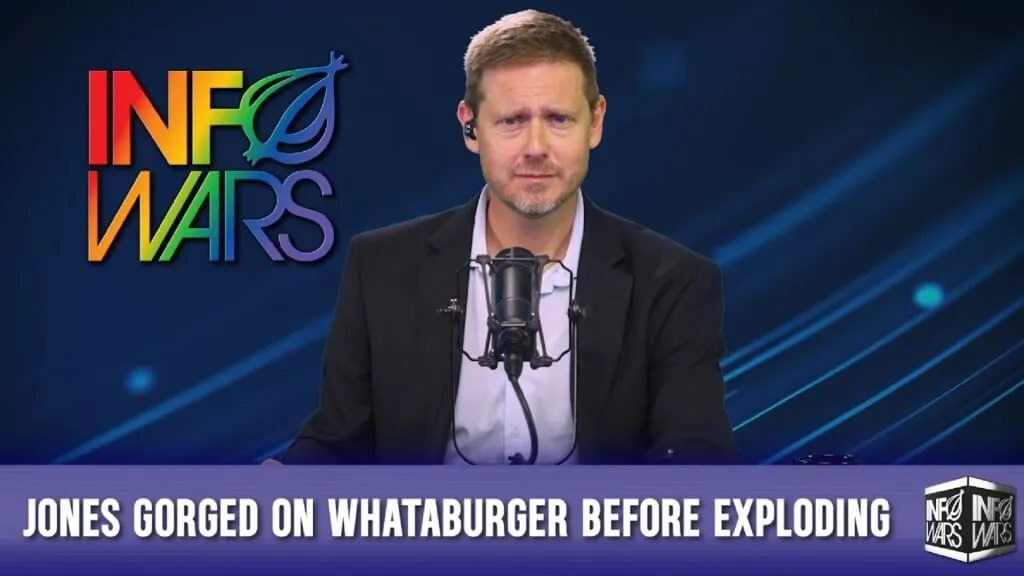
Tim Heidecker and The Onion launched “Real InfoWars” on Thursday night across streaming accounts, using two pre-taped sequences and callers. For decision-makers, it is another example of how high-profile legal and regulatory fallout is turning into mainstream comedic infrastructure.
Tim Heidecker and The Onion finally launched “Real InfoWars” in full on Thursday night, and the first thing you heard was an all-caps taunt aimed at Alex Jones. In the new broadcast, Heidecker asserted that the actual Alex Jones “popped like a balloon” a few months ago, and that the current Jones is an impersonator.
That punchline is not just content for content’s sake. It is the core premise of the “Real InfoWars” concept: an Onion-style takedown of InfoWars’ signature behavior, the weird cult of certainty where every caller and interview subject is completely convinced they have the real story. Heidecker and his collaborators leaned hard into that dynamic by staging interviews and fielding callers all certain their version of reality is the real one, in defiance of everything they have seen or heard.
The broadcast itself runs as a 50-minute block of comedy distributed via the brand’s various streaming accounts, and it answers what this new version of InfoWars is going to look like “in practice.” It took shape as two larger pre-taped sequences. One focused on an old-school Onion News Network character, Jim Haggerty (Brad Holbrook). The other blended Heidecker’s boisterous impression of ousted InfoWars host Alex Jones with promotional bits teasing other directions the new brand might go.
If you have followed The Onion video ecosystem, the Haggerty segment will feel familiar. The material had clear overlap with the recent Jeffrey Epstein: Bad Pedophile, and the highlight goes to Haggerty, wide-eyed, learning about 9/11 from his CIA source. That matters because it positions the show’s satire as a straight line from mock-national-security narratives to the conspiratorial certainty that fuels real-world misinformation ecosystems. The structure says: the tone is the joke, but the subject is the mechanism.
Heidecker’s Alex Jones segment, meanwhile, is less improvised than the “Emergency Broadcast” he made several weeks ago. This time, it is a full-on assault on Jones, built around the claim that the real Jones is gone and what you see now is a performance. The broadcast then extends that logic outward into the caller ecosystem. One caller, which the article says it is “99 percent sure” was Tim Robinson, claimed that “Alex Jones” is a character passed between performers, “Like Bozo.” The stream ends up presenting certainty as a transferable product: if one persona can be swapped, then the audience's claim-checking habits can be too.
That premise also lands because the source ties the whole situation back to legal pressure that forced InfoWars into a reckoning. The background: this all follows the fact that Jones got sued into bankruptcy after making claims about the families of the Parkland shooting victims. The Onion story frames this as the chain reaction that led to the current “Real InfoWars” project. It also adds a direct irony that is part of the humor. Heidecker’s “impersonator” framing is basically turnabout being fair play, given how often Jones has asserted that people surrounding various dead people are lying or actors over the years.
Now, put on the executive glasses. When mainstream brands create a format that explicitly mimics a high-stakes conspiracy platform, they are doing more than entertainment. They are translating the informational incentives of that ecosystem into something trackable, shareable, and scalable. In practice, it means the audience appetite for certainty has not disappeared. It has simply found a new wrapper, one that can be distributed through streaming accounts and segmented into pre-taped sequences, while keeping the “live callers” energy that makes conspiratorial content feel interactive.
There are also regulatory and platform-consideration second-order effects, even if the broadcast itself is comedic. InfoWars is a brand name heavily entangled with real-world legal outcomes and credibility constraints, and the story’s mention of bankruptcy and lawsuits about Parkland families makes the stakes tangible. For media operators, this is a reminder that the compliance story does not live only in courtrooms. It also lives in how platforms handle distribution of branded claims, how brands brand-adjacent content gets categorized, and how reputational risk propagates when satire intentionally echoes the shapes of disinformation.
Strategically, the broadcast ends with a promise that the universe would “expand” this fall. That lines up with comments Global Tetrahedron CEO Ben Collins made to the publication last week, noting that this version of InfoWars, with Heidecker front and center, would be a six-episode run before branching out into other comedic avenues. For executives watching media formats, that matters because it signals an intent to move from one-off parody to a series architecture: a repeatable pipeline for audiences who already understand the reference points.
And for boards, founders, and investors tracking the attention economy, the bigger lesson is uncomfortable but useful: legal battles and regulatory scrutiny do not automatically reduce the cultural footprint of a platform. Sometimes they redirect it. “Real InfoWars” suggests that when a controversial information brand gets boxed into real-world consequences, satire can still extract the mechanics of certainty, then repackage them for mainstream consumption at scale.
This story's Key Insights and Take-aways are locked.
Create a free account to unlock Executive Actions for one credit.
Register to UnlockAlways free for Executives Club members. Join the Club
More in Entertainment

Russell Brand's accuser 'bewildered and confused' as he denies 7 sex charges
The criminal case against the comedian is a live test of how media companies manage talent risk when serious allegations go public.

'It's a Magic Trick': Ballet Experts Say Rosalía's SNL Pose Is Impossible
Three ballet experts tell Rolling Stone Rosalía's gravity-defying SNL stillness shouldn't be possible - and why the debate is now part of the show.

Activision CMO: GTA 6 Will Boost Call of Duty, Not Bury It
Activision's top marketer says Rockstar's blockbuster will drive players back to consoles and into Modern Warfare 4, even as the company admits its recent strategy failed.