

Timothée Chalamet promotes Kalshi in new ad, and X called it “Bro Sold His Soul”
A one-minute Kalshi spot directed by Linus Sandgren ignites backlash over prediction-market risk, legality, and incentives.
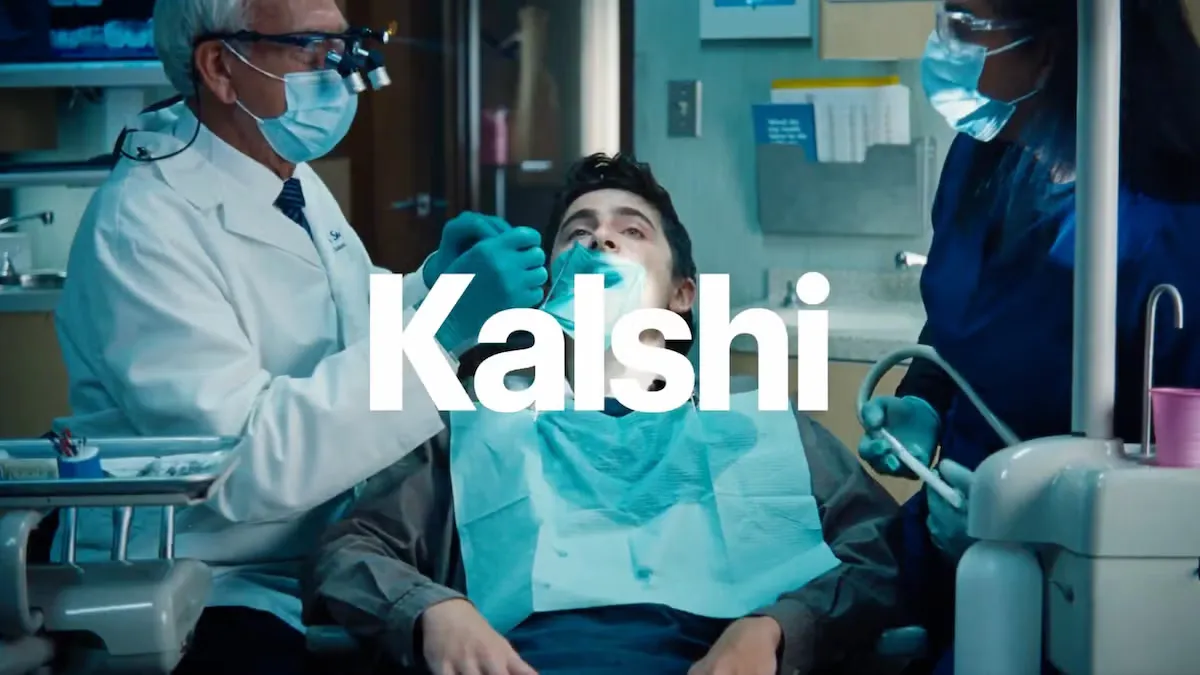
Timothée Chalamet, the “Dune” actor, promoted the controversial prediction market platform Kalshi in a one-minute ad directed by Academy Award-winning cinematographer Linus Sandgren. The backlash matters for decision-makers because it highlights how fast consumer-facing endorsement can amplify regulatory and credibility risks for the whole category.
Timothée Chalamet put Kalshi in front of millions of people with a one-minute advertisement, and the internet response was immediate and brutal: commenters branded the move “Bro sold his soul,” and others accused the platform of being predatory or legally dubious. The ad, directed by Academy Award-winning cinematographer Linus Sandgren, shows Chalamet name-dropping “Kalshi” in everyday moments, ending each segment with “Kalshi” on screen. That choice may look light and quirky, but it is precisely why the backlash landed. The more innocuous the setting, the more some viewers read it as normalization.
In the spot, Chalamet repeats “Kalshi” to his dentist while getting a procedure done. He then beefs with his upstairs neighbors, banging his head on the ceiling to get them to quiet down, and finally tests out some keyboards at Guitar Center. In other words, it is classic celebrity ad logic: take something controversial, put it in an unserious storyline, and let the brand association do the rest. But online reaction overwhelmingly did not support the endorsement. One Instagram comment mocked the timing by saying, “Had to pay for those courtside seats somehow,” referencing Chalamet’s courtside attendance at nearly every New York Knicks game of the NBA Finals. Another user on X wrote, “Dune funds couldn’t have dried up that fast,” tying the criticism to perceived incentives.
To understand why this matters beyond celebrity gossip, zoom out to what Kalshi is trying to sell. TheWrap reports that Kalshi has described itself as a prediction market that allows users to bet on things ranging from game outcomes to world news. Prediction markets, in plain terms, are betting-style platforms that price predictions like “what will happen next.” For users, that can feel like entertainment and insight. For regulators and critics, it can look a lot more like gambling or like a financial product that carries unique risks. That tension is central to the controversy described in the article.
The platform sparked controversy “for what seemed like a death bet,” which led to legal action against them, according to TheWrap. The company’s CEO, Tarek Mansour, has since clarified that Kalshi does not list markets directly tied to death. That clarification is important because it signals a boundary around the company’s offerings, but it also reveals how fast markets can become reputational flashpoints. Even when a firm says it is not doing the thing critics allege, the underlying narrative can persist and spread, especially when a high-visibility personality plugs the product in a mainstream ad.
There is also a second layer here: politics and trust. TheWrap notes that some politicians, including George Santos, have been accused of using the prediction market platform as a means for insider trading and skewing their own elections. Whether any particular allegation is proven is not spelled out in the source, but the existence of accusations alone raises the stakes for boards and compliance teams. If a platform becomes entangled with allegations of insider dealing or election influence, it stops being “just a betting app” in the eyes of the public, investors, regulators, and partners. It becomes a category-wide governance test.
Chalamet’s ad also echoes other unconventional marketing, which helps explain why it felt like a surprise to fans. TheWrap says the ad resembles off-the-wall marketing Chalamet did for his Academy Award-nominated ping-pong movie “Marty Supreme,” including climbing atop the Sphere and pitching his campaign in a then-viral Zoom call. That context matters because it shows Chalamet is not new to chaotic, attention-grabbing promotion. The difference is that “Marty Supreme” is entertainment. Kalshi is a platform operating in a regulatory gray zone, with legal action history and political accusations attached. In category terms, the celebrity brand works like an accelerator: it can amplify adoption, but it can also amplify scrutiny.
For executives at prediction markets, fintechs, and any consumer-facing platform that sits near legal or reputational fault lines, this moment is a live case study. A one-minute creative decision can turn into a public debate about incentives, ethics, and legality in the middle of normal business. The “Dune funds” and “courtside seats” jabs are not just jokes; they point to how people interpret partnerships. When audiences suspect someone is taking money from a controversial product, the endorsement stops being a neutral marketing channel and becomes a credibility referendum. That is a dangerous dynamic for companies whose regulatory posture depends on trust as much as on text in statutes.
The strategic takeaway is simple: endorsement risk is not only about whether your product works. It is about how your product is framed, who is associated with it, and what legal and political narratives are already circulating. The backlash TheWrap describes shows Kalshi is operating in a spotlight, even when the marketing is designed to look like a harmless pop-culture cameo. In a world where attention moves faster than compliance, these partnerships can accelerate both user growth and regulatory urgency. For boards and leadership teams, the question is not whether a celebrity ad gets views. It is whether it forces you to answer the hardest questions, sooner, and at a scale your competitors may not be dealing with yet.
This story's Key Insights and Take-aways are locked.
Create a free account to unlock Executive Actions for one credit.
Register to UnlockAlways free for Executives Club members. Join the Club
More in Entertainment

Russell Brand's accuser 'bewildered and confused' as he denies 7 sex charges
The criminal case against the comedian is a live test of how media companies manage talent risk when serious allegations go public.

'It's a Magic Trick': Ballet Experts Say Rosalía's SNL Pose Is Impossible
Three ballet experts tell Rolling Stone Rosalía's gravity-defying SNL stillness shouldn't be possible - and why the debate is now part of the show.

Activision CMO: GTA 6 Will Boost Call of Duty, Not Bury It
Activision's top marketer says Rockstar's blockbuster will drive players back to consoles and into Modern Warfare 4, even as the company admits its recent strategy failed.