
Tommy Maddox-Upshaw ditches anamorphic lenses for Starfleet Academy’s new Star Trek look
The cinematographer explains why the show had to change its lens language to land a fresh visual chapter.
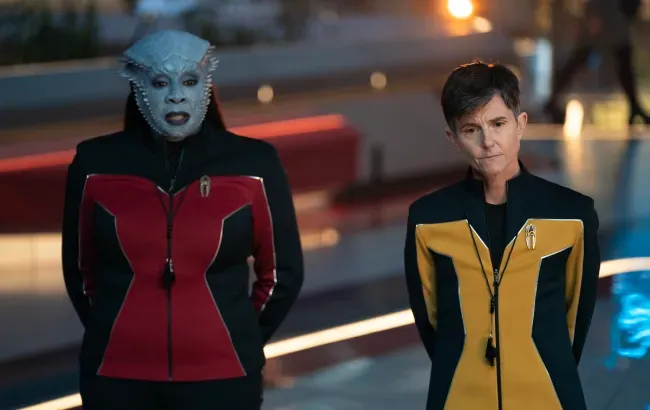
Cinematographer Tommy Maddox-Upshaw, speaking at IndieWire's Craft Roundtables, explains how Starfleet Academy required a visual rethink within the Star Trek universe. The shift away from anamorphic lenses has practical implications for how production teams plan look, cost, and continuity across an expanding franchise.
Star Trek fans have a sixth sense for “the look.” Cinematography choices can signal a time period, a tone shift, even a new production mindset. That is exactly why cinematographer Tommy Maddox-Upshaw’s decision matters: he breaks down the craft reasoning behind why Starfleet Academy needed to ditch anamorphic lenses as the show aimed to take off with a whole new visual chapter.
At IndieWire's Craft Roundtables, Maddox-Upshaw frames the change as more than style. It is an execution problem, a language problem, and ultimately a brand-consistency problem inside a franchise that runs on recognizability while still demanding evolution. The headline question, in plain terms, is simple: if you are making a Star Trek story, why change the lens setup? His answer, as described in the session, is that the visual identity required a different approach, one that anamorphic lenses were not serving as well for this specific chapter.
To understand why this kind of swap is consequential, you have to remember what anamorphic lenses typically do for filmmakers: they are associated with a particular aesthetic, including distinctive lens flares and image characteristics that viewers may implicitly connect to “epic” or “classic” cinematic looks. In a franchise like Star Trek, that aesthetic can be a double-edged sword. It can help unify a show’s visual grammar, but it can also lock productions into a look that may not match the moment they are trying to tell. Maddox-Upshaw’s craft breakdown, grounded in the specific needs of Starfleet Academy, signals that the production did not treat lens choice as a default setting. It treated it as a creative variable that had to earn its place.
There is also the reality side. Lens choices cascade through a production pipeline. They impact how you light scenes, how you expose, how you compose shots, and how you manage consistency from set to set. Even without getting lost in technical jargon, the board-level takeaway is straightforward: “camera department decisions” are not isolated. They touch scheduling, the complexity of setups, and the reliability of the final image across scenes that might be shot at different times or in different production blocks.
For decision-makers, this is where craft turns into risk management. If a show is expanding, the franchise needs both continuity and differentiation. Continuity means audiences still recognize they are in the Star Trek world. Differentiation means the new series still feels like it belongs on its own terms. A lens package is one of the highest-leverage tools a cinematographer can use to steer that balance. Maddox-Upshaw’s discussion at IndieWire's Craft Roundtables is essentially a case study in how those tradeoffs get worked through at the creative level, then translated into concrete production decisions.
Zoom out further and you get the second-order implications that often do not show up in press releases. When a series “dips” one visual approach, it may also require retraining workflows across departments: editorial expectations, color pipeline calibration, VFX planning where it matters, and even marketing stills or key art that borrow from the show’s on-screen look. Those downstream systems are where surprises can turn into cost and delay. The fact that the choice is explicitly about ditching anamorphic lenses suggests the production recognized that sticking with the prior “default” would not automatically deliver the right image language for this new chapter.
Strategically, this is a reminder for executives overseeing ambitious content programs: the pipeline is not neutral. Creative tools come with operational consequences, and operational decisions shape creative output. The upside of getting this right is that it reduces rework and gives the team a coherent target for every department. The downside of getting it wrong is that you end up forcing a look that does not fit the story, then paying for that mismatch later. Maddox-Upshaw’s craft breakdown, tied directly to Starfleet Academy’s aim for a fresh Star Trek visual identity, is a clean example of preempting that problem by changing the foundational choices early.
If you are a producer, studio leader, or investor tracking how franchises evolve, pay attention to the humble detail: a lens. IndieWire’s session shows that “taking off” is not just about plot or casting. It is also about what the camera is allowed to do, what the image is supposed to communicate, and how quickly the team can align on a visual chapter that feels intentional. Starfleet Academy’s move away from anamorphic lenses is the kind of quiet but high-impact decision that can decide whether a new show feels like a compelling step forward or a paint-by-numbers extension.
This story's Key Insights and Take-aways are locked.
Create a free account to unlock Executive Actions for one credit.
Register to UnlockAlways free for Executives Club members. Join the Club
More in Entertainment

Russell Brand's accuser 'bewildered and confused' as he denies 7 sex charges
The criminal case against the comedian is a live test of how media companies manage talent risk when serious allegations go public.

'It's a Magic Trick': Ballet Experts Say Rosalía's SNL Pose Is Impossible
Three ballet experts tell Rolling Stone Rosalía's gravity-defying SNL stillness shouldn't be possible - and why the debate is now part of the show.

Activision CMO: GTA 6 Will Boost Call of Duty, Not Bury It
Activision's top marketer says Rockstar's blockbuster will drive players back to consoles and into Modern Warfare 4, even as the company admits its recent strategy failed.