

Tony Leung will play a serial killer in a streaming series, plus two new projects
As jury president at Shanghai, the Hong Kong star lays out three pipeline moves: Johnnie To film, India project, and serial killer role.
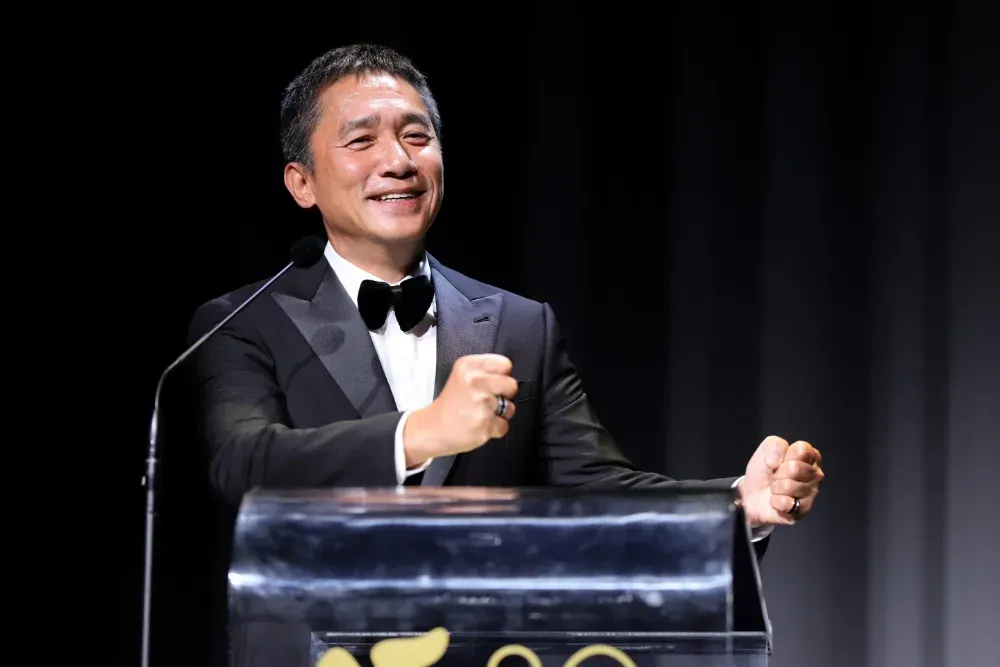
Tony Leung Chiu-wai says he has three productions in the pipeline: a film directed by Johnnie To, a separate India-set project, and a six-or-seven-episode streaming series where he will play a serial killer. The announcement gives decision-makers a clear read on star-driven slate strategy and cross-border content momentum.
Tony Leung Chiu-wai is building a three-part pipeline that reads like a master class in audience math: he has lined up a film to be directed by Johnnie To, a separate project set in India, and a six-or-seven-episode streaming series in which he will play a serial killer. Leung disclosed these projects to Variety ahead of his role as jury president for the Shanghai jury.
That serial killer series is the headline-grabber, but the more interesting part for anyone tracking how premium content gets financed and packaged is how Leung is combining formats and geographies at once. A Hong Kong star anchoring a streaming series for episodic consumption, then pairing that with a Johnnie To-directed film and an India-set project, is a clear signal that “one market” is no longer the operating model for major talent. It is also a reminder that for studios and streamers, star casting is not just casting. It is a distribution strategy. A well-known face can compress uncertainty: it helps markets decide faster, it helps marketing teams budget smarter, and it can influence how aggressively a platform commits to a slate.
Leung’s comments come in a timing sweet spot. Variety reports he spoke to the outlet ahead of his role as jury president of the Shanghai jury, which places him in a gatekeeper position for prestige visibility while also talking like a working producer and performer. Festivals and juries matter because they shape what gets coded as “serious.” For executives, that can translate into better positioning when content competes for attention, licensing leverage, and international sales conversations. Even if the projects themselves are in development rather than fully greenlit, the ecosystem sees signal.
Now zoom out to the industry incentive structure. Streaming series in the six-or-seven-episode range are typically built around momentum and retention. Shorter seasons can reduce production risk versus longer runs, and they concentrate marketing around a defined arc. Leung playing a serial killer also points to a trend in premium streaming: high-stakes narratives with built-in audience hooks. The practical effect for decision-makers is that casting a lead with proven dramatic range can justify higher budgets, because the platform is betting that viewers will follow the character arc episode-to-episode.
Cross-border projects, like Leung’s India-set project, sit at the other side of the same coin. International settings are not just storytelling. They are a way to broaden addressable audiences, attract partners, and create distribution pathways that do not rely on one box office window. Historically, Asian talent and Asian productions have cycled between localization and international appeal, but the bar is higher now. Platforms and producers want recognizable names and settings that travel. A Hong Kong screen legend with pipeline commitments that span streaming and film helps reduce the “translation risk” executives worry about when crossing markets.
Then there is the Johnnie To angle, which matters because it is a form of creative branding. Johnnie To is the kind of director whose name carries a promise of tone and craftsmanship, and that helps the market underwrite the film side of the slate. Pairing a To-directed film with an India-set project and a serial killer series suggests Leung is not putting all his career bets on one lane. That matters to boards and producers because slates are portfolios. If one project hits a snag, another can carry momentum. If one format underperforms, another can still deliver strategic value through awards visibility, platform differentiation, or international licensing prospects.
There is also a second-order implication here for governance and stakeholder expectations. When a talent announces multiple projects publicly, it can change how other parties calibrate timelines. Streamers and film financiers do not like uncertainty, but they also do not like being left behind. If a recognizable star is willing to commit to episodic work and cross-border development, counterparties may accelerate conversations, revisit scheduling assumptions, or re-run internal diligence sooner than planned. The “pipeline” framing is important. These are not described as completed productions; they are in development. Still, in entertainment, development announcements can be leverage.
For executives in media, the strategic takeaway is straightforward: Tony Leung’s pipeline is a map of where premium attention is heading. It blends streaming episodic structure, prestige festival energy through his Shanghai jury role, and international storytelling reach via an India-set project, while anchoring film credibility with a Johnnie To-directed credit. In other words, he is not just acting. He is curating a slate designed to travel across platforms, geographies, and audience expectations. If you are sitting on a board, a content strategy team, or a distribution negotiation desk, that is the kind of signal you do not ignore.
This story's Key Insights and Take-aways are locked.
Create a free account to unlock Executive Actions for one credit.
Register to UnlockAlways free for Executives Club members. Join the Club
More in Entertainment

Entertainer Russell Brand denies 7 sex charges amid accuser's 'couldn't breathe' claim
The alleged victim's account sharpens the reputational and legal stakes for Brand, his platforms, and any business tied to a public figure under criminal scrutiny.

Russell Brand's accuser 'bewildered and confused' as he denies 7 sex charges
The criminal case against the comedian is a live test of how media companies manage talent risk when serious allegations go public.

'It's a Magic Trick': Ballet Experts Say Rosalía's SNL Pose Is Impossible
Three ballet experts tell Rolling Stone Rosalía's gravity-defying SNL stillness shouldn't be possible - and why the debate is now part of the show.