
Tony Tyson says Rubin’s 10-year sky survey is a guarantee, if satellites don’t ruin it
The Vera C. Rubin Observatory kicks off LSST, but ultra-bright satellite plans could darken the future of optical astronomy.
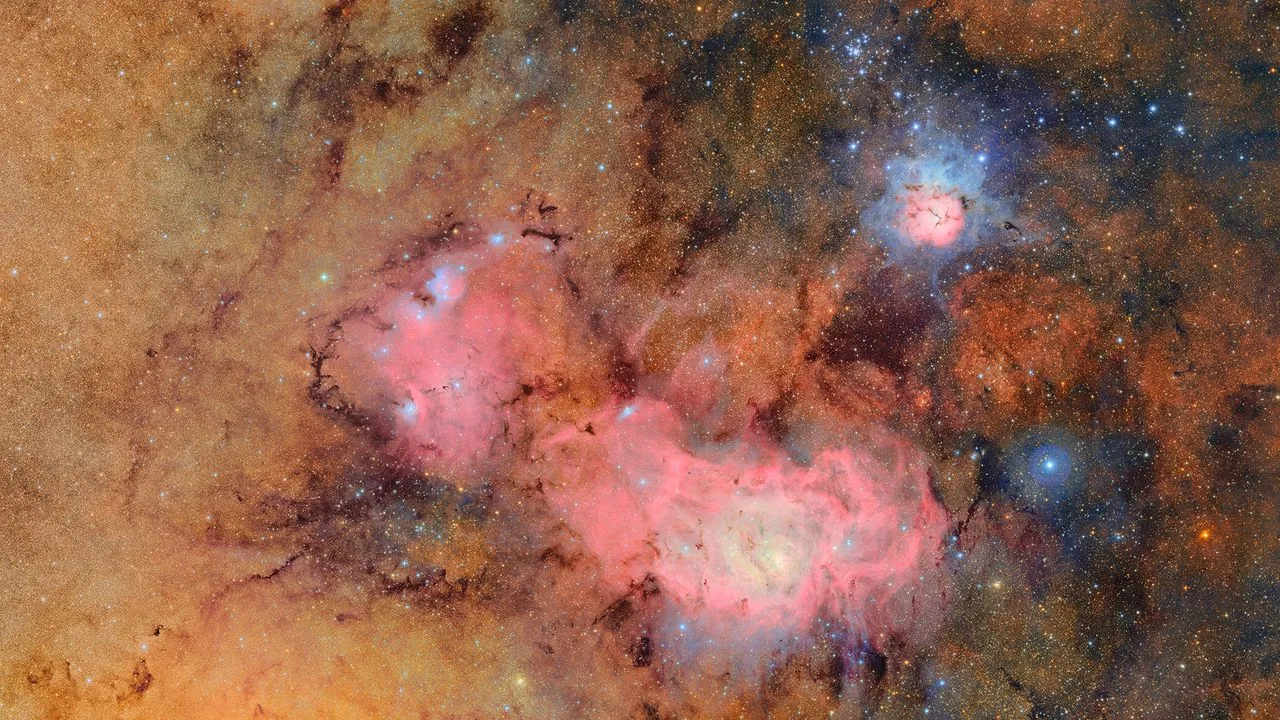
Tony Tyson, chief scientist of the Vera C. Rubin Observatory and former founding director, says the Legacy Survey of Space and Time (LSST) is set to begin mapping the southern sky for 10 years. Decision-makers should treat the satellite threat as a regulatory and operational risk, not a background nuisance.
The Vera C. Rubin Observatory officially began its Legacy Survey of Space and Time (LSST) this Tuesday (June 30), and its chief scientist, Tony Tyson, isn’t hiding the stakes: he calls the mission “more than a hope” because he expects something truly mind-blowing, provided ultra-bright corporate satellites do not “ruin the view.” In the same breath, Tyson acknowledges a real problem that could turn a generational astronomy project into a blurry compromise.
Here’s what Rubin is doing, in concrete terms. For the next 10 years, the observatory will use its car-size LSST Camera to capture a 3,200-megapixel image of the southern sky every night, with thousands of 30-second exposures. Within about two minutes of each exposure’s shutter closing, Rubin will process the data, compare it against the archival sky for that patch, and issue public alerts if something “explodes, or pops off, or moves” in a way that doesn’t fit what came before. Tyson says he made a deliberate decision early on to make the data available to everyone, and the alerts also flow to eight data brokers that specialize in areas like cosmology and supernovae.
Now for why executives should care even if they do not own a telescope. Rubin is trying to unmask the “invisible 95% of the universe” made of dark matter and dark energy, but it is also building an enormous time-domain discovery machine. Tyson says the survey is expected to spot between 7 million and 8 million changes among stars each night, including flashing supernovas, streaking comets, colliding galaxies, and dim, tumbling asteroids. That’s not just astronomy theater. A high-cadence, wide-field, continuously alerting system changes the odds of catching rare events early, testing models quickly, and spotting unexpected classes of objects before the scientific community has time to rationalize them away.
And Tyson thinks the “unexpected” part is not optional. He says that while his cosmology goal is to get closer to understanding dark energy and dark matter, he expects Rubin to be remembered 100 years from now for something else as well. His pitch is about the time domain: discovering something totally new that “blows our minds,” something they did not anticipate. He points to radio astronomy examples like FRBs [fast radio bursts] as a precedent for what may come when you build an instrument that can’t stop watching.
One reason the mission is primed for surprises is how Rubin will handle the unknown. Tyson describes a “live stream of catalog information” available to the public and highlights one data broker he finds especially interesting, the one that produces a classification of “unknown.” The operational implication is subtle but important: Rubin is designed so that the system itself, not just human expectations, has a path to route anomalies outward. That is how you avoid building a discovery pipeline that only finds what you already know how to look for.
But the other shoe is sitting on a mountaintop in Chile under “famously dark skies,” and it’s not a technical bug. Tyson says there are “still some technical bugs to work out” and that the team will gradually increase sky area and image quality over the next few months. The bigger threat is ultra-bright satellites. He calls the class of proposed extremely ultra-bright satellites incompatible with LSST science and says the “skies will no longer be dark for anybody, anywhere.” He names Reflect Orbital as one example, and he also flags “orbiting AI computational centers” that would be exceedingly bright. Tyson says he and his colleagues have met with these companies, which say they “feel our pain,” but their board of directors or investors are still pushing forward.
So what happens when the sky itself becomes an advertising screen? Tyson says he is working with Congress and the American Astronomical Society and other bodies including the United Nations and the FCC [Federal Communications Commission]. He describes the problem as something that will be tough to solve, and even if mitigation efforts proceed, “nothing is perfect.” He mentions that he has been working with SpaceX, which is “really trying very hard to eliminate some of these effects,” but he still expects a period where the new satellite plans could degrade observing conditions.
There is a second-order implication here for boards and decision-makers across tech and infrastructure: regulatory pathways often move slower than deployment cycles. Tyson’s account suggests that mitigation is partly technical, partly political, and partly structural, because it involves brightness, interference, and standards that are not inherently aligned with satellite operators’ incentives. Rubin’s LSST is automated and global, issuing alerts quickly, processing huge volumes, and aiming to keep scientists from having to travel to use it. That makes it maximally dependent on a shared environmental constraint: darkness. If that constraint weakens, the project’s value proposition is not just reduced. The discovery pipeline itself could be altered, especially for low-light, short-lived phenomena.
Rubin’s first images, released in June 2025, already capture more than 10 million galaxies, and the debut images include a small section of the Virgo Cluster. The mission is off the ground with momentum and a credible path to major outputs. But Tyson’s framing turns this into a broader reckoning: LSST’s promise hinges on protecting the conditions under which the universe can still be seen clearly. If bright satellite projects go forward, it could reshape what astronomy can do, what counts as observable, and how quickly anomalies can be verified. For executives watching large-scale science, this is a live case study in how capital deployment into shared spaces can collide with public-interest missions, and how quickly “future impact” becomes today’s operational risk.
This story's Key Insights and Take-aways are locked.
Create a free account to unlock Executive Actions for one credit.
Register to UnlockAlways free for Executives Club members. Join the Club
More in Business
Comcast shares jump 25% as it plans to split NBCUniversal and Sky
The tax-free spin-off could reshape focus, funding, and competition across media and tech for years.

Bungie cuts most Destiny 2 staff as Sony says Marathon still matters
Herman Hulst confirms layoffs affecting most Destiny and some Marathon teams after Bungie admits Destiny fell short.

SK Hynix jumps 11% after seeking up to $29.4B in Nasdaq listing
The chip giant filed for a Nasdaq listing plan that could raise $29.4 billion, instantly reshaping investor expectations.