

Topgolf fled VMware's 400% price hike and saved $11.3M
Broadcom's post-acquisition pricing pushed the golf-entertainment giant to move 12,000 virtual machines to VergeOS, and the savings are already in the millions.
Topgolf global infrastructure manager Scott Forehand led the company's migration of 12,000 virtual machines from VMware to VergeIO's VergeOS after Broadcom's pricing would have raised costs 400 percent. The sports entertainment company has saved over $11.3 million so far, a case study for any enterprise facing a VMware renewal.
Topgolf has banked more than $11.3 million in savings by walking away from VMware, and the trigger was a single brutal number: a 400 percent cost increase. Scott Forehand, Topgolf's global infrastructure manager, told Ars Technica that the sports entertainment company moved 12,000 virtual machines to VergeIO's VergeOS to escape the price shock. The savings are not projections; they are already on the books, and the clock is still running. For a company facing a fourfold increase on its virtualization bill, the decision has already paid for itself.
The defection is all the more striking because Topgolf was not a casual VMware customer. Forehand said the company's VMware connection "ran very deep." Topgolf used vSphere and ESXi for decades, adopted VxRail, the hyperconverged infrastructure platform VMware co-engineered with Dell, in 2017, and employees sat on VMware customer councils and were interviewed for books about how Topgolf used vSphere and Horizon, now Omnissa Horizon. Forehand himself leads the Dallas/Ft. Worth VMware User Group, a role that makes his public accounting of the migration all the more pointed.
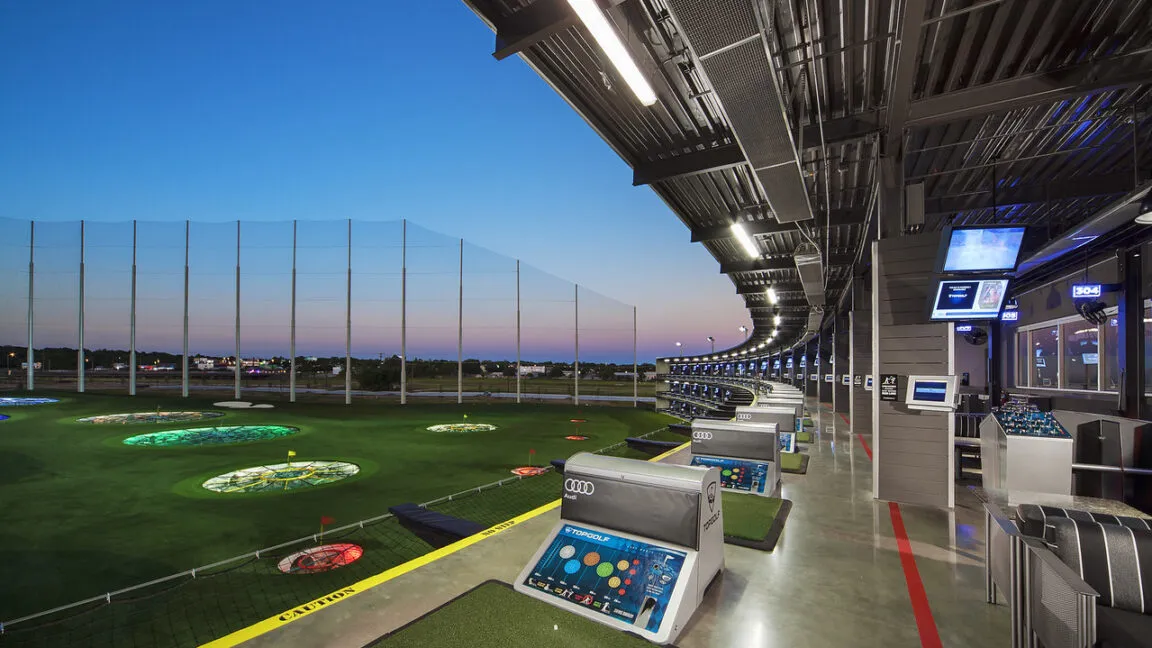
Topgolf operates more than 100 locations worldwide, each running interactive golf games with real-time shot tracking and digital analytics. That means the infrastructure is not back-office plumbing; it is the product. Every venue is a data-generating machine, with sensors tracking each shot and screens rendering analytics in real time. A disruption in that stack means a disruption to the customer experience, which makes the migration riskier and the savings more impressive. When the cost of running that product jumped by 400 percent under Broadcom, the business case for staying collapsed.
Moving 12,000 VMs is the kind of migration that would make most IT teams blanch, yet Topgolf executed it, and the savings have already crossed eight figures. For context, Broadcom's acquisition of VMware has reshaped the virtualization market, with price and packaging changes rippling through renewals. Topgolf's experience is now a public data point in that wave: the sticker shock was severe enough to push a decades-long loyalist out the door. VergeIO, a smaller virtualization vendor, gets a marquee reference customer, and the win signals that challengers can now compete on price in a market VMware once dominated. The migration also carries a reputational signal: Topgolf was the kind of customer VMware featured in councils and books, and its departure is a visible crack in the installed base.
The deeper lesson is about switching costs and how quickly they evaporate when the price moves enough. Topgolf's integration with VMware ran deep, by Forehand's own description, yet the company still unwound it. That suggests the perceived lock-in to VMware may be less binding than it appears, especially when the alternative delivers savings in the millions. A 400 percent increase is the kind of number that does not require a spreadsheet to understand; it is a fourfold jump on a core infrastructure line item, and it turns a renewal conversation into a migration project.
For CIOs and CFOs staring down their own VMware renewals, Topgolf is a useful benchmark. The migration of 12,000 VMs is not trivial, but the payoff, over $11.3 million and counting, is the kind of result that gets a board's attention. The case also shows that vendor loyalty, customer councils, and even co-authored books do not survive a pricing decision that breaks the business case. The question is not whether your organization is as deeply embedded as Topgolf was; it is whether your renewal notice has a similar number hiding in it.
The strategic stakes extend beyond cost. Topgolf's defection shows that even the most embedded vendor relationships can be broken when the economics stop making sense. For every enterprise running VMware, the question is no longer whether alternatives exist, but whether the savings justify the disruption. Topgolf's answer, in the millions of dollars, is now public, and it will be cited in procurement meetings for years. The case also raises a question for Broadcom: whether aggressive pricing wins in the short term but erodes a customer base that took decades to build.
This story's Key Insights and Take-aways are locked.
Create a free account to unlock Executive Actions for one credit.
Register to UnlockAlways free for Executives Club members. Join the Club
More in Business

Elon Musk unveils a flying car, and SpaceX helped build it
The Tesla CEO's showcase at a SpaceX facility signals a future where road and rocket engineering converge.

Apple's $2,000 iPhone Duo opens preorders, taking on Samsung and Google
Apple's first foldable hits the market at a premium price, reshaping a category Samsung and Google have led.

Pope Leo XIV, first American pope, diagnosed with lung cancer
The 71-year-old Chicago-born pontiff underwent successful surgery on his right lung, and his diagnosis raises new questions about his AI-focused papacy and the Vatican's future.