
Toy Story 5 debuts with $160M, the year’s biggest box-office launch
A franchise-best opening for Pixar and Disney sets the tone for studios chasing the summer money sprint.
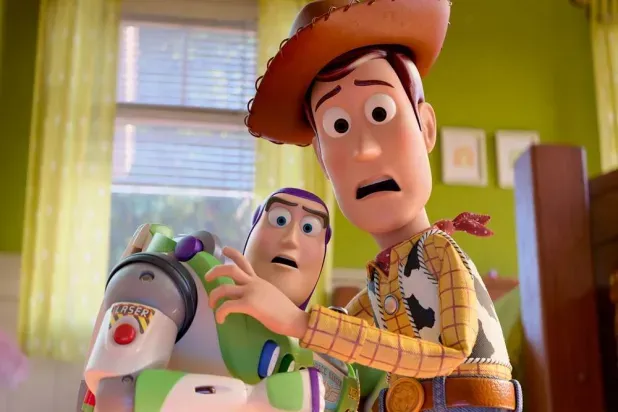
Toy Story 5 raked in a franchise-best $160 million in its biggest box-office debut of the year, per Asharq Al-Awsat. For decision-makers, the launch is a live stress test of theatrical demand and franchise momentum right now.
Toy Story 5 just landed the biggest box-office debut of the year, taking in a franchise-best $160 million at the start of its run. That figure matters because it is not merely “a strong opening.” It is a new high-water mark for this specific franchise. In an industry where theatrical performance has to clear the bar against streaming alternatives, that kind of number is a signal that audiences are still willing to show up in large, measurable volume.
Asharq Al-Awsat frames the opening as both the year’s top debut and the franchise’s best, which gives the moment a double meaning for executives. First, it sets a competitive benchmark. If other studios were planning releases around expectations of the market, Toy Story 5 just proved there is a lane where legacy brands can still pull blockbuster crowds. Second, it validates a franchise strategy that relies on recognition and built-in fan demand. A $160 million opening is the kind of start that can change internal discussions fast, from marketing spend to theater commitments and beyond.
To understand why that opening is such a big deal, look at how box-office outcomes shape downstream decisions. The first weekend (and the opening-week trajectory) often drives how theaters allocate screens and how distributors position advertising. Big launches can generate momentum: more screens, stronger showtimes, and greater visibility, all feeding into the next wave of tickets. Even if executives know that opening-weekend hype fades, a franchise-best debut still gives the movie leverage in every conversation that follows. In other words, this is not just revenue. It is bargaining power.
There is also the capital-and-capability angle that boards tend to care about. Studios take on substantial production and marketing risk, and the theatrical window is one of the most visible ways to de-risk performance. A launch at this scale tends to tighten the feedback loop between creative development and financial planning, making it easier to justify future entries in the same universe. When a franchise hits a new peak, management can point to tangible demand rather than relying on softer indicators like social buzz.
Regulatory framing is not always front and center in entertainment coverage, but it matters in the background for how films move through markets. In many regions, theatrical distribution and content review processes can influence release timing and rollout. While the source focuses on box-office numbers, the implied operational reality is that studios are still navigating a complex set of constraints around where and when movies can play. A franchise that starts strong can absorb friction better because distributors have a proven market pull. When a movie opens with $160 million, it creates more room to handle uneven market schedules, because the baseline demand is already there.
Now zoom out to the competitive field. “Biggest debut of the year” is a category title, and categories shape behavior. If you are an executive at another studio, you do not just watch Toy Story 5. You read it as a demand signal. Which genres can still dominate? How much can brand recognition pull audiences in a crowded release calendar? How should marketing calendars be timed against tentpole releases? Large openings often force peers to rethink the timing and intensity of their own pushes, because a single breakout launch can alter how much attention the market has left.
For governance, this kind of performance can also recalibrate board-level discussions about strategy and risk. Boards want to know whether a company’s slate is built on repeatable engines or one-off hits. A franchise-best debut supports the idea of repeatability, at least at the beginning. That can influence how leadership allocates next-cycle budgets, whether it prioritizes more iterations of proven IP, and how it balances investment between new properties and sequels.
The second-order stake is simple: an opening this large raises the bar for everything around it. It pressures marketing to sustain attention, pressures distribution to protect theater run quality, and pressures future franchise planning to avoid overextending a winning formula. The best part for decision-makers is also the hardest part: when $160 million comes in at the start, expectations do not sit still. They turn into numbers that must be justified week after week.
This story's Key Insights and Take-aways are locked.
Create a free account to unlock Executive Actions for one credit.
Register to UnlockAlways free for Executives Club members. Join the Club
More in Business

A flaw in PHP just forced governments to pull their own sites offline
European agencies from Belgium to Germany took websites dark to patch a critical weakness in the language behind almost 70% of the web, and the blast radius extends far beyond government portals.

BioWare shuts down, Mass Effect 5 dead after $55B EA buyout
The legendary RPG studio's closure lands months after a $55 billion investment group buyout of EA, raising tough questions for gaming's biggest acquirers.
Musk weighs Tesla-SpaceX mega-merger as boards form review panels
Special committees at both companies will examine a tie-up that could fuse electric vehicles and space launch, forcing a fresh look at governance and valuation.