
Toy Story 5 opens with $312M, then sets a franchise record in 2026 summer swing
A record global opening validates Pixar's multigenerational playbook, and forces everyone else to rethink what “brand-safe” means.
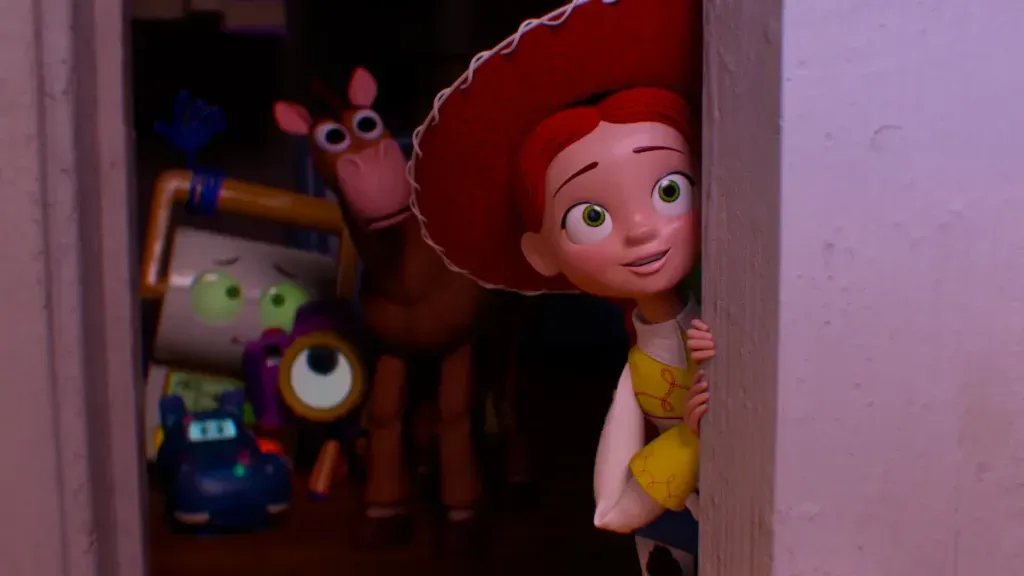
Disney/Pixar's “Toy Story 5” opened with $160 million domestically and $312 million worldwide, setting a new franchise record for opening weekend. For decision-makers, the real lesson is how Pixar keeps characters event-level across generations without burning audiences out.
“Toy Story 5” just posted a global opening of $312 million and set a new franchise record for opening weekend. In the U.S. and Canada, it opened to $160 million from 4,425 domestic locations, beating the prior benchmark set by “Toy Story 4” in 2019 with $121 million domestic and $249 million globally. And this is not a one-off spike: the reporting says the film has strong critical and audience reception scores across the board, plus an A CinemaScore from audiences, which matters because it usually correlates with how long movies keep pulling their weight.
So what? Because a $312 million worldwide debut is not just box office. It is a stress test for every “what do audiences actually want” argument animators and studios have been having in their boardrooms for years. The column frames “Toy Story” as one of the best brand management cases in Hollywood history, and the numbers are doing the talking. The franchise has now shown it can land with multiple generations “without missing a beat,” from the 1995 original through today.
The original “Toy Story” is described as a hard-won win. It launched in 1995 with “disastrous test screenings” and a “way-too-dark early cut,” but Pixar built a foundation for storytelling excellence by rewriting and remaking each movie until it was “absolutely great.” It ushered in an era of CG animation and grossed over $370 million worldwide. That matters strategically because it tells you the franchise was not engineered for nostalgia alone. It was engineered for quality, then quality scaled.
Then came “Toy Story 2” in 1999, which the column describes as another hard-won overhaul. Disney “originally tried to make a direct-to-video sequel,” but John Lasseter “wrestled control back and crashed a complete overhaul.” The result: it grossed nearly $500 million. The pattern is clear in this telling: when Pixar got its hands on the story, it treated each sequel less like a merchandise extension and more like a fresh creative product that deserved theatrical treatment.
The next pivot is timing and theme. Pixar waited until 2010 for “Toy Story 3,” centering the story on an all-grown-up Andy heading to college. The idea is that Andy’s experience was “directly reflected” in the kids who saw the first films, who were now late teens and early twenties themselves. That connection helped the film gross over $1 billion and receive a Best Picture nomination. Then in 2019, “Toy Story 4” proved the franchise was not just for millennials and their parents. The column notes that Gen Zers cite “Toy Story 4” as their first “Toy Story” movie in theaters, and that the semi-reboot grossed over $1 billion, topping “TS3” worldwide.
Now “Toy Story 5” inherits that momentum and raises the bar. The reporting says it broke a franchise record for opening weekend and should have no problem busting past the $1.073 billion worldwide gross of “Toy Story 4.” It also situates the film inside a broader summer competition picture. Warner Bros./DC’s “Supergirl” is currently tracking for a domestic opening next weekend in the $40 million range, and Universal/Illumination’s “Minions & Monsters” could bring some competition in July. The column reminds readers that Illumination and Pixar already co-existed in 2024: “Inside Out 2” set a then-global record of $1.7 billion even as “Despicable Me 4” grossed $972 million. In other words, multiple animation tentpoles can coexist when audiences treat the releases as events.
The downstream effect is visible in the box office lanes right now. The success of “Toy Story 5” came “partly at the expense of” Universal/Amblin’s “Disclosure Day,” which fell 62% from its $44.5 million opening weekend for a $17 million second frame. Meanwhile, “Obsession” is third with $14.2 million in its sixth weekend, and it finally dropped below its $17.1 million opening after more than a month. “Backrooms” reached $175 million domestic and $300 million worldwide, and “Scary Movie” completes the top 5 with $6.7 million in its third weekend, bringing its total past $200 million worldwide against a $30 million budget. Those are the kinds of comparisons that matter for executives because an event-level hit can reallocate audience attention for weeks.
Underneath all the numbers is the part studio leaders actually debate: quality control, franchise fatigue, and character relevance. The column says Pixar has “pretty terrific quality control,” especially for cornerstone franchises. It also highlights how Pixar keeps characters current with shorts and merch drops while “not wearing out their welcome.” Key strategic point: each film becomes an event, and moviegoers treat it like one. That combination is why the franchise stays multigenerational. And for peers trying to build their own durable IP stacks, the quiet takeaway is that “brand safe” is not a vibe. It is a system: story iteration, release timing, audience alignment, and a controlled trickle of supporting content that keeps familiarity without turning characters into background noise.
This story's Key Insights and Take-aways are locked.
Create a free account to unlock Executive Actions for one credit.
Register to UnlockAlways free for Executives Club members. Join the Club
More in Business

A flaw in PHP just forced governments to pull their own sites offline
European agencies from Belgium to Germany took websites dark to patch a critical weakness in the language behind almost 70% of the web, and the blast radius extends far beyond government portals.

BioWare shuts down, Mass Effect 5 dead after $55B EA buyout
The legendary RPG studio's closure lands months after a $55 billion investment group buyout of EA, raising tough questions for gaming's biggest acquirers.
Musk weighs Tesla-SpaceX mega-merger as boards form review panels
Special committees at both companies will examine a tie-up that could fuse electric vehicles and space launch, forcing a fresh look at governance and valuation.