
Trine 6 returns on Sept. 17 with co-op heist chaos across PlayStation, Xbox, Switch, PC
Frozenbyte’s colorful co-op platformer returns for a sixth chapter, with familiar faces and a heist that goes sideways.
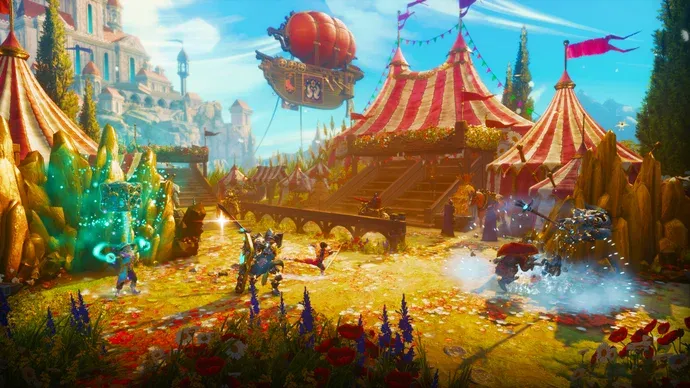
Frozenbyte is bringing Trine back for its sixth outing, Trine 6: Together in Time, a co-op platforming adventure with new and familiar faces and a heist that goes wrong. The Sept. 17 launch across PlayStation, Xbox, Switch, and PC gives publishers, platform teams, and investors a fresh data point on cross-platform co-op demand.
Trine 6: Together in Time lands on September 17 on PlayStation, Xbox, Switch, and PC. Developer Frozenbyte is using the sixth outing of its co-op platforming series to set up a simple promise: more co-op, more character variety, and a heist scenario that goes wrong. If your game backlog has been feeling a little beige, this is the release that shows up like a burst of neon paint.
The headline promise is also the core business signal. Frozenbyte is leaning into the franchise formula while changing enough to keep it feeling like a “new run,” not just another re-skinned collectathon. Trine 6 returns for a fresh adventure with new and familiar faces, and it wraps that cast around a heist that goes sideways. That matters because co-op games live and die on player momentum, and momentum is usually built by three things: dependable mechanics, recognizable characters, and a scenario that creates tension fast.
From a market standpoint, Trine is a useful reminder that co-op does not have to be competitive to be sticky. Platforming co-op tends to attract players who want teamwork without the constant stress of ranked match volatility. In other words, it is often less about “who is best” and more about “can we clear the level together.” That shape influences how publishers think about retention. If the experience is approachable solo but better in a party, then you get a broader funnel and more natural replay loops when friends drop in.
Also, let’s talk timing. September is crowded, but it is not random. It is a season where players come back from summer schedules and look for releases that fit different playtimes. A co-op platformer is the kind of game people can pick up for a session that ends when the group is done, rather than requiring a multi-hour commitment every time. When a studio targets PlayStation, Xbox, Switch, and PC all at once, it is essentially maximizing distribution surface area so that whatever your preferred device is, the entry point is the same.
Frozenbyte’s positioning here is interesting because the series is known for its distinctive visuals. The original coverage describes Trine as the aesthetic equivalent of a Dulux catalogue, and while that is a vibe reference, it points to something more concrete: art direction is part of the product. In the co-op space, where friends are deciding whether to “start now” versus “maybe later,” a clear visual identity reduces the friction of sharing a recommendation. It is easier to sell a game when it looks like it already knows what it is doing.
There is also an operational implication hiding in plain sight. Supporting four major platforms means production choices that respect input differences, performance expectations, and storefront realities. Even if nothing about the underlying tech is discussed in the source, the multi-platform commitment itself is a planning constraint that tends to shape everything from update cadence to QA scope. For boards and investors, that translates into a familiar risk question: can the studio maintain polish across platforms without slowing down iteration after launch? A sixth installment suggests Frozenbyte has already learned how to scale a recurring release pipeline.
Finally, the “heist that goes wrong” framing is not just narrative flavor. Heists are inherently structured around preparation, role division, and a payoff that depends on teamwork. In co-op platformers, role division can show up through character abilities, level interactions, and the way objectives force coordination. A heist premise can turn gameplay variety into story variety, and story variety into replay intent. That is how you get beyond the first playthrough, especially when players have already seen enough previews to know the genre.
So for decision-makers watching co-op performance, Trine 6 is a clean case study: a mid-series sequel, cross-platform day one, and a high-clarity hook built around familiar co-op expectations plus a scenario twist. If you are allocating resources to co-op titles, tracking engagement strategies, or assessing where players are spending their limited attention in Q4, September 17 is a date worth circling. The real question is whether Frozenbyte’s mix of new and familiar faces, paired with a heist that goes wrong, can turn that recognizable franchise energy into fresh momentum across every platform it launches on.
This story's Key Insights and Take-aways are locked.
Create a free account to unlock Executive Actions for one credit.
Register to UnlockAlways free for Executives Club members. Join the Club
More in Entertainment

Ali G's 'stooge' says he was in on joke, outplayed Sacha Baron Cohen
A 54-year-old aspiring actor says he recognized Sacha Baron Cohen mid-shoot, kept his MAGA act up, and let the film-makers think they had fooled him.

Entertainer Russell Brand denies 7 sex charges amid accuser's 'couldn't breathe' claim
The alleged victim's account sharpens the reputational and legal stakes for Brand, his platforms, and any business tied to a public figure under criminal scrutiny.

Russell Brand's accuser 'bewildered and confused' as he denies 7 sex charges
The criminal case against the comedian is a live test of how media companies manage talent risk when serious allegations go public.