

Troy Jackson locks a majority of Maine Senate delegates, accelerating a new fight vs. Susan Collins
A delegate-slate win at Maine's nominating convention puts Jackson on track quickly to take on the well-funded incumbent.

Troy Jackson has effectively secured the Maine Senate Democratic nomination by winning a majority of the state delegates who will officially nominate a candidate next weekend. The timeline shrinks to under four months before the general election, leaving him to build a battleground campaign against GOP Sen. Susan Collins.
SANFORD, Maine - Troy Jackson has effectively secured the Democratic nomination in Maine’s crucial Senate race by winning the support of a majority of the state delegates heading into next weekend’s statewide nominating convention. The delegates are not legally bound to vote for him, but POLITICO reports that nearly two-thirds of the 601 delegates have committed to voting for Jackson at the statewide convention. In plain terms: the race may still be technically on the convention floor, but the direction is already set by the delegate math.
That momentum did not come from a slow, months-long build. Jackson dominated the county-level meetings this weekend that selected those delegates, while two rivals fell far behind. One of them, Maine Secretary of State Shenna Bellows, dropped out partway through the process Sunday, minutes before voting began on Sunday. Bellows then encouraged Democrats to coalesce behind Jackson. “This has been an unprecedented nominating process, compressed into days instead of months, and I'm grateful to every volunteer who worked around the clock for this movement,” Bellows said in a statement, adding that “That energy is exactly what we need to beat Susan Collins in November - and Democrats don't have a day to waste in unifying around that shared goal.”
The stakes are immediate because the general election opponent is not just any incumbent. GOP Sen. Susan Collins is the only Senate Republican running for reelection in the state, and Maine is a state carried by former Vice President Kamala Harris in 2024. Jackson’s new role comes with less than four months to spin up a major battleground campaign against Collins. POLITICO notes that Maine’s nominating convention on Saturday is just 101 days before Election Day in November, which compresses the campaign timeline further than most challengers get.
This is happening in the shadow of a nasty, high-velocity scramble to replace Graham Platner. Platner won the primary but dropped out this month after Platner denied the allegations. Once that news landed and the primary result effectively collapsed, the party had to rebuild fast: delegates had to be selected, then whips had to turn those selections into a controlling slate.
Jackson’s delegate path was fueled by real organizing muscle at the county level. The source points to a sweep of all 149 delegates in Cumberland County, the largest county in the state, after the Saturday meetings. Jackson’s advantage is not just that he has committed delegates. It is that his coalition looks like it was built from the people who already understood how to mobilize supporters during the Platner surge.
For executives and board members watching from the outside, the business lesson is that “switching horses midstream” is easier when the team structure already exists. In political terms, the volunteers, organizers, and delegate nominees who had been part of Platner’s operation did not vanish. They helped whip votes for Jackson’s delegate slate across Maine over the weekend. That matters because after a compressed nominating process, turnout and credibility are currency. You cannot just announce a campaign; you have to activate local networks and persuade persuadables quickly.
The fundraising and resource gap is the other hard constraint. POLITICO reports that Collins currently has an $11 million war chest in reserves, according to the latest Federal Election Commission filings. That gives the incumbent staying power, the ability to buy time with ads and ground presence while the challenger is still introducing themselves. Jackson is already acknowledging the mismatch in preparation time. After a Sunday morning rally ahead of the delegate meeting in York County, where he secured the support of enough delegates to cross the 50 percent threshold, Jackson told reporters he would have to “put our ground game even more into maximum overdrive.” He said, “What did Graham have, 70 town halls? If we did one every other day we wouldn’t be able to do 70 from here on out.”
There is also a geographic and identity challenge. Jackson hails from the far-northern tip of Allagash and represented that area in the state Senate. POLITICO notes he will have to quickly introduce himself to the southern part of the state, where he is “not as well known down here.” He emphasized that distance is not just symbolic: “I’m six hours away from my home. And as we know, the state legislature means nothing. Nobody’s following it. It’s a lot of work to make sure people know what I’m about.” For a campaign, that translates into a brutal tradeoff: every week spent building name recognition is a week not spent converting that recognition into votes.
Finally, Jackson’s win is the pinnacle of a longer organizing career in Maine’s progressive activist world. POLITICO describes his failed gubernatorial campaign backed by Sen. Bernie Sanders (I-Vt.), and his work campaigning alongside Platner ahead of the June primary. Jackson ultimately called for Platner to drop out after the sexual assault allegation. That history matters because it signals the style of the coalition Jackson is bringing into the general election. It is likely to lean on organizing and mobilization, not just persuasion.
Bottom line: Jackson has effectively locked in the delegate base needed to claim the nomination, but he is stepping into a campaign window that is shrinking fast, while Collins enters with money and incumbency advantages. For anyone in leadership roles, this is a clear case study in timing, coalition control, and how quickly “process outcomes” become “market reality.” The next weekend’s convention may be the formal cap on this chapter. The real test starts immediately after.
This story's Key Insights and Take-aways are locked.
Create a free account to unlock Executive Actions for one credit.
Register to UnlockAlways free for Executives Club members. Join the Club
More in Politics
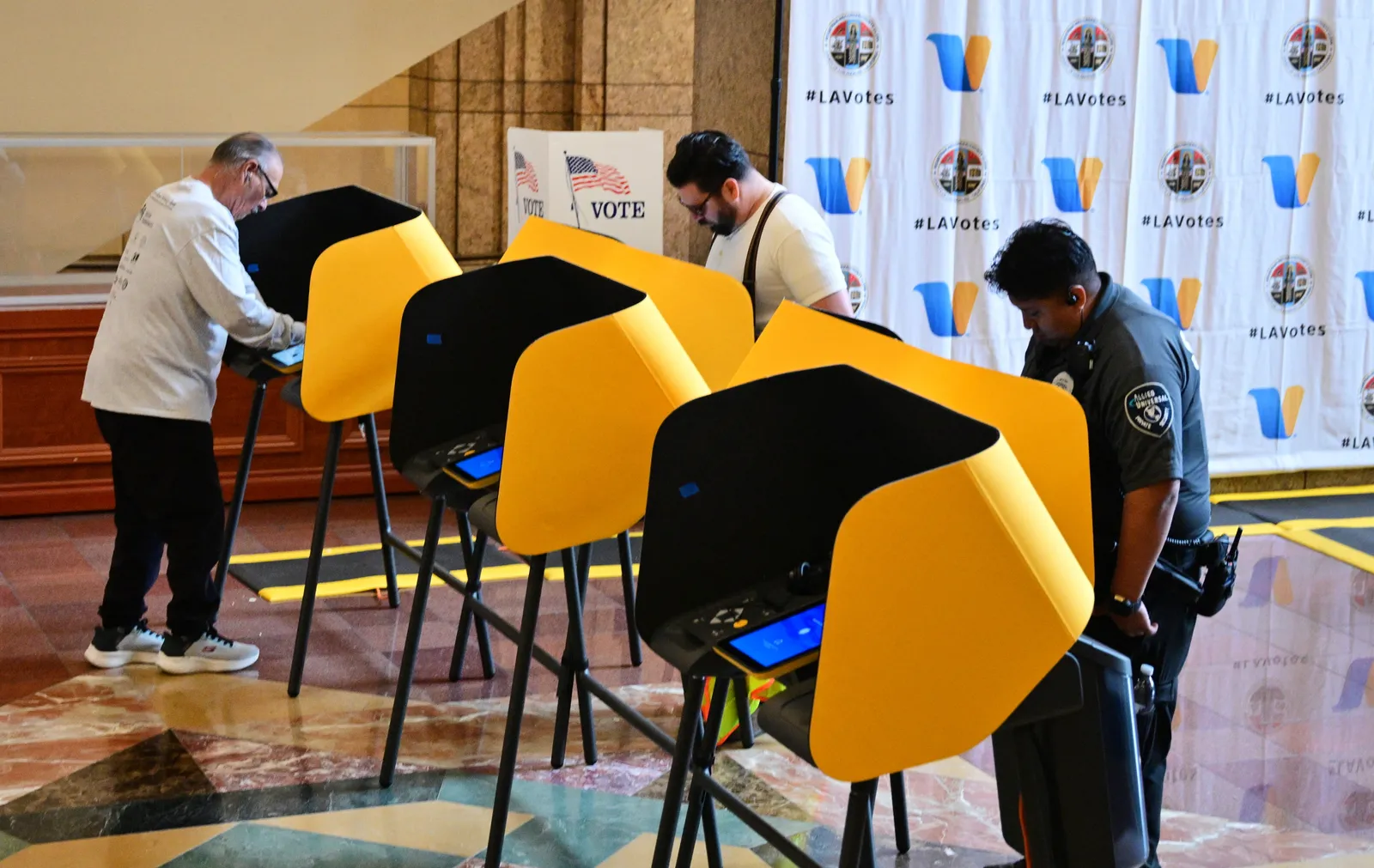
LA County: DOJ's 20,000 'noncitizen' voter list is 'unreliable,' includes U.S.-born
Preliminary review by Los Angeles County election officials finds errors in the federal list, raising the stakes for voter roll integrity ahead of November.

Trump's $1.5B Pentagon chip investment lands in North Carolina
A $1.5 billion defense infusion for North Carolina chipmaking signals a new era of Pentagon-backed reshoring - here's what it means for the industry.

Nigeria confirms first Ebola case in Abuja, a woman just off a Uganda flight
Health Minister Muhammad Ali Pate says the patient flew in from Uganda, putting Africa's latest outbreak on Nigeria's doorstep.