
Trump administration reportedly discusses taking a stake in OpenAI, but terms are not set
The reported talks raise immediate questions about control, oversight, and incentives for AI builders and investors.
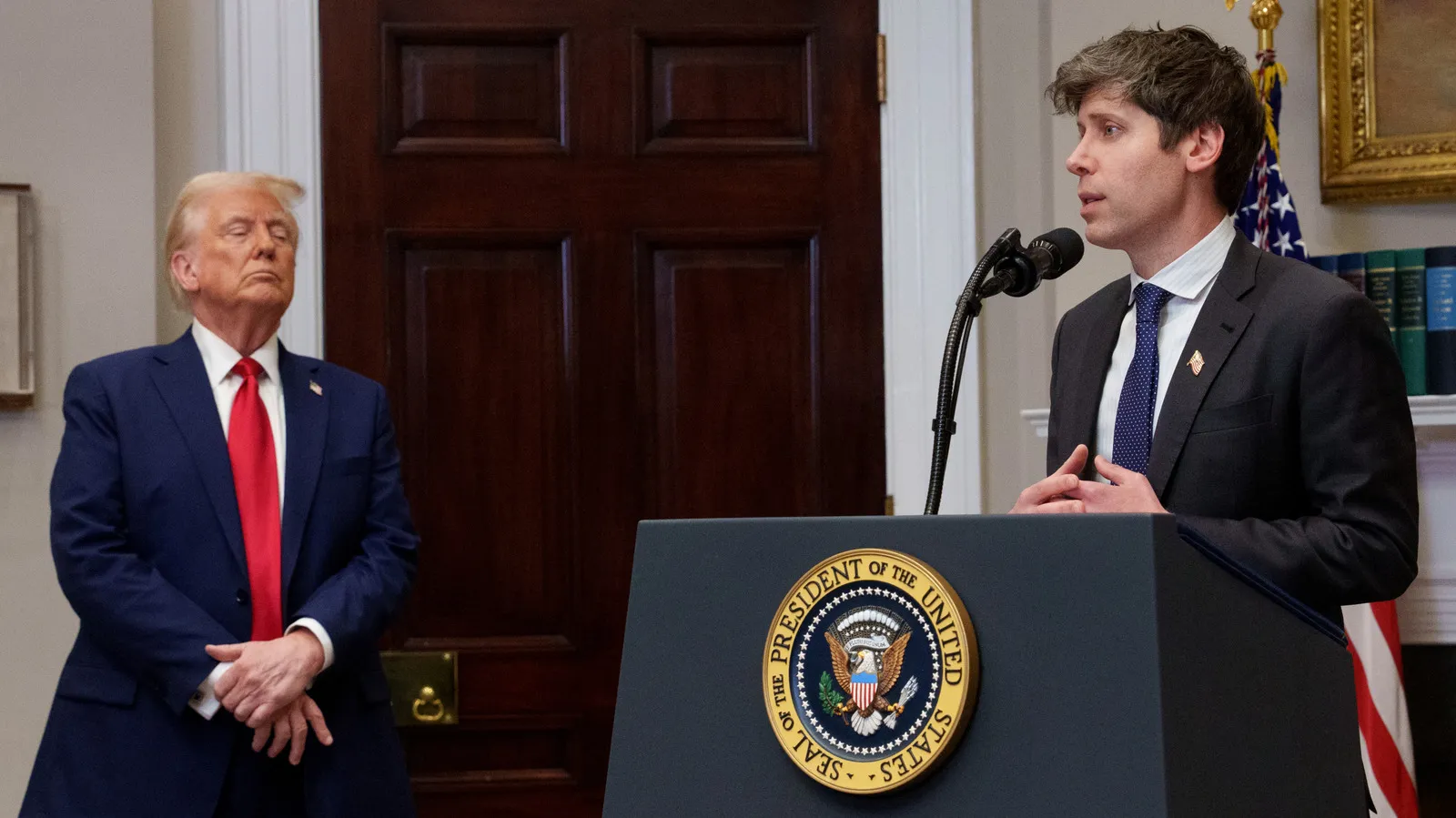
The Trump administration is reportedly in talks about taking a stake in OpenAI. While details of any potential deal have not been finalized yet, the possibility alone could reshape how decision-makers think about AI governance and leverage.
A report says the Trump administration is in talks about taking a stake in OpenAI. The key detail, and the one that changes how you should read everything else, is simple: details for a potential deal have not been finalized yet.
Still, those two lines matter because they hint at a bigger shift in how governments might engage with frontier AI. For most of the last few years, the default model has been regulation-first, with agencies setting rules, monitoring compliance, and trying to slow risks without owning the technology outright. A government equity stake flips the frame. It does not automatically mean control, but it does change the negotiation posture. It can pull boards and executives into a world where “policy” and “capital structure” start behaving like the same lever.
From an executive and board perspective, there are two immediate lanes to watch: what a stake could buy, and what it could complicate. A stake is never just money. Even without final terms, the mere fact that talks are happening means OpenAI’s governance team, and likely its broader stakeholder network, must be thinking about how an outside party would affect decision-making. In practical terms, executives will care about rights that often travel with equity: information rights, voting rights, board participation, and any operational constraints tied to the investment. The article does not provide deal specifics, so nobody can responsibly claim what those rights would be. But boards do not wait for the term sheet to start thinking through second-order implications like governance deadlocks, disclosure obligations, and strategy constraints.
Now add the regulatory background. AI has become the kind of technology where regulation moves fast, and where governments want a say before harm happens. But regulation alone can feel slow to tech companies that build under intense competition. An equity stake can look like a way to align incentives: governments participate, companies gain resources or legitimacy, and both sides can aim at guardrails. That alignment is not guaranteed, though. In the real world, government involvement tends to increase expectations around transparency and risk management, and it can also accelerate scrutiny when something goes wrong. Even without finalized terms, executives should treat the possibility as a governance stress test: if a state actor becomes a significant shareholder, what happens when there is a political controversy, a national security concern, or a compliance dispute?
There is also the market side. When a major institution signals interest in an AI company, it often changes how other investors interpret the competitive landscape. Even if the talks do not become a deal, the signal can still ripple: it can influence whether partners view AI as a strategic infrastructure category, not just a product category. That can affect capital allocation decisions across the ecosystem. For other AI firms, the question becomes whether they should expect more bids, more partnerships, or more direct government involvement in funding and oversight.
For OpenAI specifically, the board-level challenge is managing uncertainty while protecting autonomy. “Not finalized yet” is doing a lot of work here. It means no one can confidently predict the final economics, the timeline, or the governance terms. But it also means the company must be ready for a scenario where negotiations move quickly once parties feel comfortable. This is the kind of uncertainty that can create internal friction, because different stakeholders can value different outcomes: financial strength, speed of execution, reputational considerations, and governance independence.
And for decision-makers at other companies and in the investment community, the lesson is less about OpenAI alone and more about the pattern it implies. If a government can discuss taking a stake, then frontier AI companies may increasingly be evaluated not only on model performance and product traction, but also on institutional fit. Boards may need clearer frameworks for engagement: when is a government partner helpful, when does it increase risk, and how do you preserve long-term decision rights under short-term political pressure.
The strategic stakes are clear even with sparse details. A potential stake could be a tool for influence, a mechanism for aligning incentives, or a source of governance complexity. The report confirms that talks are underway, and it underscores that details have not been finalized yet. That combination is exactly what executives should treat as actionable intelligence: something big is being discussed, the terms are still in motion, and whoever plans for it early will have fewer surprises later.
This story's Key Insights and Take-aways are locked.
Create a free account to unlock Executive Actions for one credit.
Register to UnlockAlways free for Executives Club members. Join the Club
More in Technology

OpenAI says 10,000 agents cracked a 90-year math problem in 88 hours
The company's claim is audacious, but one mathematician is pushing back. Here's what it means for AI-driven discovery.

Meta still serves child sexual abuse ads on Instagram in India - BBC report
A new report following the BBC Eye investigation says the ads are still there - what it signals for every platform with a self-serve ad engine.

White House yanks 'Build the Wall' game after Tetris Company copyright warning
The administration's arcade game vanished in hours - and the takedown playbook every brand can learn from.