
Trump at Mount Rushmore declares communism “can be given no quarter”
His Independence Day kickoff frames dissent as an enemy doctrine, with partisan edge and real political ripple effects.
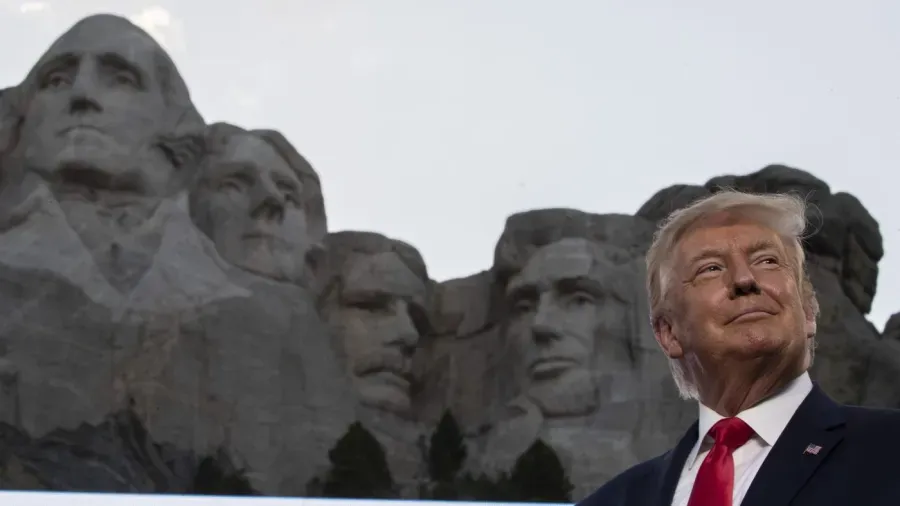
President Trump used his Mount Rushmore Independence Day kickoff speech to deliver a fierce rebuke of communism. For decision-makers, the key consequence is how quickly the rhetoric signals tougher political and policy posture coming out of the political calendar.
President Trump used his Independence Day kickoff speech at Mount Rushmore to deliver what the report calls a “fierce rebuke” of communism. Speaking in Keystone, South Dakota, as part of remarks celebrating America’s 250th birthday, he framed the ideology as an existential threat, declaring: “such doctrines can be given no quarter.”
In other words, this was not a neutral civics moment. The speech, delivered on Friday, injected partisan rancor into a setting Americans associate with national unity, using the monument backdrop to sharpen a blunt line: communism as an “enemy” doctrine that will not be tolerated. For executives watching politics for signals, the headline stake is straightforward. When a sitting U.S. president chooses that language and that stage, it is usually a marker that the political center of gravity is tilting toward harsher framing, and that downstream policy debates will likely inherit that tone.
That matters beyond cable news because U.S. political rhetoric does not stay contained in speeches. It shapes what becomes “reasonable” in hearings, what gets prioritized in agencies, and how lawmakers justify budgets, enforcement posture, and regulatory timelines. Businesses typically feel this first in guidance and enforcement risk, then in procurement preferences, then in how employees interpret corporate risk tolerance. Even if a particular policy is not named in a speech, the framing can quickly become a roadmap for what staff and allies consider defensible.
The report describes Trump’s remarks as “thinly-veiled dark threat” against less-specified opponents. While the article excerpt stops short of listing exactly who he targeted, the structure is familiar: identify an ideology, label it as dangerous, and pair that label with language that implies no compromise. That is an effective political move because it collapses negotiation space. If “such doctrines” are beyond compromise, then any debate becomes, by definition, a debate over loyalty rather than over details.
Mount Rushmore is not an incidental choice either. The choice of location connects the message to national identity. For presidents, that association is a tool: it lets rhetoric borrow legitimacy from symbols. When the symbol of American greatness is paired with language about an external ideological enemy, the speech is implicitly asking Americans to treat the issue as a national security problem rather than a partisan argument.
Now zoom out to what “Independence Day kickoff” signals in the U.S. system. These annual starts are often used to set themes for what comes next: legislative posture, campaign messaging, and agenda shaping. The report ties the address to the celebration of America’s 250th birthday, which makes the contrast sharper. A milestone birthday normally calls for reflection. Instead, the report says Trump’s speech injected partisan rancor, and that pivot is the point.
Second-order implications for executives and boards can show up in several practical places. First, political tone can spill into regulators’ interpretation of priorities, even without an explicit new rule. Agencies, especially those with politically charged mandates, may become more aggressive or more risk-averse depending on leadership signals. Second, corporate boards that manage reputation and compliance may need to reassess how their organizations communicate during periods of heightened ideological messaging, because internal alignment and employee retention can become governance issues. Third, companies in sectors sensitive to national security and geopolitics often face additional scrutiny when rhetoric increases tension, since procurement, export controls, and partnership decisions can shift faster than long-term planning cycles.
There is also a feedback loop to consider. When presidential rhetoric pushes conflict framing, opposition parties and interest groups often respond with their own counter-framing. That can escalate the level of political temperature, which tends to make compromise harder. In a legislative context, increased polarization can also mean fewer durable policy outcomes, or policy outcomes that swing quickly between extremes. For decision-makers, this is why speeches like this can be more than optics: they can predict the style of governance that follows.
So what should peers in similar roles take from this? At minimum, it is a clear signal that Trump is willing to use major national symbolism to deliver an uncompromising message about communism and ideological opposition. At maximum, it is a warning that the administration’s political and policy posture may lean toward tougher, less negotiated approaches as the agenda moves through the next stages of the year.
This story's Key Insights and Take-aways are locked.
Create a free account to unlock Executive Actions for one credit.
Register to UnlockAlways free for Executives Club members. Join the Club
More in Politics

Glacial collapse, not rain, killed 180 in Nepal's Himalayan flood
The Himalaya's extreme geography hid the true cause of Nepal's catastrophic flood, a glacial collapse that turned a geological battleground into a mass-casualty zone.

Iran’s Esmail Baghaei says Oman talks start shipping via Hormuz, not US talks yet
Temporary route plans with Oman aim to restart commerce while Tehran says Washington dialogue is not on the table.
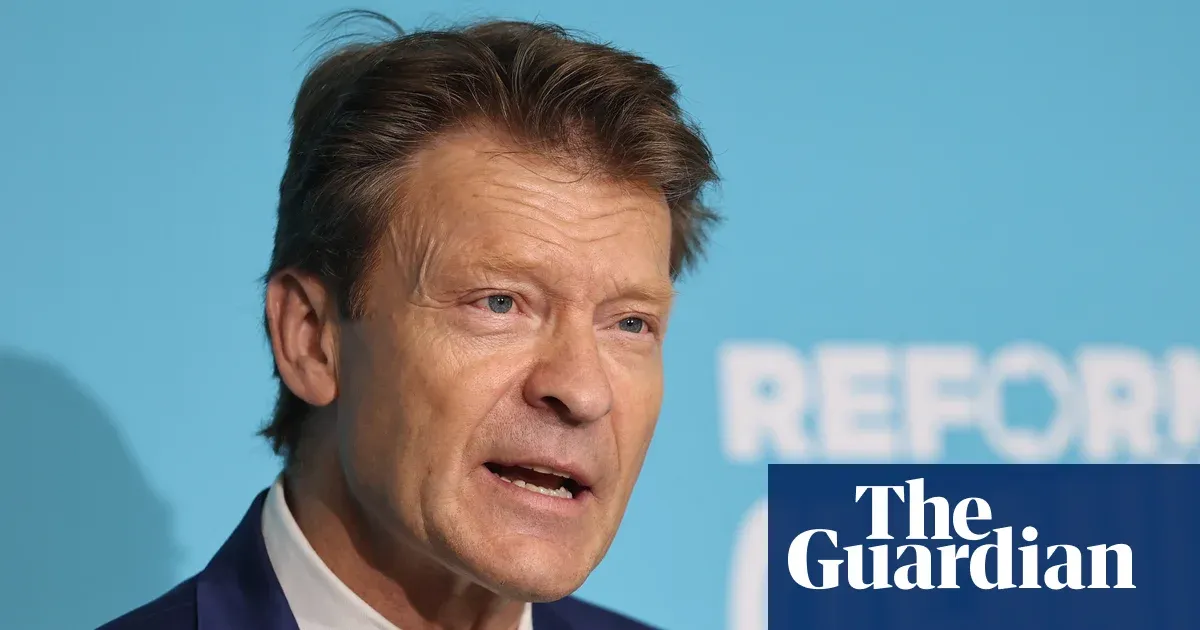
Standards watchdog opens probe into Reform UK deputy leader Richard Tice over interests
The parliamentary standards commissioner says it began an investigation on 28 July into a possible undeclared interest.