
Trump compares presidencies in his second term, distancing from failures of predecessors
Why the president's second-term habit of benchmarking other administrations is now shaping how allies and rivals read his playbook.
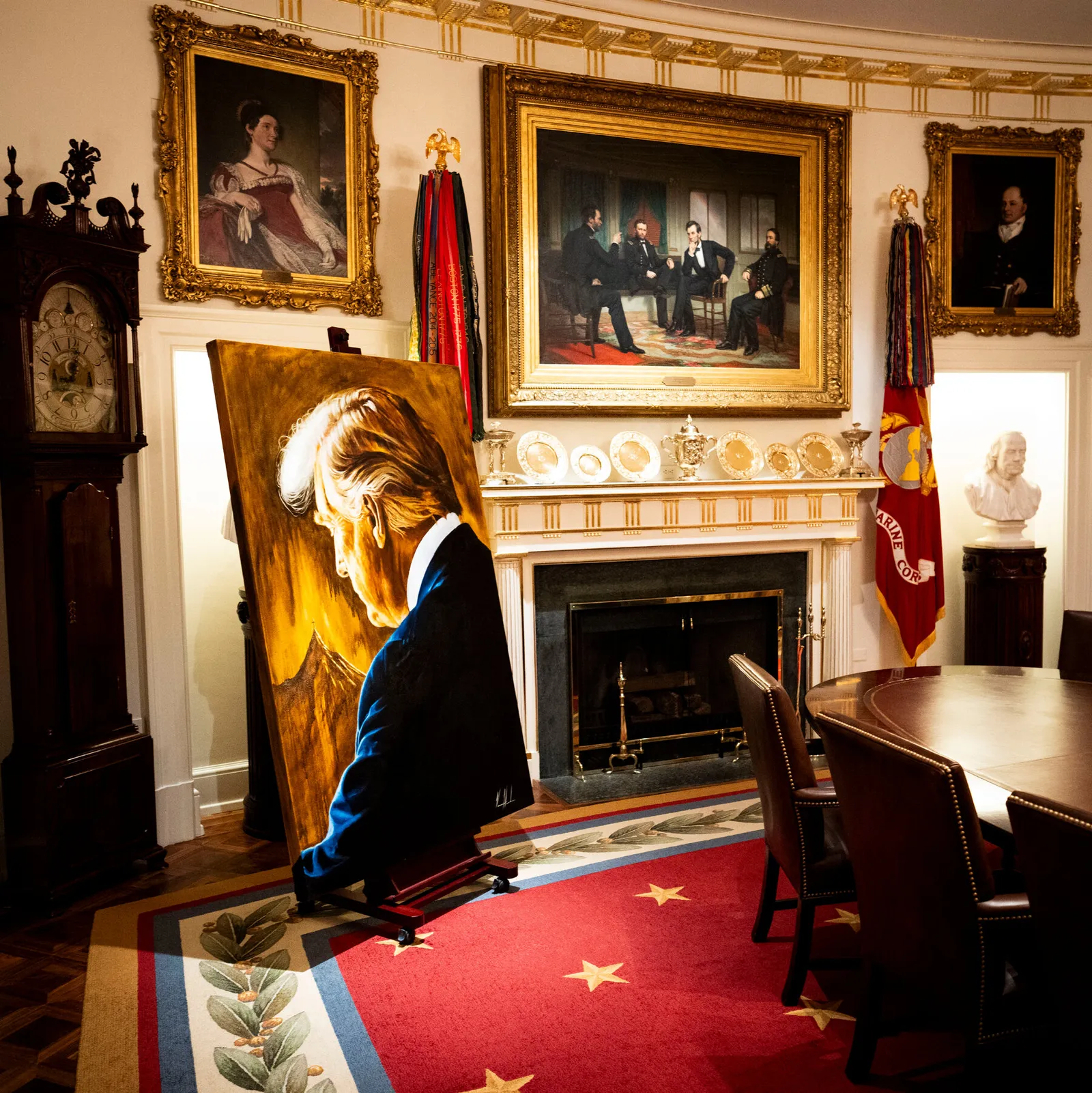
President Trump, in his second term, has increasingly mused about his predecessors, comparing himself with some and distancing from the failures of others. For decision-makers, this signals how political narratives may be used to justify policy direction and calibrate risk around what comes next.
In his second term, President Trump has increasingly mused about his predecessors, comparing himself with some and distancing from the failures of others. That is the through-line the New York Times report spotlights: the White House is not just running a second presidency, it is actively narrating the meaning of earlier presidencies while deciding what lessons to claim, what mistakes to outsource, and what to brand as inevitable.
For anyone trying to forecast Washington, that matters immediately. When a president repeatedly benchmarks prior administrations, it changes the incentives inside the building. Staffers and outside allies do not merely ask, “What is the policy?” They start asking, “Which past failure is being invoked as the reason this administration will do things differently?” In politics, framing is leverage. In practice, framing can influence how regulators interpret intent, how agencies justify enforcement priorities, and how businesses anticipate the risk profile of compliance.
Second-term presidents often develop a more expansive relationship with history because they have less to prove and more time to shape legacy. But the Times report suggests Trump is leaning into this habit more visibly as he moves further into his second term. The comparisons are doing double duty: they reinforce his self-positioning relative to other presidents, and they also provide convenient boundaries, distancing from what he characterizes as predecessor failures. Even without an explicit policy announcement in every instance, that kind of narrative tells bureaucracies and stakeholders what kind of outcomes he wants to be associated with, and what kind of outcomes he wants to avoid being linked to.
To understand why executives should care, consider the mechanics of how governments decide. Regulatory agencies typically operate within statutes and rules, but enforcement priorities and implementation decisions are heavily influenced by political signals. A president who constantly references other administrations is effectively testing which historical stories land and which do not. If a particular “failure” narrative gains traction, it becomes a scaffold that can be used later to justify stricter enforcement, faster approvals, or more aggressive rhetoric around compliance. Conversely, when the president highlights “success” comparisons, it can create pressure for teams to replicate whatever policies are implicitly tied to the positive benchmark.
There is also a board-level implication. When political messaging changes, risk committees have to revisit assumptions about regulatory exposure and reputational risk. Not because a memo from the White House instantly rewrites the Code of Federal Regulations, but because messaging can alter the tempo. In the real world, tempo affects decision-making: timelines for rulemaking can shift, agency resources can be reallocated, and companies can face different expectations from regulators, courts, and customers who interpret enforcement signals.
At the same time, Trump’s pattern of comparing himself with some predecessors and distancing from others can reshape coalition dynamics. Allies and adversaries both pay attention to the boundaries a president draws. Allies want alignment, so they may seek to tie their policy agenda to the “success” comparisons. Rivals, meanwhile, try to attach themselves to the “failure” contrasts, framing certain proposals as a repeat of past mistakes. That creates a political sorting process around narratives, not just legislation. And in politics, narratives become a form of currency.
Second-order effects can show up in procurement and partnership decisions too. Government contracting is often a web of compliance requirements, reporting obligations, and relationship management across agencies. If political messaging emphasizes avoiding past failures, agencies may intensify documentation expectations or tighten interpretive discretion. Companies that treat those shifts as pure PR can get surprised by operational changes. The more a president frames earlier presidencies as cautionary tales, the more likely it is that implementing teams will look for ways to prevent anything that looks like the cited “failure,” even if the cited “failure” was not directly caused by the same legal mechanism.
Ultimately, the Times report describes a president actively taking stock of other presidencies in his second term. The strategic stakes for decision-makers are straightforward: your environment is not only shaped by statutes and budgets. It is also shaped by the story the White House tells about what happened before and why it will be different now. If Trump is repeatedly benchmarking predecessors, those comparisons become a map for how policies may be framed, how agencies may prioritize, and how stakeholders will read the administration’s next steps. In a world where uncertainty is the only constant, narrative discipline becomes a risk factor, and ignoring it is how companies, boards, and investors get caught reacting instead of preparing.
This story's Key Insights and Take-aways are locked.
Create a free account to unlock Executive Actions for one credit.
Register to UnlockAlways free for Executives Club members. Join the Club
More in Politics

Trump pardons Clean Air Act violators and a major fraud donor tied to Jack Abramoff
Clemency targets environmental enforcement and shields a political ally, reshaping risk for regulators and companies downstream.

Argentina scrape past Cape Verde in World Cup 2026 thriller, escaping extra-time scare
An extra-time survival act keeps Argentina on track, while Cape Verde’s push proves smaller nations can still bite.

Colombia’s de la Espriella turns a yellow soccer jersey into a campaign uniform, judge banned it
A Bogotá judge barred Abelardo de la Espriella from wearing Colombia’s national team shirt before June 21, but it arguably boosted his populist brand.