

Trump fires the last Election Assistance Commission members months before midterms
The bipartisan Election Assistance Commission loses its remaining members, and voting-rights advocates call it a reckoning with consequences.
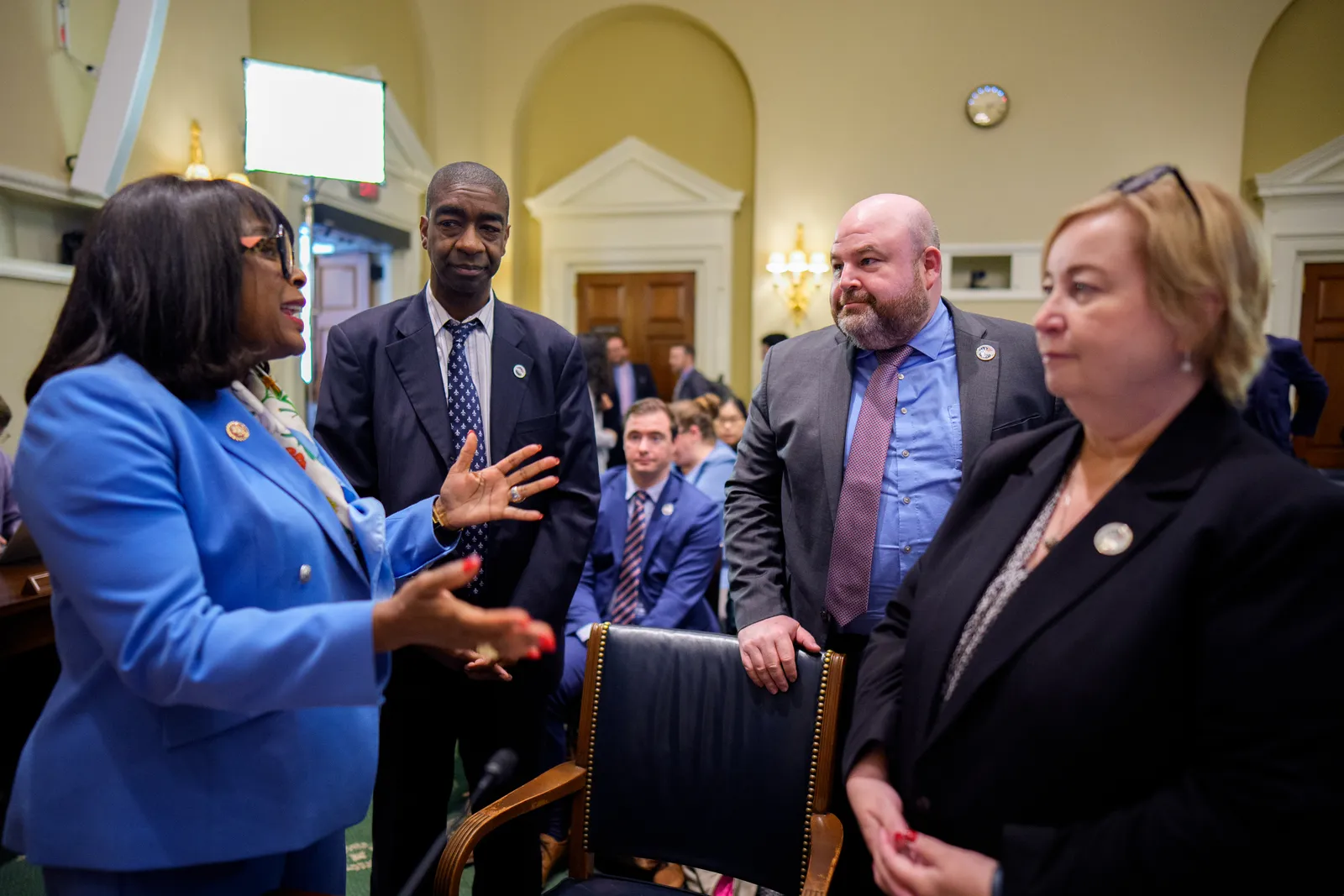
President Trump relieved the remaining members of the U.S. Election Assistance Commission. The move, coming with months until the midterms, drew condemnation from Democrats and voting rights advocates and raises pressure on how election administration oversight gets handled.
Months before the midterms, President Trump relieved the remaining members of the U.S. Election Assistance Commission, leaving the agency in a radically different posture right when the political system is most intense. The decision has been condemned by Democrats and voting rights advocates, who argue it could weaken oversight at the worst possible time.
The EAC matters more than most people realize because it sits at the intersection of elections administration and the rules, processes, and systems states use to run federal elections. When you strip away the people responsible for guidance and accountability, you do not just change who is in a room. You change what gets prioritized, what gets delayed, and what signals states and vendors receive about how much compliance and scrutiny will happen in the months leading into voting.
For decision-makers, the timing is the first thing to notice. The article frames it explicitly as happening with just months until the midterms, which is not a leisurely window. It is a sprint. Election systems and election administration are not seasonal tasks you can restart in a weekend. Even if the underlying administrative machinery is still working, governance matters: who has the authority to act, who can convene, and how quickly the agency can respond to practical problems that always show up during elections. In that sprint period, staffing and leadership are not “nice to have.” They are the difference between smooth coordination and institutional drift.
There is also a political dynamic hiding behind the bureaucratic language. The EAC is described in the source as having remaining members, and it is characterized as bipartisan. That label is not just a branding exercise. Bipartisan commission structures are often designed to make election oversight less vulnerable to pure partisan swings. So when a president removes remaining members, it is read as more than routine personnel management. It is interpreted as a shift in how much the agency will be able to operate with cross-party legitimacy.
That is why the condemnation from Democrats and voting rights advocates lands with force. Even without extra details in the source, the reaction tells you the core allegation: this is not viewed as neutral housekeeping, it is viewed as consequential institutional disruption. Voting-rights advocates in particular tend to focus on whether election administration is resilient against errors, intimidation, and unequal access. If oversight bodies lose continuity, advocates worry that problems can become harder to document, harder to address, and easier to exploit.
For boards, investors, and leaders in adjacent spaces, the second-order implications are real even if you are not directly running elections. Vendors that supply election technology, services, or compliance support live and die by regulatory expectations and administrative clarity. When the governance around those expectations changes abruptly, uncertainty can creep into procurement cycles, documentation, audits, and customer expectations. States and local jurisdictions often want stable guidance when making decisions about systems, training, and readiness. Sudden leadership churn can slow responses to questions that matter to budgets and timelines.
There is also a broader governance lesson here, one that executives who operate in regulated environments will recognize immediately. Regulatory agencies are not just rulebooks. They are operational processes. Staffing levels and leadership continuity influence how quickly interpretations get issued, how thoroughly audits are handled, and how reliably institutions can coordinate across jurisdictions. In election administration, where coordination across states is the whole point, any disruption to continuity can create friction that shows up later as public controversy, legal wrangling, or simply administrative confusion.
Finally, the strategic stakes are immediate and personal. With the midterms months away, the EAC’s leadership vacuum, as described in the source, becomes part of the environment election administrators and political actors are navigating right now. For other executives sitting on boards, managing government-facing programs, or building products that depend on regulatory touchpoints, the move signals a willingness to reshape oversight institutions quickly. The practical takeaway is simple: in election-adjacent sectors, governance and staffing can change the timeline as much as any technical limitation. And when that happens close to an election, everyone feels it at once.
This story's Key Insights and Take-aways are locked.
Create a free account to unlock Executive Actions for one credit.
Register to UnlockAlways free for Executives Club members. Join the Club
More in Politics

Glacial collapse, not rain, killed 180 in Nepal's Himalayan flood
The Himalaya's extreme geography hid the true cause of Nepal's catastrophic flood, a glacial collapse that turned a geological battleground into a mass-casualty zone.

Iran’s Esmail Baghaei says Oman talks start shipping via Hormuz, not US talks yet
Temporary route plans with Oman aim to restart commerce while Tehran says Washington dialogue is not on the table.

Standards watchdog opens probe into Reform UK deputy leader Richard Tice over interests
The parliamentary standards commissioner says it began an investigation on 28 July into a possible undeclared interest.