

Trump, not Iran, is the greatest danger as US bombing returns in endless war
Simon Tisdall argues Washington’s objectives are shrinking while civilian strikes harden resistance and widen economic fallout.
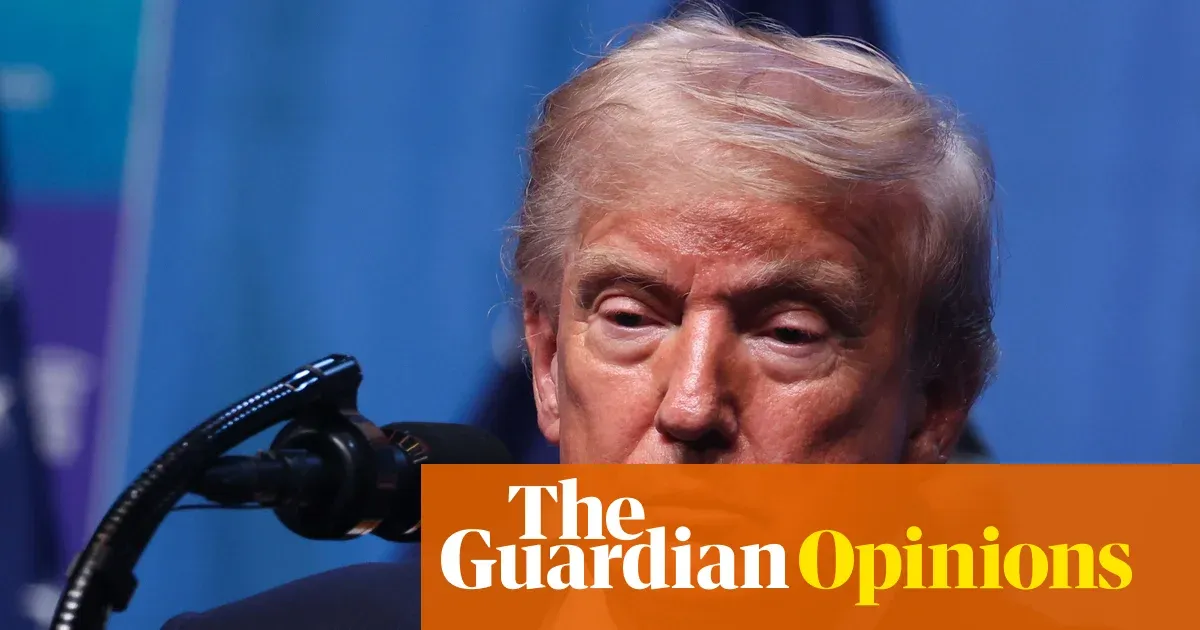
In a Guardian analysis, Simon Tisdall says Donald Trump has dragged the US into a “limitless fiasco” over Iran, with renewed US bombing and expanding damage to civilian infrastructure. He argues the main consequence for decision-makers is a narrowing set of achievable war aims alongside growing economic and strategic costs.
Bombing starts again, and Simon Tisdall’s central claim lands like a weight: the United States is becoming the driver of an open-ended crisis, not Iran. In his view, Donald Trump is “lost in Iran,” unable to find a way out of the disastrous war he started, even as the US military pummels the country and increasingly its civilian infrastructure. The more that strikes widen, Tisdall argues, the more they strengthen the resistance of a hardline regime that “cares little for its people’s suffering.”
The White House line is that the campaign is producing results. Tisdall points to Trump’s claim this week that he is “winning big,” arguing that no one believes it. Instead, he says the only concrete objective the administration can actually point to is controlling the strait of Hormuz, which had been closed due to Trump’s belligerence. That objective, he adds, is still “limited” and “elusive,” and the grander US and Israeli war aims he lists are “less attainable than ever.” Those aims include eliminating Iran’s nuclear programme, degrading its regional militias, and regime change.
Why does this matter to executives, investors, and anyone with a board seat? Because war outcomes are not just geopolitical scoreboard updates. They propagate into supply chains, energy pricing, and risk premiums long before anyone can agree on a settlement. Tisdall frames the moment as both strategic and economic: he says the president has dragged the US into a “limitless fiasco” and the world into an “economic quagmire.” Even if the analysis is political in tone, it is still operating like a risk memo: escalation that expands targets tends to increase uncertainty, reduce negotiating leverage, and make the “exit ramp” harder to reach.
In Tisdall’s telling, the key operational mismatch is leadership effectiveness. He argues it is “Trump’s craven leadership” that renders US forces ineffective, not the Islamic Revolutionary Guard Corps. That is a sharp inversion. The typical public-facing narrative focuses on the adversary’s capability. Tisdall shifts the blame to the decision environment around the campaign, implying that the US is failing to convert military force into achievable political aims. If you are managing a company exposed to the Middle East in any way, that distinction matters. It suggests the variable is not only “what Iran can do,” but whether the US can sustain coherent objectives, clear end-states, and realistic timelines.
Tisdall also injects a historical comparison to sharpen the stakes. He recalls that when George W Bush decided Iraq posed unacceptable dangers, he invaded with 170,000 ground troops. The Iraq war, Tisdall says, was a catastrophe. But he contrasts it with Trump’s approach by claiming, essentially, that Bush at least had “balls.” Whether or not you share the author’s framing, the comparative structure is clear: large-scale military commitments do not guarantee success, yet they still change the economic and operational gravity of the conflict. For boards, the second-order implication is that escalation can become self-sustaining. Once major powers commit, the costs accelerate, the politics polarize, and the range of workable options shrinks.
There is another incentive problem embedded in the piece. Tisdall asks, implicitly, how a leadership team can celebrate progress when outcomes are not translating into durable leverage. He points to how Trump and Pete Hegseth, described as the Pentagon’s “wildling lord of bones,” have “hailed a bogus victory” repeatedly. Even without agreeing with the language, the governance issue is real: when top officials reward optimistic messaging, it can distort how internal stakeholders evaluate success. That distortion can spill into planning assumptions, contingency budgeting, and operational risk controls in connected industries, especially those tied to logistics, insurance, commodity flows, and regional stability.
Finally, Tisdall ends with a stark logical challenge. If Iran truly is the existential menace Trump claims, he argues, the logical course would be “all-out conquest.” That thought experiment is meant to expose the contradiction between threat claims and limited objectives. The US cannot credibly promise maximal outcomes while simultaneously pursuing constrained ones, especially when the observable battlefield effects increasingly include damage to civilian infrastructure. For decision-makers, the strategic takeaway is not that one side has all the answers. It is that campaigns framed as “necessary” can still fail to deliver their stated aims while still producing huge human, economic, and reputational costs. In that world, the risk is not a single event. It is a prolonged, self-reinforcing spiral where each new strike makes the next political step harder, not easier.
This story's Key Insights and Take-aways are locked.
Create a free account to unlock Executive Actions for one credit.
Register to UnlockAlways free for Executives Club members. Join the Club
More in Politics

LA County: DOJ's 20,000 'noncitizen' voter list is 'unreliable,' includes U.S.-born
Preliminary review by Los Angeles County election officials finds errors in the federal list, raising the stakes for voter roll integrity ahead of November.
Trump's $1.5B Pentagon chip investment lands in North Carolina
A $1.5 billion defense infusion for North Carolina chipmaking signals a new era of Pentagon-backed reshoring - here's what it means for the industry.
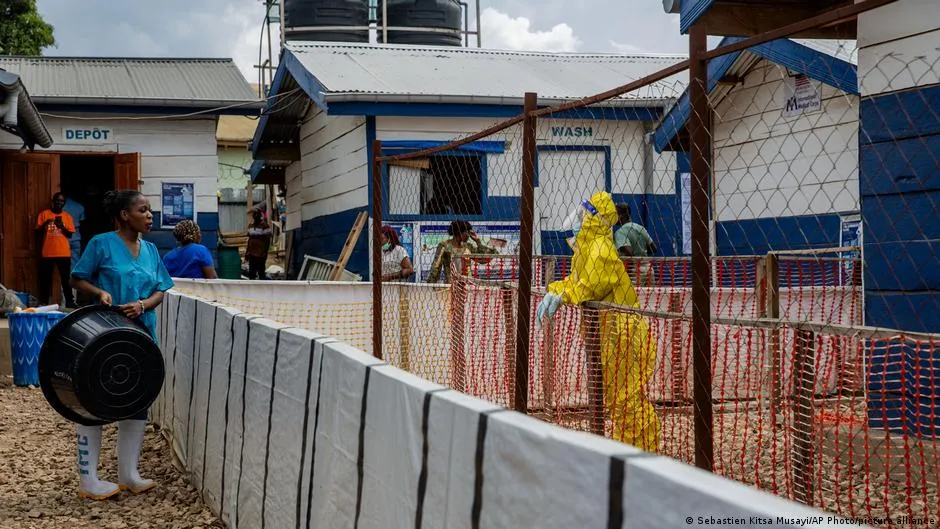
Nigeria confirms first Ebola case in Abuja, a woman just off a Uganda flight
Health Minister Muhammad Ali Pate says the patient flew in from Uganda, putting Africa's latest outbreak on Nigeria's doorstep.