

Trump pledges U.S. licensing for Ukraine to build Patriots, but timelines stretch months
Ukraine could get licensed Patriot production, but operational-ready interceptors may still take months or years.

President Trump said the United States would license Ukraine to produce Patriots, air-defense systems that can intercept ballistic missiles. For decision-makers, the announcement is a supply-chain unlock with a long runway, shifting planning from immediate coverage to staged capability building.
President Trump said the United States would license Ukraine to produce Patriots, air-defense systems that can intercept ballistic missiles. The immediate takeaway is simple: the U.S. is signaling that Patriot-related production in Ukraine is possible, not just the transfer of completed systems.
The second takeaway is the part that matters for planning: Trump also indicated that it could be months or years before those systems are ready. In other words, even if licensing accelerates the “what” and “how,” it does not magically remove the “when.” For leaders tracking near-term air defenses and long-range ballistic missile threats, this is a timeline problem as much as it is a technology and policy problem.
To understand why, you have to look at how air-defense capabilities are normally built. Patriots are not a single widget. They are a package of components and subsystems, plus testing, integration, and training. Licensing production typically means moving know-how, manufacturing standards, and supply-chain requirements to enable local output. That can reduce dependence on completed foreign deliveries over time, but it usually does not translate into instant, field-ready interceptors.
So when the announcement frames the outcome as “months or years,” it aligns with the reality of industrial ramp-ups. Manufacturing complex defense systems is slow for structural reasons: the inputs have to exist at scale, factories need qualification and quality control, and systems must be tested to ensure they meet performance requirements in real conditions. Even when licensing is granted, there is an unavoidable gap between authorizing production and delivering operational capability.
There is also a regulatory and authorization layer that tends to be invisible until it is missing. Licensing defense technology is a policy instrument, not just a technical one. Governments decide what can be transferred, under what conditions, and with what oversight. When a country is being licensed to produce a system designed to intercept ballistic missiles, the stakes are especially high, because performance and reliability are not optional. That makes the administrative timeline and compliance burden part of the strategic equation.
For Ukraine, the political and operational implications are immediate. The statement is essentially a bet on longer-term resilience: if local production can be established, Ukraine can potentially improve continuity of air defense over time. But the “months or years” lag means the country still needs the near-term defensive coverage that comes from existing procurement, deliveries, and deployments. So the announcement does not replace current needs. It reshapes how leaders prioritize future sourcing, budgeting, and planning, likely shifting from pure procurement of finished systems toward a mixed strategy that includes building domestic production capacity.
For the United States, the decision to license production is a signal with second-order effects for other defense-policy decisions. Licensing can be a way to reduce strain on delivery pipelines and to encourage allied manufacturing capacity, but it also requires sustained coordination to ensure that licensed output stays aligned with intended performance. If the U.S. goes down the licensing path, it increases the importance of follow-on support, supply-chain alignment, and the administrative machinery that keeps production and quality on track.
For executives, investors, and board members watching defense-adjacent industries, the strategic stake is broader. Air-defense is a category where procurement decisions can ripple into manufacturing capacity, supplier selection, and workforce development. A shift from “buy finished systems” to “license and build” changes what gets funded and where the bottlenecks will show up. Even without additional details in the source, the headline fact is clear: this is an industrial strategy with a slow-burn payoff, and anyone building forecasts or operational plans should treat the timeline as a core variable, not a footnote.
This story's Key Insights and Take-aways are locked.
Create a free account to unlock Executive Actions for one credit.
Register to UnlockAlways free for Executives Club members. Join the Club
More in Politics

Glacial collapse, not rain, killed 180 in Nepal's Himalayan flood
The Himalaya's extreme geography hid the true cause of Nepal's catastrophic flood, a glacial collapse that turned a geological battleground into a mass-casualty zone.
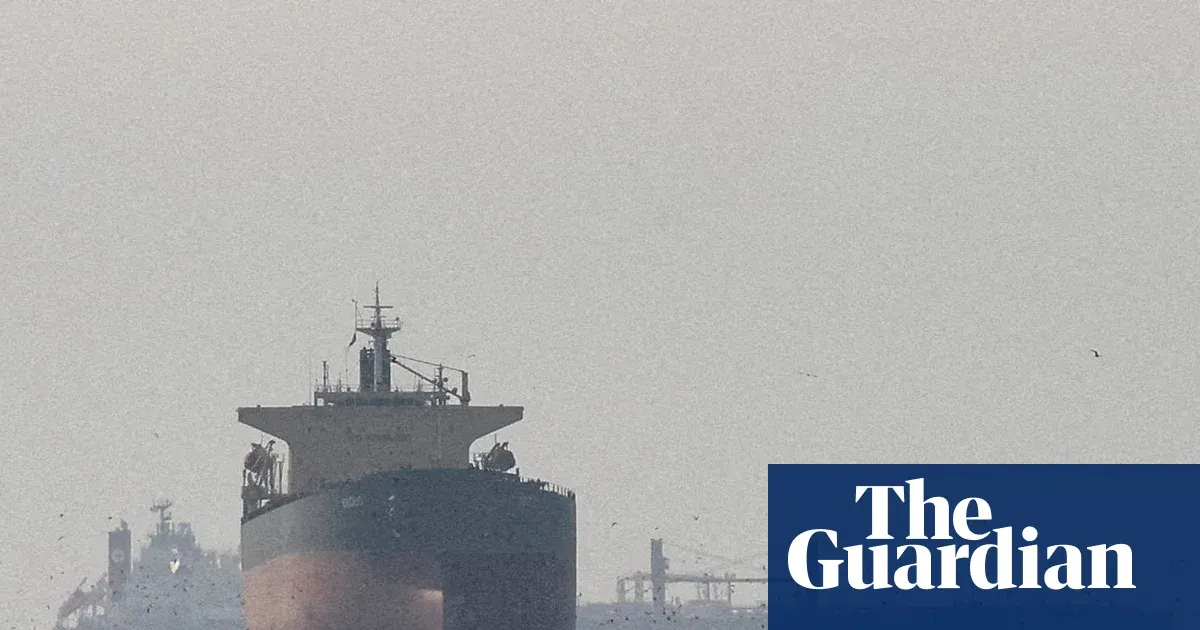
Iran’s Esmail Baghaei says Oman talks start shipping via Hormuz, not US talks yet
Temporary route plans with Oman aim to restart commerce while Tehran says Washington dialogue is not on the table.

Standards watchdog opens probe into Reform UK deputy leader Richard Tice over interests
The parliamentary standards commissioner says it began an investigation on 28 July into a possible undeclared interest.