

Trump's AI Order lets government pick which tech winners get early access
The new federal framework gives the administration a role in selecting 'trusted partners' for advanced AI models, raising major concerns among policy experts.
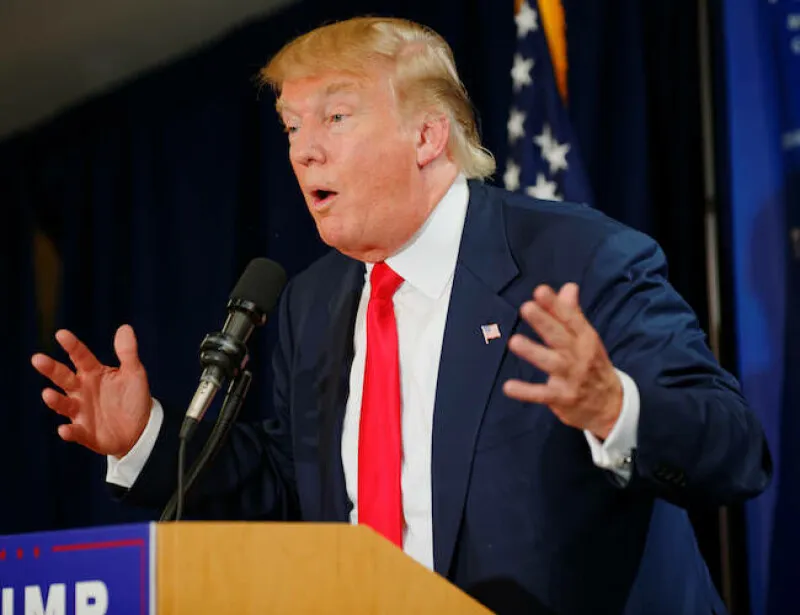
President Trump signed an executive order directing federal agencies to bolster cybersecurity defenses and facilitate access to advanced AI models. This move gives the administration significant discretion in determining which private companies receive early access to cutting-edge AI technology.
President Trump signed a new executive order that directs federal agencies to enhance cybersecurity defenses and establish a framework for accessing advanced AI models. While the order aims to protect government systems and data from cyber threats, the most controversial element is the mechanism it establishes for granting early access to 'covered frontier models.' Specifically, the order asks federal agencies to develop a voluntary framework that allows the government to review advanced AI models for up to 30 days before they are released to 'other trusted partners.' This structure means the Trump administration effectively gains a role in selecting which companies and which industry players get to participate in these high-stakes early access programs.
This provision, which allows the government to collaborate with AI companies to select 'trusted partners,' has drawn immediate and pointed criticism from policy analysts. Experts worry that this mechanism gives the executive branch too much discretion, potentially allowing the government to influence market outcomes or even weaponize the technology against companies with political disagreements with the administration. For instance, the ability to select 'trusted partners' means the administration could effectively decide which companies, like those participating in programs such as Anthropic’s Project Glasswing for its Claude Mythos Preview, get the coveted early look at the most powerful AI tools.
Beyond the selection process, the order introduces other elements that are reshaping the AI regulatory landscape. It directs the Treasury Department to establish an “AI cybersecurity clearinghouse.” This clearinghouse is tasked with coordinating and deconflicting the use of advanced AI tools across the industry and critical infrastructure operators. Its mandate includes supporting efforts for software vulnerability scanning, vulnerability discovery and validation, and remediation and patching. Furthermore, the order directs federal grant programs toward companies that are developing AI vulnerability detections, and it expands the US Tech Force's Information Cybersecurity Specialist hiring and placement pathways, signaling a federal push to build both the regulatory infrastructure and the skilled workforce necessary to manage advanced AI risks.
The core of the regulatory shift, however, remains the 'Secure Frontier Model Deployment' section. This section requires federal agencies to work with the National Institute of Standards and Technology (NIST) to establish the voluntary framework. The government would review 'covered frontier models' for potential cybersecurity risks. A key change from the earlier May draft is the reduction of the review period from 90 days to 30 days. This accelerated timeline suggests a desire to balance rapid innovation with necessary security oversight, but it also compresses the window for thorough, independent vetting.
Policy experts are concerned about the lack of clear guardrails surrounding the definition of a 'covered frontier model.
This story's Key Insights and Take-aways are locked.
Create a free account to unlock Executive Actions for one credit.
Register to UnlockAlways free for Executives Club members. Join the Club
More in Technology

OpenAI says 10,000 agents cracked a 90-year math problem in 88 hours
The company's claim is audacious, but one mathematician is pushing back. Here's what it means for AI-driven discovery.

Meta still serves child sexual abuse ads on Instagram in India - BBC report
A new report following the BBC Eye investigation says the ads are still there - what it signals for every platform with a self-serve ad engine.

White House yanks 'Build the Wall' game after Tetris Company copyright warning
The administration's arcade game vanished in hours - and the takedown playbook every brand can learn from.