

Trump’s crypto disclosures showed $635M royalty income and $197M from stablecoin exposure
Fortune details Trump’s memecoin, World Liberty Financial, and trading-linked Bitcoin exposure from a U.S. ethics filing.
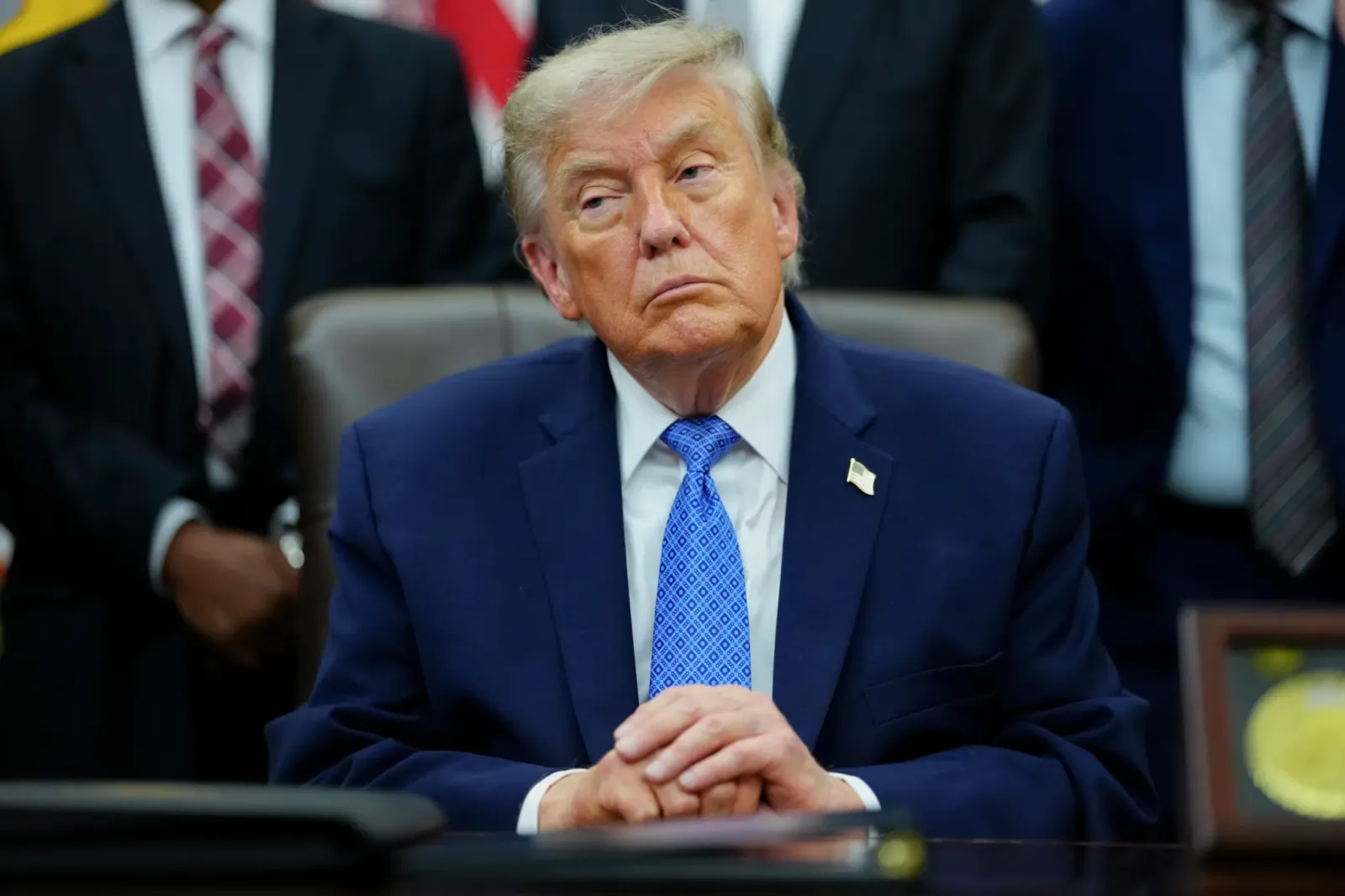
Fortune reports that U.S. Office of Government Ethics disclosures released Tuesday show President Donald Trump’s entities generated over $635 million in royalty income from his memecoin and nearly $197 million through DT Marks SC. The filings sharpen the policy fight in Congress, including lawmakers pushing the Clarity Act and demanding guardrails against profiting from crypto.
President Donald Trump is now officially a crypto billionaire, and this week’s U.S. Office of Government Ethics filing makes the money trail unusually specific. According to the disclosure released Tuesday, Trump’s business entities generated more than $635 million in royalty income from his memecoin, plus almost $600 million from World Liberty Financial, the crypto company he cofounded with his three sons and longtime associate Steve Witkoff and Witkoff’s two sons.
The same disclosure also put a spotlight on a quieter piece of his holdings: nearly $197 million through DT Marks SC, a company that owns 38.5% of Stablecoin Holdco, a Miami-based stablecoin venture. In other words, this is not just headlines about Bitcoin vibes or memecoin chatter. It is royalty-heavy revenue tied to crypto, plus meaningful exposure to stablecoin infrastructure, with the exact income channels left partly unclear in the filing.
World Liberty Financial is central to the numbers. Fortune reports that the entity connected to it received more than $33 million in annual income from Bitcoin and over $150 million from Ethereum over the course of 2025, plus about $1.8 million from staked Ethereum. The disclosure, however, “did not clearly specify how these crypto positions generated income.” That matters, because it is one thing to own crypto or trade crypto-linked assets. It is another when the portfolio looks like an operating revenue stream with multiple sources.
Trump’s disclosures also spread into a basket of altcoins and stablecoins through other companies. Through DT Marks Defi, he earned more than $5 million across several altcoins, including LINK, AAVE, ENA, MOVE, and ONDO. He also earned over $56 million from USDC, via that same setup. Again, the filing did not clearly map the mechanics from holdings to income, which becomes a governance question, not just a curiosity. If you are a policymaker or an executive in crypto, the big concern is incentives: does the structure create pressure for policy or oversight to align with portfolio outcomes, even without explicit intent?
The ethics context does not stop at the filings. Fortune notes that a January Wall Street Journal investigation found that the Trump family secretly sold a 49% stake in World Liberty Financial to Aryam Investment 1, a company backed by Abu Dhabi royal Sheikh Tahnoon bin Zayed Al Nahyan, who serves as the UAE’s national security adviser. According to Trump’s latest financial disclosure, his entities DT Marks Defi and DT Marks SC realized nearly $263 million in net proceeds from that sale. World Liberty Financial did not immediately respond to a request for comment.
Trump’s financial reporting also shows active trading in stocks tied to the crypto narrative. The disclosure showed trading of MSTR shares, which is tied to Strategy, formerly MicroStrategy, across multiple investment accounts. Fortune reports these trades were in the $15,000 to $50,000 range and gave him indirect exposure to Bitcoin. Separately, his disclosure showed buying and selling Coinbase and Robinhood shares in different investment accounts. (Eric Trump previously argued that the holdings are maintained exclusively in fully discretionary accounts managed by independent third-party financial institutions. He denied that the president, his family and The Trump Organization has any role in selecting, directing, approving, influencing or soliciting specific investments.)
Then there is the human and political overlap. Fortune writes that Michael Saylor, Strategy’s executive chairman, emerged as a key crypto ally to the Trump White House. Saylor attended Trump’s first crypto summit at the White House in March 2025, and Fortune notes that Eric Trump has said he and Saylor had a friendship spanning two decades. When market participants watch Washington, they do not only track legislation. They track access, relationships, and who shows up on the official calendar. In that sense, the disclosure is not just a record of assets. It is a map of potential influence.
All of this lands as Congress intensifies the debate over crypto market structure. Fortune reports that the disclosure comes amid scrutiny of Trump’s proximity to multiple crypto ventures while he advances a crypto-friendly agenda. Lawmakers have raised conflict of interest concerns, and the president has repeatedly rejected them. The timing is especially sharp because senators are pushing to pass the Clarity Act, a bill that would regulate crypto market structure. Critics argue the current draft lacks adequate ethics safeguards. Sen. Elizabeth Warren said in a statement on Tuesday: “The crypto legislation heading to the Senate floor must prevent the president, vice president, senior administration officials, members of Congress, and their families from profiting off the crypto industry.”
For executives and boards, the second-order stakes are obvious even if the headline is about Trump. When officials’ portfolios include royalty revenue, stablecoin infrastructure exposure, and trading in crypto-adjacent public equities, regulators and lawmakers get pulled into the question of whether guardrails are about ethics theater or real risk control. The filings lay out the ingredients of a conflict debate, whether or not you believe conflicts exist. They also raise the bar for disclosure clarity itself. In a market where incentives move fast, ambiguity is not neutral. It is fuel.
This story's Key Insights and Take-aways are locked.
Create a free account to unlock Executive Actions for one credit.
Register to UnlockAlways free for Executives Club members. Join the Club
More in Business
Comcast shares jump 25% as it plans to split NBCUniversal and Sky
The tax-free spin-off could reshape focus, funding, and competition across media and tech for years.

Bungie cuts most Destiny 2 staff as Sony says Marathon still matters
Herman Hulst confirms layoffs affecting most Destiny and some Marathon teams after Bungie admits Destiny fell short.

SK Hynix jumps 11% after seeking up to $29.4B in Nasdaq listing
The chip giant filed for a Nasdaq listing plan that could raise $29.4 billion, instantly reshaping investor expectations.