

Trump’s red line is back in play as U.S.-Iran strikes escalate after Jordan deaths
A naval blockade resumes, airstrikes hit infrastructure, and the Strait of Hormuz route effectively shuts down.
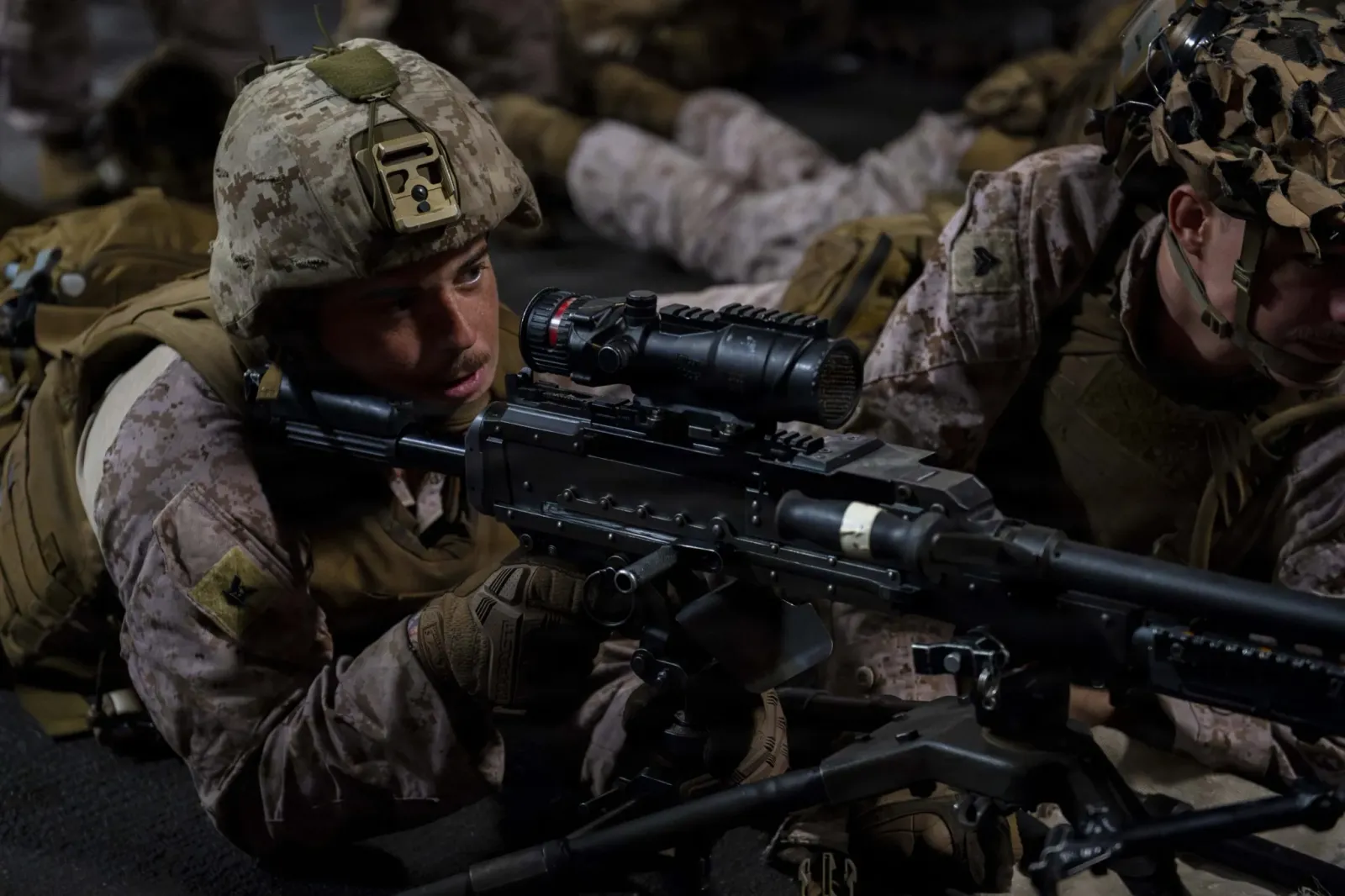
After Iran attacked a base in Jordan and U.S. service members died, the U.S. military reinstated a naval blockade and bombed Iran for several consecutive days. The result is a fast escalation that pushes the U.S. back toward the “all-out war” Trump had said he would consider if Americans are killed.
The U.S. deaths that followed Iran’s attack on a base in Jordan have put President Donald Trump’s “red line” back on the table, as fighting escalates with “no end in sight.” According to the Wall Street Journal, Trump had told aides he would consider ending the prior ceasefire and going back to war if Iran kills American troops, after a memorandum of understanding that both sides signed earlier last month collapsed.
In response to those casualties, the U.S. military has reinstated a naval blockade and bombed Iran for several consecutive days, with attacks concentrating on coastal areas near the Strait of Hormuz. But the air campaign has also extended beyond purely military targets to infrastructure such as railways that could be used to ferry weapons. Iran, for its part, has launched attacks on commercial ships and at neighbors across the Persian Gulf region, targeting U.S. military assets, while also hitting energy infrastructure and even water desalination plants.
So why does this matter beyond the battlefield? Because the conflict is now operating less like a contained, episodic standoff and more like a system with feedback loops. The source is explicit that fighting has not been as extensive as it was during the initial phases of the war. Still, Iran’s actions are designed to deny normal commerce, not just to score tactical victories. Tehran has enough combat power, the story notes, to scare away commercial shipping and is not deterred from continuing attacks.
That denial matters directly for global markets. As fighting intensified in recent days, oil prices jumped. More war, the story argues, would deliver another shock to global markets. The stakes are elevated because consuming countries have drawn down their oil stockpiles to the lowest level in decades, leaving little breathing room if the Strait of Hormuz faces another prolonged closure. In energy terms, this is not just a geopolitical story. It is an inventory story, and inventories are the buffer that usually prevent one shock from becoming a second, bigger shock.
The U.S. previously established an alternate route through the narrow water to bypass an Iranian corridor. But the renewed fighting has effectively shut it down. On Friday, no crossings via the U.S.-backed route were detected, and no shadow fleet movements were recorded either, while Iran’s route saw seven transits. That detail points to a brutal operational reality: rerouting is possible in planning, but harder once surveillance, pressure, and attacks intensify in real time.
Even after massive U.S.-Israeli bombardment, the story says the war did not bring about an overthrow of Iran’s regime and has failed to fully reopen the strait. Iran’s economy is reeling and conventional forces were decimated, but the Islamic Republic retains leverage. This is why the conflict risks sliding from “escalate and then de-escalate” into something more permanent. Ali Vaez, the Iran Project Director at the International Crisis Group, wrote in a New York Times op-ed on Wednesday that the immediate dispute concerns who controls the Strait of Hormuz, but more is at stake, warning that the “collapse of even this minimal understanding could remove the last barrier between episodic confrontation and a forever war.”
Meanwhile, any attempt to restart negotiations is running out of runway. The story describes how some officials appeared to leave room for talks even after defiant Tehran statements. But pragmatists inside Iran privately admitted the initial naval blockade had crushed the economy, and the reported resumption reportedly deepened a rift between pragmatists and hard-liners who want to fight more aggressively. On Saturday, Iran’s supreme leader warned of “unforgettable lessons” if the U.S. keeps attacking, and called Trump’s signature “worthless and invalid.” On the U.S. side, Central Command’s statement focused on casualties, while the U.S. blames Iran for violating the ceasefire agreement by refusing to reopen the strait and attacking ships sailing outside Tehran’s approved corridor.
For executives and board-level decision-makers, the second-order implication is that this is now a business-cycle risk with a live trigger. When the strait’s practical flow gets strangled, it can transmit into input costs, freight, procurement timelines, and margin assumptions faster than most companies can hedge or re-route. It also raises the policy risk for firms exposed to energy logistics, insurance, shipping, defense supply chains, and international compliance. And in parallel, the strategic logic for policymakers is narrowing: Gregory Brew, senior analyst for Iran and energy with the Eurasia Group, told Fortune’s Jordan Blum earlier that there’s no military option for reopening the strait, that Iran will not let go of its main source of leverage, and that some form of Iranian fee to cross the strait seems inevitable. He also warned that U.S. attacks only strengthen Tehran’s resolve, framing the options as escalate or cut a deal. In his view, the administration is likely to do the first, see it fail, and end up with the second.
This story's Key Insights and Take-aways are locked.
Create a free account to unlock Executive Actions for one credit.
Register to UnlockAlways free for Executives Club members. Join the Club
More in Politics

Tomi Lahren calls for Trump clarity after 2 more U.S. service members die in Jordan
Fox’s Tomi Lahren pushes for clearer objectives and a defined end-state after U.S. Central Command reports two more deaths.

France avoid World Cup 2026 humiliation, then lose to England in Deschamps' final match
Did France escape embarrassment? Yes. Did it matter? Also yes, because England’s win reshapes momentum.
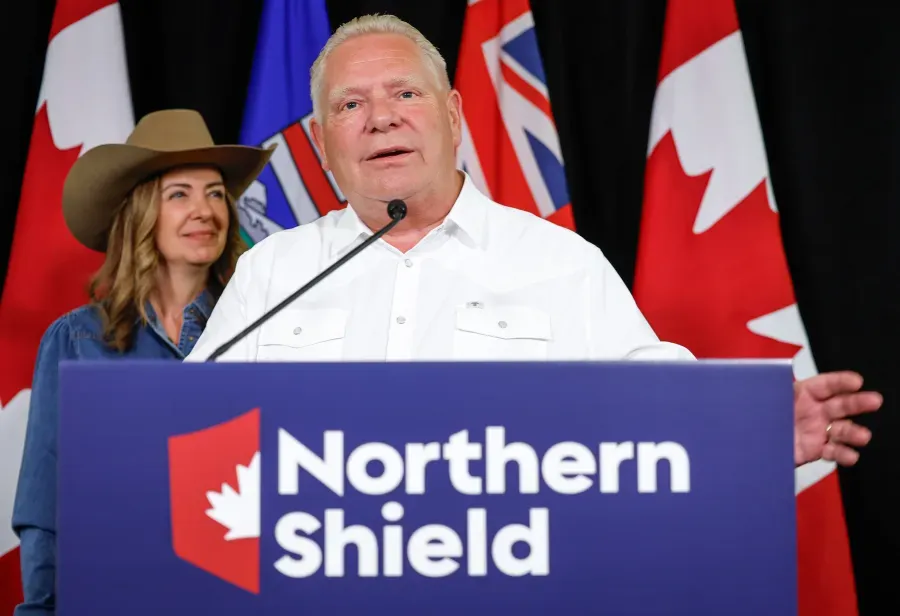
Doug Ford calls Trump wildfires rhetoric “absolutely unacceptable” during Thunder Bay briefing
Ontario’s premier rejects U.S. criticism, framing the moment as emergency response over politics, and signaling high-stakes cross-border fallout.