
Trump says he will ask the Supreme Court to rehear a citizenship case
Rehearing after a decision is rare, with the last such grant in 1965.
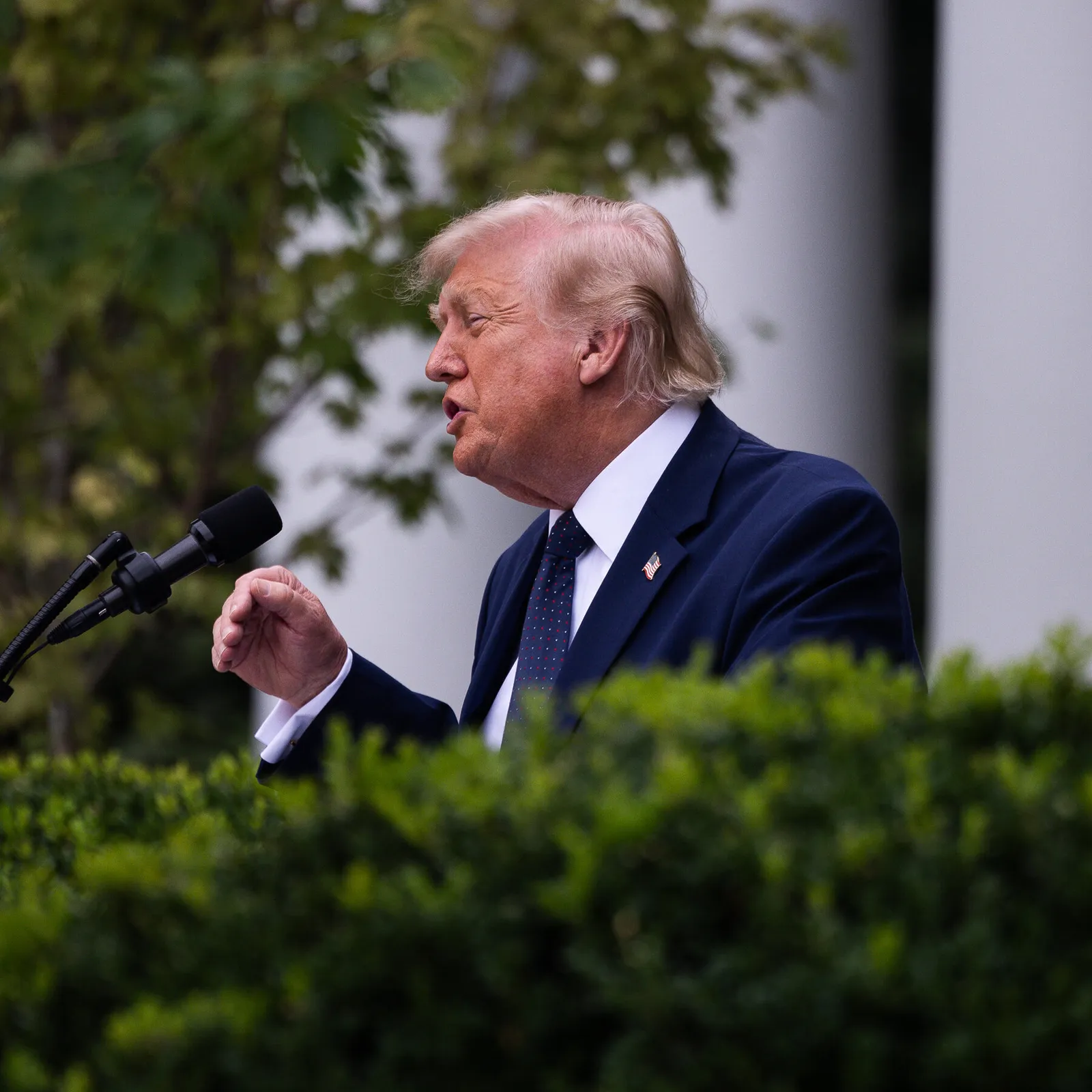
President Trump says he will ask the Supreme Court to rehear a citizenship case. The request matters because Supreme Court rehearings after decisions are exceptionally uncommon.
President Trump says he will ask the Supreme Court to rehear a citizenship case. That is an unlikely move by the court's own standards, since the last time justices granted a rehearing request after a case decision was in 1965.
The odds are not subtle: the Supreme Court has only once reversed itself after rehearing a case. In other words, even if the justices agree to take another look, history suggests the court rarely flips course once it has already ruled.
Why this matters beyond courtroom trivia is simple: citizenship cases are not just legal puzzles, they can be policy chokepoints. When the Supreme Court steps in, it sets terms that ripple through government agencies and the people who depend on those systems. For executives and decision-makers, the practical question is what happens to the operating environment when the rules governing status, rights, or eligibility are in motion. Even the possibility of rehearing can extend uncertainty, because stakeholders plan around finality. When finality gets delayed, procurement timelines, compliance processes, staffing decisions, and risk models can all get more complicated.
From a regulatory perspective, the U.S. legal system typically treats Supreme Court decisions as the settling moment. That is the whole point of the institution's authority: lower courts and agencies adjust to the ruling, then move on. Rehearing requests after a decision threaten that cadence. They do not automatically change outcomes, but they introduce a “maybe we rewire later” problem for anyone affected by the doctrine or the interpretation at issue.
There is also a governance angle. When legal outcomes hinge on the Supreme Court, boards and executives often build their oversight around two phases: what the law says now, and what could happen if the decision is disturbed. Most of the time, the “could happen” bucket stays empty because rehearing after a decision is so rare. The source makes that rarity concrete by noting the last time the justices granted such a rehearing request after a case decision was in 1965. That kind of historical scarcity is not just trivia. It tells you what the baseline expectation is for stability.
But President Trump’s statement changes the baseline conversation, at least temporarily. It signals an attempt to pull the case back into the court’s process, even after the justices have already ruled. And the source also gives a second historical anchor: the court has only once reversed itself after rehearing a case. Combine those two data points and you get the central reality for decision-makers: the ask is extraordinary, and even more extraordinary would be a reversal after the rehearing.
So what is the strategic stake? For peers in government-adjacent roles, regulated industries, or anyone running compliance-heavy operations, the key is not assuming that a rehearing request equals an outcome. Instead, it is about anticipating the administrative drag that comes with legal limbo. If stakeholders think the Supreme Court could revisit an interpretation, they may delay certain commitments or increase legal review. Agencies may hesitate on implementation details. Courts may watch for guidance. This can lead to slower execution even without a substantive change in the end result.
For executives, the smart move is to treat this as a timing and risk management story. Supreme Court events often create downstream effects, but the magnitude depends on whether the court actually grants rehearing and whether it reverses itself. The source underscores both constraints: rehearing after a decision last happened in 1965, and reversals after rehearing have happened only once. That means the highest-confidence planning assumption remains: legal finality usually holds. Still, the statement by President Trump adds just enough uncertainty to matter, especially for organizations that cannot tolerate abrupt regulatory shifts.
In the end, the headline fact is clear: President Trump says he will ask the Supreme Court to rehear a citizenship case. The supporting context is even clearer: Supreme Court rehearings after decisions are extraordinary, with the last grant in 1965, and reversals after rehearing happening only once. For decision-makers, the lesson is to respect how rarely the court does this, while also planning for the second-order uncertainty that can follow when the process gets reopened.
This story's Key Insights and Take-aways are locked.
Create a free account to unlock Executive Actions for one credit.
Register to UnlockAlways free for Executives Club members. Join the Club
More in Politics

Glacial collapse, not rain, killed 180 in Nepal's Himalayan flood
The Himalaya's extreme geography hid the true cause of Nepal's catastrophic flood, a glacial collapse that turned a geological battleground into a mass-casualty zone.

Iran’s Esmail Baghaei says Oman talks start shipping via Hormuz, not US talks yet
Temporary route plans with Oman aim to restart commerce while Tehran says Washington dialogue is not on the table.

Standards watchdog opens probe into Reform UK deputy leader Richard Tice over interests
The parliamentary standards commissioner says it began an investigation on 28 July into a possible undeclared interest.