
US strikes Iran a second day after Trump says Iran-war deal is “over”
Explosions reported in Bandar Abbas, Sirik, and Bushehr hours after the interim talks collapse, escalating risks for markets.
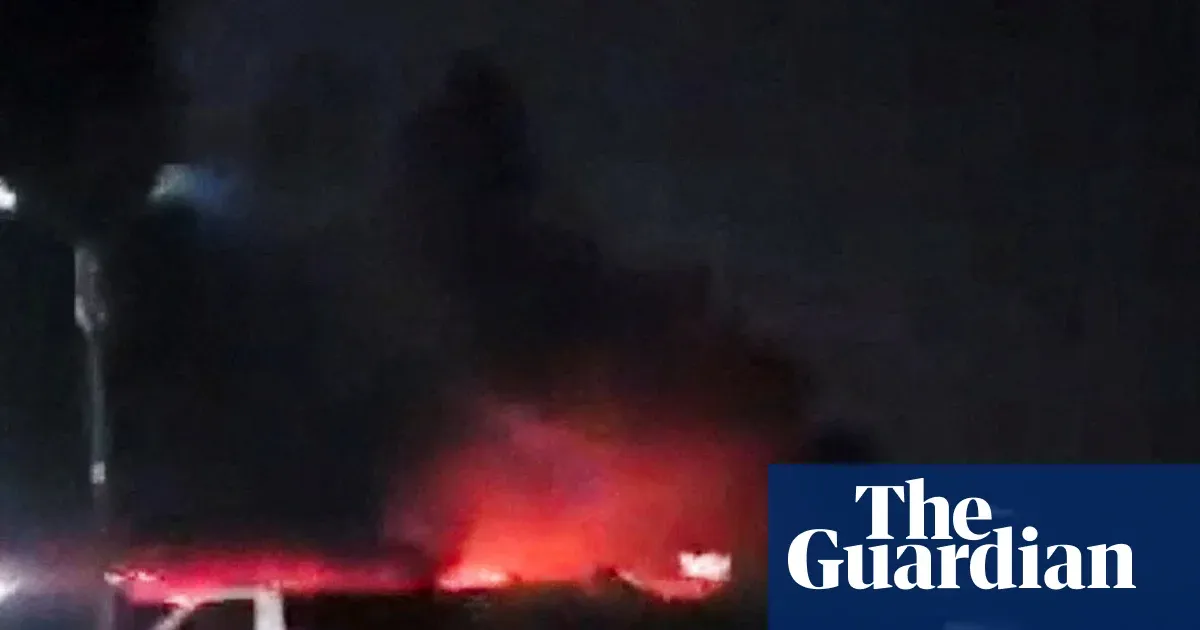
The US military carried out strikes on Iran for a second day after President Donald Trump said an interim agreement to end the war was “over”. Iranian state media reported explosions in Bandar Abbas, Sirik, and Iran’s Bushehr province.
The US military carried out strikes on Iran for a second day, after President Donald Trump said an interim agreement to end the war was “over”. The timing is the story here: the attacks came hours after Trump’s declaration, and they landed as Iranian state media reported explosions in three separate locations, underscoring how quickly diplomacy and deterrence collided.
Late on Wednesday, Iranian state media reported explosions in the port city of Bandar Abbas in the strait of Hormuz, as well as in Sirik, another southern coastal city, and the south-western Bushehr province. Bushehr matters beyond geography because the province is home to Iran’s nuclear-power-plant complex. Put simply, this was not only about immediate pressure near shipping lanes. It was also about signaling that the broader strategic footprint of Iran is on the table.
The strikes follow a pattern the source points to clearly: the attacks came after three tankers in the strait of Hormuz were targeted on Tuesday. That detail matters for decision-makers because it ties the current escalation to maritime security in one of the world’s most strategically dense chokepoints. The strait is where energy logistics, insurance pricing, and shipping schedules all intersect, so any disruption tends to echo far beyond the coastline that first gets hit.
For executives and investors, the second-order effect is that “interim agreements” are not a soft landing. They are often fragile bridges, and when a leader says the agreement is “over,” markets generally treat that as permission to re-price risk. The source does not claim causality beyond timing, but it does connect the dots that matter: strikes continuing into a second day, and their start coming after Trump’s statement. When negotiations hinge on political statements, the calendar becomes a trigger, not a background detail.
There is also a governance and communications dimension. In fast-moving conflicts, public statements can tighten constraints for all sides. If an interim deal is declared dead, it becomes harder for officials to walk back positions without either appearing to lose leverage or inviting a new round of retaliation. That dynamic can extend beyond the immediate actors, pulling in companies that operate across affected regions and supply chains that depend on predictable logistics.
Still, it is not just about headlines. Iranian state media specifically flagged three locations: Bandar Abbas, Sirik, and Bushehr. Bandar Abbas is a port city on the strait of Hormuz, tying the incident to shipping and regional access. Sirik is another southern coastal city, reinforcing the idea that coastal pressure is part of the operational geography. Bushehr, home to Iran’s nuclear-power-plant complex, adds a layer of strategic sensitivity. Even if the intent is deterrence or disruption, strikes that land near nuclear-linked infrastructure are the kinds of events that can change how regulators and counterparties assess compliance risk, contingency planning, and severity thresholds.
This is where the boardroom angle bites. When conflict escalates in proximity to energy and nuclear-adjacent assets, the risk management workload usually rises quickly: insurers reassess exposure, shippers adjust routing and delivery times, and legal teams revisit sanctions and operational compliance. Those are not abstract concerns. They become cash flow concerns when timelines slip and insurance costs increase, or when customer contracts require revised risk assumptions.
For peers in leadership roles, the strategic stake is straightforward. The source shows the escalation is immediate and geographically specific, and it is linked to a political turn from “interim agreement” to “over.” The question for decision-makers is not only what happens on the ground, but how quickly disruptions propagate into shipping, energy pricing, and compliance burdens. In an environment where a declaration can precede strikes within hours, contingency plans stop being a slide deck and start being an operating system.
This story's Key Insights and Take-aways are locked.
Create a free account to unlock Executive Actions for one credit.
Register to UnlockAlways free for Executives Club members. Join the Club
More in Politics

Glacial collapse, not rain, killed 180 in Nepal's Himalayan flood
The Himalaya's extreme geography hid the true cause of Nepal's catastrophic flood, a glacial collapse that turned a geological battleground into a mass-casualty zone.

Iran’s Esmail Baghaei says Oman talks start shipping via Hormuz, not US talks yet
Temporary route plans with Oman aim to restart commerce while Tehran says Washington dialogue is not on the table.

Standards watchdog opens probe into Reform UK deputy leader Richard Tice over interests
The parliamentary standards commissioner says it began an investigation on 28 July into a possible undeclared interest.