

Trump told Congress military action against Iran started July 7
A reported notification raises the stakes for US companies, markets, and risk managers planning for escalation.
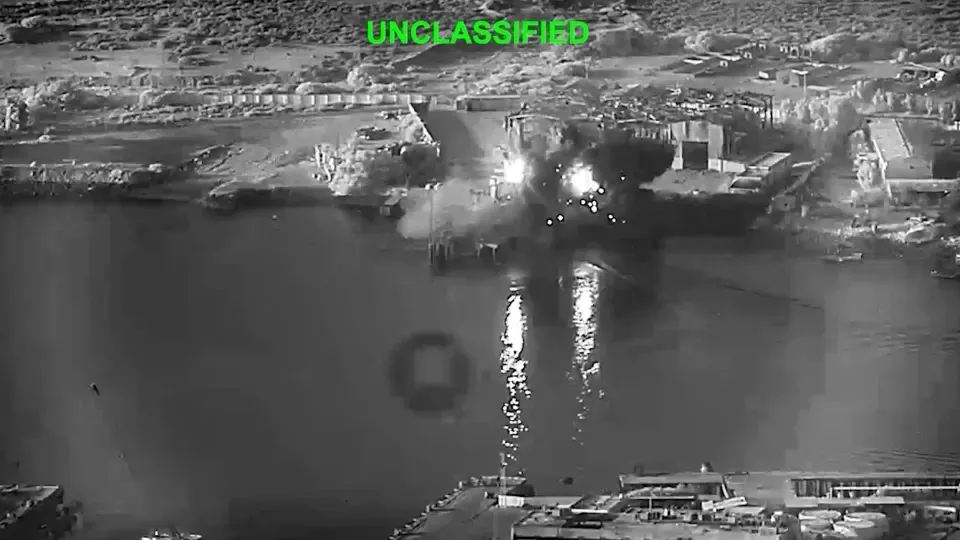
President Donald Trump reportedly notified Congress that
Last week, President Donald Trump reportedly notified Congress that "military action" against Iran commenced July 7. That single reported phrase matters because it signals a shift from tense diplomacy into an operational posture that can quickly expand in scope and duration.
Why should decision-makers care about a congressional notification? Because the move changes how regulators, insurers, counterparties, and investors think about legal exposure and physical risk. When "military action" begins, compliance and risk teams stop treating Iran as a sanctions-only problem and start planning for disruption: supply chains, shipping routes, payment rails, and even basic ability to operate.
Zoom out and you get the real context: US policy toward Iran has for years blended sanctions with diplomatic pressure. In that system, businesses usually plan around definable rules: what payments are allowed, which entities are restricted, what goods face licensing requirements. Military escalation blows a hole through that kind of planning. Even when sanctions regimes stay the same on paper, enforcement priorities, routing decisions, and contracting standards can tighten fast. The reported July 7 start date effectively becomes a new timeline risk managers will anchor to.
It also reframes incentives inside companies. Board members and executive teams are not just asking, "Can we comply?" They are asking, "Can we keep operating if this expands?" That changes spending patterns toward contingency plans, country risk reviews, legal audits, and insurance discussions. It also pressures treasury and procurement leaders to revisit counterparty exposure, because in high-tension environments, counterparties can become reluctant to process transactions or ship goods even if a transaction is technically permitted.
There is another layer that matters for investors and corporate finance leaders. Capital markets tend to price risk quickly, but they price it imperfectly until the operational story becomes clearer. A reported notification that "military action" commenced on a specific date creates a hard anchor for scenario models. Analysts can revise assumptions about timelines, trade impacts, and volatility in energy and security-related categories. Even executives outside the energy and defense sectors feel it when volatility shows up as higher funding costs, tighter credit, and a faster move from "hedge later" to "hedge now."
Historically, periods of armed escalation between major parties produce a second-order effect that is easy to underestimate: the compliance perimeter expands. For example, teams may re-check not only direct dealings but also indirect relationships like logistics partners, re-shippers, customs brokers, and financial intermediaries. A notification to Congress is not a corporate directive, but it is a signal that the government is treating the situation as real and underway. That typically leads to a more conservative posture across the ecosystem, from insurers to banks to vendors.
So what is the strategic stake for peers in similar roles? It is time. Boards and executive teams need to decide whether they can continue business as usual, or whether they must shift to escalation mode: document decisions, stress test exposures on the date the operation began, and align legal, treasury, operations, and communications. In an escalation scenario, the cost of being slow is not abstract. It can be wasted capital, failed transactions, insurance denials, or a reputational hit if the company looks reactive rather than prepared.
Bottom line: the reported notification that "military action" against Iran commenced July 7 is a clear inflection point. For executives, it means risk planning cannot wait for clearer headlines. It has to start now, with specific dates, specific exposures, and a board-level view of how the operating environment may change next.
This story's Key Insights and Take-aways are locked.
Create a free account to unlock Executive Actions for one credit.
Register to UnlockAlways free for Executives Club members. Join the Club
More in Politics

LA County: DOJ's 20,000 'noncitizen' voter list is 'unreliable,' includes U.S.-born
Preliminary review by Los Angeles County election officials finds errors in the federal list, raising the stakes for voter roll integrity ahead of November.

Trump's $1.5B Pentagon chip investment lands in North Carolina
A $1.5 billion defense infusion for North Carolina chipmaking signals a new era of Pentagon-backed reshoring - here's what it means for the industry.

Nigeria confirms first Ebola case in Abuja, a woman just off a Uganda flight
Health Minister Muhammad Ali Pate says the patient flew in from Uganda, putting Africa's latest outbreak on Nigeria's doorstep.