

TSMC’s CFO Wendell Huang accelerates Arizona buildout to meet AI-driven demand
TSMC says a surge in customer orders is pushing faster construction in Arizona, with major ripple effects for chips, supply, and capital plans.
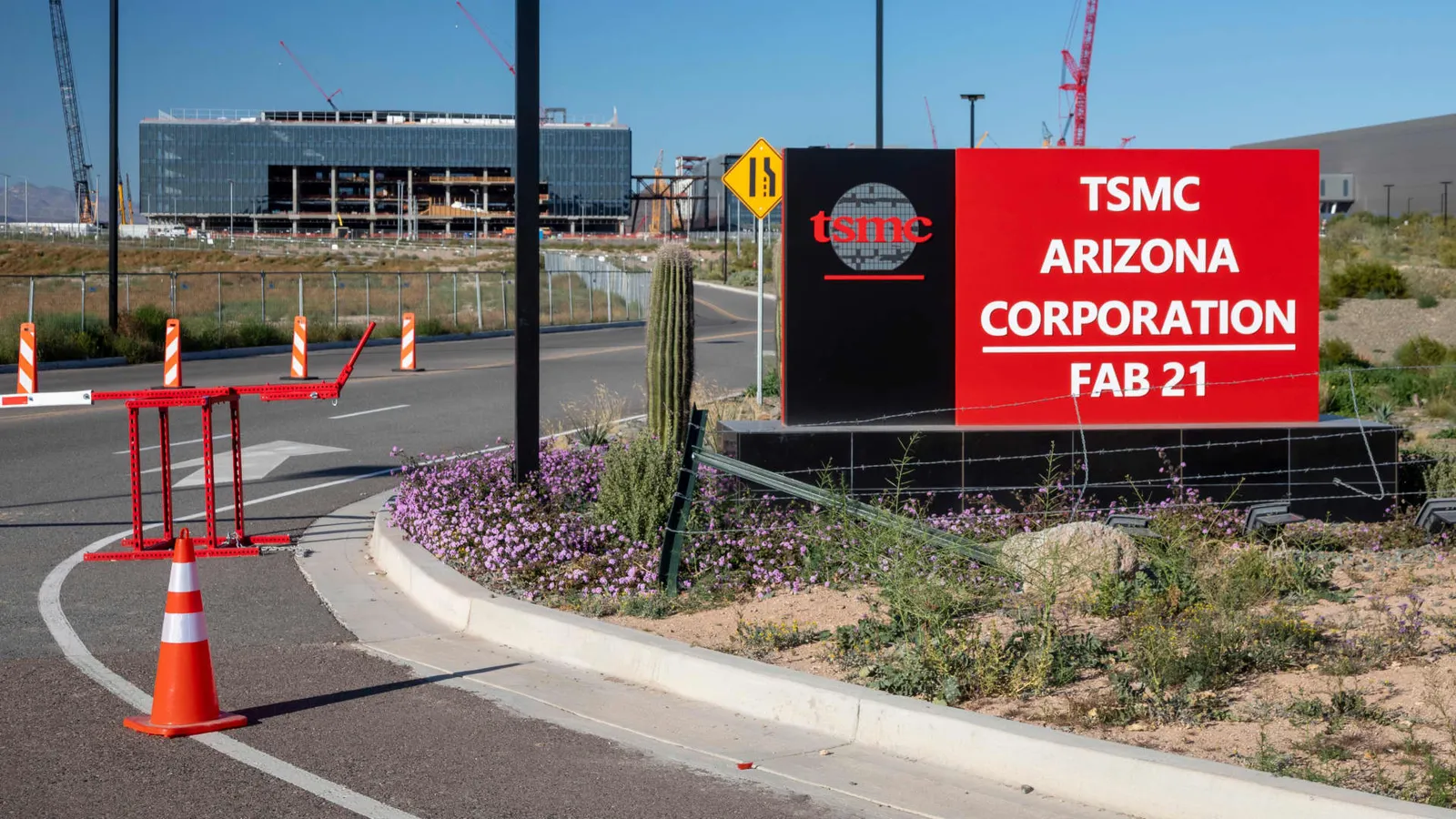
TSMC CFO Wendell Huang told CNBC in an exclusive interview that the company is accelerating its Arizona factory buildout. He linked the fresh investment to robust customer demand, positioning TSMC to capture AI-related orders as the “megatrend” builds momentum.
TSMC CFO Wendell Huang said on CNBC that the company is accelerating its Arizona factory buildout, aiming to capitalize on an AI “megatrend.” In an exclusive interview, Huang tied the new investment to robust customer demand. In other words, this is not TSMC doing long-term planning in a vacuum. It is responding to orders that are already showing up in the market, and it is choosing to build faster to keep pace.
For decision-makers, the important part is the direction of travel. Huang’s framing suggests that customer demand for advanced chips is strong enough to justify pulling forward capacity expansion in Arizona, not just sustaining it. That matters because in semiconductor manufacturing, lead times are measured in years, not quarters. When a foundry accelerates a buildout, customers are effectively signaling they expect supply constraints, and they want their partners to reduce the risk of shortages or delayed ramp-ups.
To understand why “accelerating” is a big deal, you have to zoom out on what a move like this represents in the chip industry. A modern fabrication plant is not like a data center where you can add compute quickly. Building capacity requires complex supply chains, specialized equipment, trained personnel, and a whole ecosystem of suppliers and infrastructure. That is why the word “buildout” is doing heavy lifting here: it is capital allocation with multi-year consequences. If demand holds, accelerating Arizona construction can translate into more throughput when customers need it most. If demand softens, it can also increase the risk of underutilization. But by connecting the move to “robust customer demand,” TSMC is essentially staking its near-term capital plan on the idea that AI-driven demand is not just hype.
There is also a policy dimension lurking underneath the engineering. Semiconductor manufacturing is increasingly treated as critical infrastructure, not just an industrial sector. The United States and other governments have pushed to bring more advanced chip production closer to home, partly to reduce geopolitical and supply chain risk. That broader regulatory and policy momentum is exactly the environment where new fabs in places like Arizona become strategically attractive. When TSMC accelerates buildout in the US, it is aligning with the direction of travel on industrial policy, even if the company is not making policy arguments in the quote itself. Investors and board members, meanwhile, typically care about the combination of market demand and policy tailwinds because it can affect permitting timelines, funding environments, and long-run operating resilience.
For TSMC’s customers, this kind of acceleration can reduce planning friction. Chip designers often have to secure manufacturing capacity far in advance, especially for leading-edge processes. When a foundry accelerates, it can give customers more confidence that they can hit product schedules, especially for AI workloads that typically require both compute capacity and advanced chips. For peers in the supply chain, including equipment suppliers, materials providers, and logistics partners, the signal is that capital spending will likely stay elevated as long as customer demand remains “robust.” That can help stabilize revenue planning, even if individual product cycles are volatile.
Second-order, the biggest board-level implication is capital discipline versus competitive positioning. Foundry economics can swing based on utilization, and utilization depends on whether customers can actually consume the output profitably. By linking the Arizona acceleration to current demand, Huang’s message is that TSMC is trying to lock in competitive advantage while the window is open. This is also a subtle reminder that AI is shaping not only what gets built, but where the factories get built and how quickly capacity gets added. The “megatrend” framing matters because it suggests TSMC views demand as structural, not just seasonal.
In the end, the strategic stakes extend beyond Arizona. TSMC is effectively telling the market it expects AI-linked chip demand to remain strong enough to justify faster manufacturing buildouts in a key US location. For executives at chip designers, investors monitoring capex cycles, and board members overseeing industrial strategy, this is a practical question: can your plans assume supply will scale on time? Huang’s answer, in CNBC’s exclusive interview, is that TSMC is accelerating construction now to meet the demand it is already seeing.
This story's Key Insights and Take-aways are locked.
Create a free account to unlock Executive Actions for one credit.
Register to UnlockAlways free for Executives Club members. Join the Club
More in Business

Uber buys Delivery Hero for nearly $15B, vaulting to top food delivery outside China
The deal doubles Uber's dual-services footprint and pushes a ride-and-eats bundling play into 50 more markets.

Epic and Google drop settlement bid, forcing rival Android app stores by July 22
Google told the court it is ready to carry third-party app stores starting Wednesday, July 22.
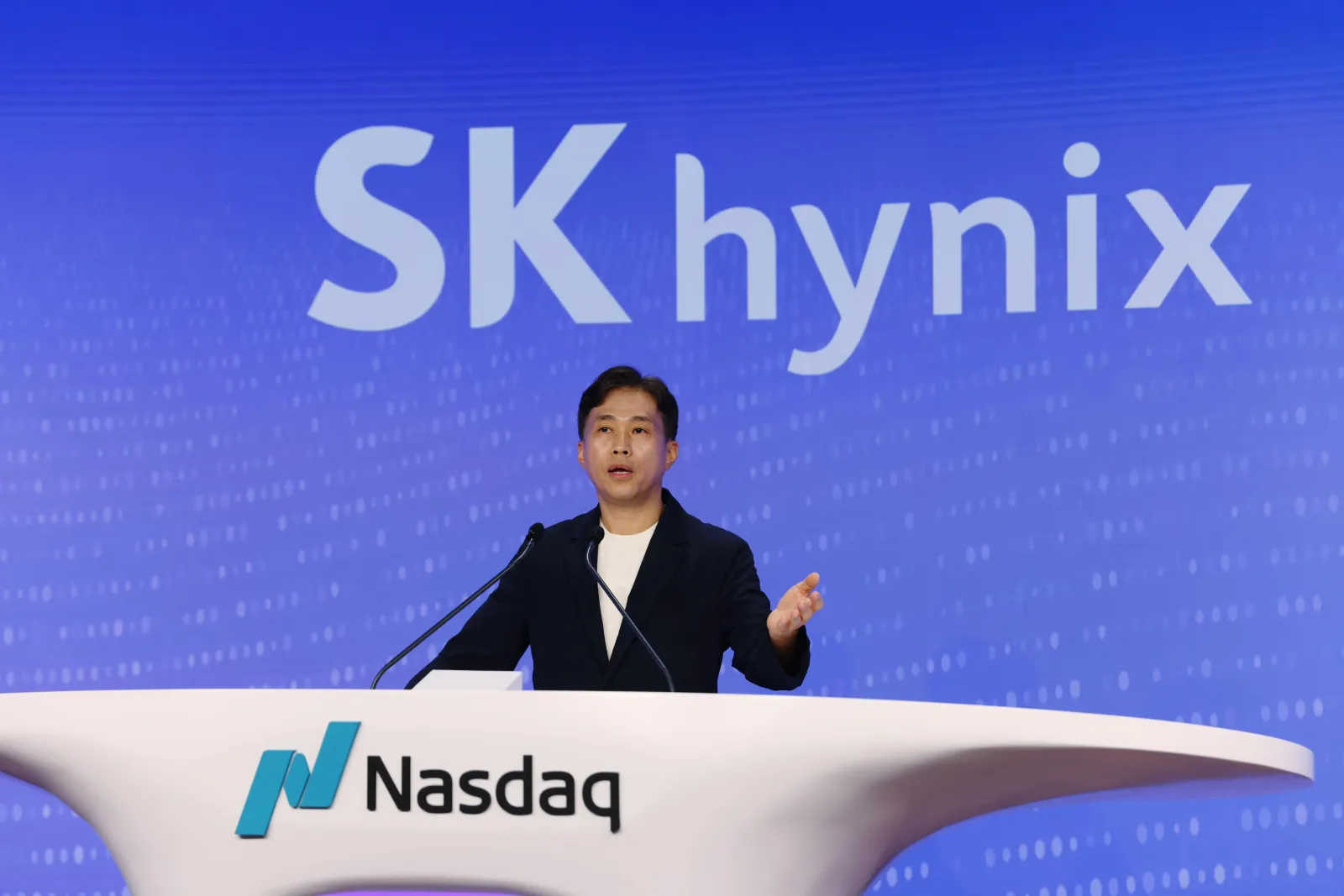
SK Hynix opens at $170, raises $26.5B, and tops foreign IPO records
In Friday's Wall Street debut, SK Hynix turns AI RAM demand into a $26.5B fundraising moment that rewrites comps.