
Two U.S. troops die, another missing after Iran-fired attack on Jordan base
Casualties arrive as Iran suspends interim nuclear deal commitments and both sides escalate air and maritime pressure.

The U.S. military says two U.S. service members were killed and another is missing after an attack on a base in Jordan. At the same time, Iran’s supreme leader warned President Donald Trump’s signature is “worthless and invalid,” while Iran suspends commitments under an interim deal signed about a month ago.
Two U.S. troops are dead and another is missing after an attack on a base in Jordan involving direct Iranian fire, according to the U.S. military. The deaths were announced on Saturday, and the statement says the service members were killed on Friday as U.S. and partner forces defended against Iranian ballistic missile and drone attacks.
The U.S. military also said four other service members who were medically evacuated to Jordanian hospitals were later discharged, and it did not identify the dead. Since the war began, the U.S. now says 16 U.S. service members have been killed and over 430 wounded, a grim running tally that matters not just for families but for every decision-maker watching whether this conflict widens or stalls.
What makes this moment even more combustible is timing. Minutes earlier, Iran’s supreme leader issued threats on state TV, warning of “unforgettable lessons” if the United States keeps attacking the Islamic Republic. The remarks, attributed to Mojtaba Khamenei, also called President Donald Trump’s signature “worthless and invalid.” The comments arrive hours after a negotiator said Tehran was suspending its commitments to the interim deal signed about a month ago. In other words, battlefield escalations and nuclear-diplomacy escalations are happening on the same clock.
That interim deal was aimed at permanently ending the fighting, but Tehran’s declarations “snapped another fragile thread as the war shows no end in sight,” per the reporting. Kazem Gharibabadi, Iran’s deputy foreign minister, told state TV that the U.S. “violated its commitments under the deal” and that Iran is now “no longer implementing them.” The U.S. and Iran have been exchanging strikes aimed at infrastructure and military targets, and the conflict has increasingly leaned into control of the Strait of Hormuz, an essential chokepoint that previously carried about a fifth of the world’s crude oil.
When leaders talk about infrastructure strikes, the second-order effect is often underpriced by people who focus only on military headlines. If you disrupt desalination and power, you disrupt daily life and you disrupt economic continuity. The reporting cites strikes that threaten civilians and services, including desalination plants for drinking water. The U.S. Central Command said its seventh straight night of strikes early Saturday hit “surveillance sites, military logistics infrastructure, underground weapons storage, and maritime capabilities.” Meanwhile, Iranian authorities reported deaths and injuries from U.S. strikes over the past three weeks, saying at least 50 were killed and more than 500 wounded, including eight killed in a strike on a bridge Friday. Separately, U.S. officials acknowledged 13 additional U.S. service members had been injured since Monday, listing 10 Army soldiers and three Navy sailors, without adding details.
Outside the battlefield, regional impacts are showing up in the places boards usually only notice when it hits supply chains. Kuwait, for example, saw “the most significant damage” from Iranian strikes on Saturday, with a water desalination plant and an oil facility hit, according to Kuwait authorities and the Kuwait Petroleum Corporation. Kuwait declined to provide locations. The strikes injured several people at the oil facility and caused a fire at the desalination plant, forcing several power generation units offline. The Kuwait Fire Force said several firefighters and a worker were injured while battling two other blazes sparked by Iranian strikes. It was also the second attack against a desalination plant in two days in the desert nation that depends on desalination for 90% of its drinking water. Kuwait briefly closed its airspace due to missile threats, and Kuwait Airways said it was rescheduling most flights to and from the capital. Iran also said Iraq shot down attack drones over Erbil.
The ripple effects extend to air defenses and political accountability. Jordan’s state-run Petra news agency reported the kingdom’s air defense systems downed Iranian missiles, while air sirens sounded multiple times in Bahrain throughout the day and in Saudi Arabia in the morning, according to their governments. Jasem Mohamed al-Budaiwi, the secretary general of the six-nation Gulf Cooperation Council, accused Iran of war crimes for strikes on infrastructure and civilian facilities. In parallel, Iranian state TV reported U.S. airstrikes hit an electricity and desalination plant in Iran’s southern Hormozgan province, with IRNA saying the Bonji desalination plant was destroyed, cutting off water supplies to about 10,000 people, and that a desalination plant on strategic Qeshm Island inside the strait was damaged. IRNA also said overnight strikes damaged two tunnels and a bridge, disrupting one of the main highways toward Bandar Abbas, Iran’s main port near the narrowest part of the strait, and that three bridges were hit Saturday, including one on a route to Bandar Abbas.
For executives, the most important business relevance is that shipping and energy pricing do not wait for de-escalation language. Iran effectively closed the Strait of Hormuz to shipping traffic after the war started with U.S. and Israeli strikes on Feb. 28. Crossings through the strait fell to a three-week low, according to an international shipping tracker, and Tehran has said the strait must be under its sole control and that vessels should pay fees to Iran, even though the world for decades has treated it as an international waterway. It fired on ships on recent days. The U.S. has reportedly reimposed a naval blockade on Iranian ports to halt crude oil shipments. A growing portion of the region’s energy is being shipped through pipelines, but not enough to offset the decline in shipping.
Boardrooms should treat this as a two-track risk story: military casualty counts are rising, and nuclear diplomacy is fraying. Because Trump has resumed threats to target power stations and bridges to compel Iran to loosen its hold, political pressure to end the war without triggering a prolonged Middle East conflict is also part of the equation. The immediate stakes are clear: 16 U.S. killed and over 430 wounded since the war began, plus new damage to water, power, and maritime capability. The strategic stakes for peers are just as real: when infrastructure becomes a primary target, even companies far from the region can feel the blast radius through energy markets, logistics, and regulatory scrutiny of exposure to sanctioned or high-risk routes.
This story's Key Insights and Take-aways are locked.
Create a free account to unlock Executive Actions for one credit.
Register to UnlockAlways free for Executives Club members. Join the Club
More in Politics

LA County: DOJ's 20,000 'noncitizen' voter list is 'unreliable,' includes U.S.-born
Preliminary review by Los Angeles County election officials finds errors in the federal list, raising the stakes for voter roll integrity ahead of November.

Trump's $1.5B Pentagon chip investment lands in North Carolina
A $1.5 billion defense infusion for North Carolina chipmaking signals a new era of Pentagon-backed reshoring - here's what it means for the industry.
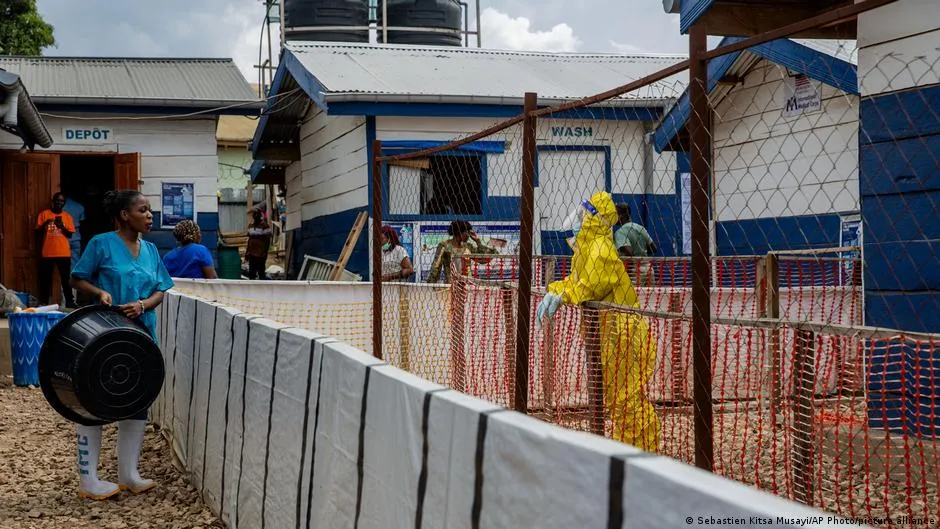
Nigeria confirms first Ebola case in Abuja, a woman just off a Uganda flight
Health Minister Muhammad Ali Pate says the patient flew in from Uganda, putting Africa's latest outbreak on Nigeria's doorstep.