
Tyler Perry Studios lands multi-year virtual production soundstage deal with Synapse
A new Atlanta facility puts Perry’s production machine into the virtual production era, with multi-year momentum.
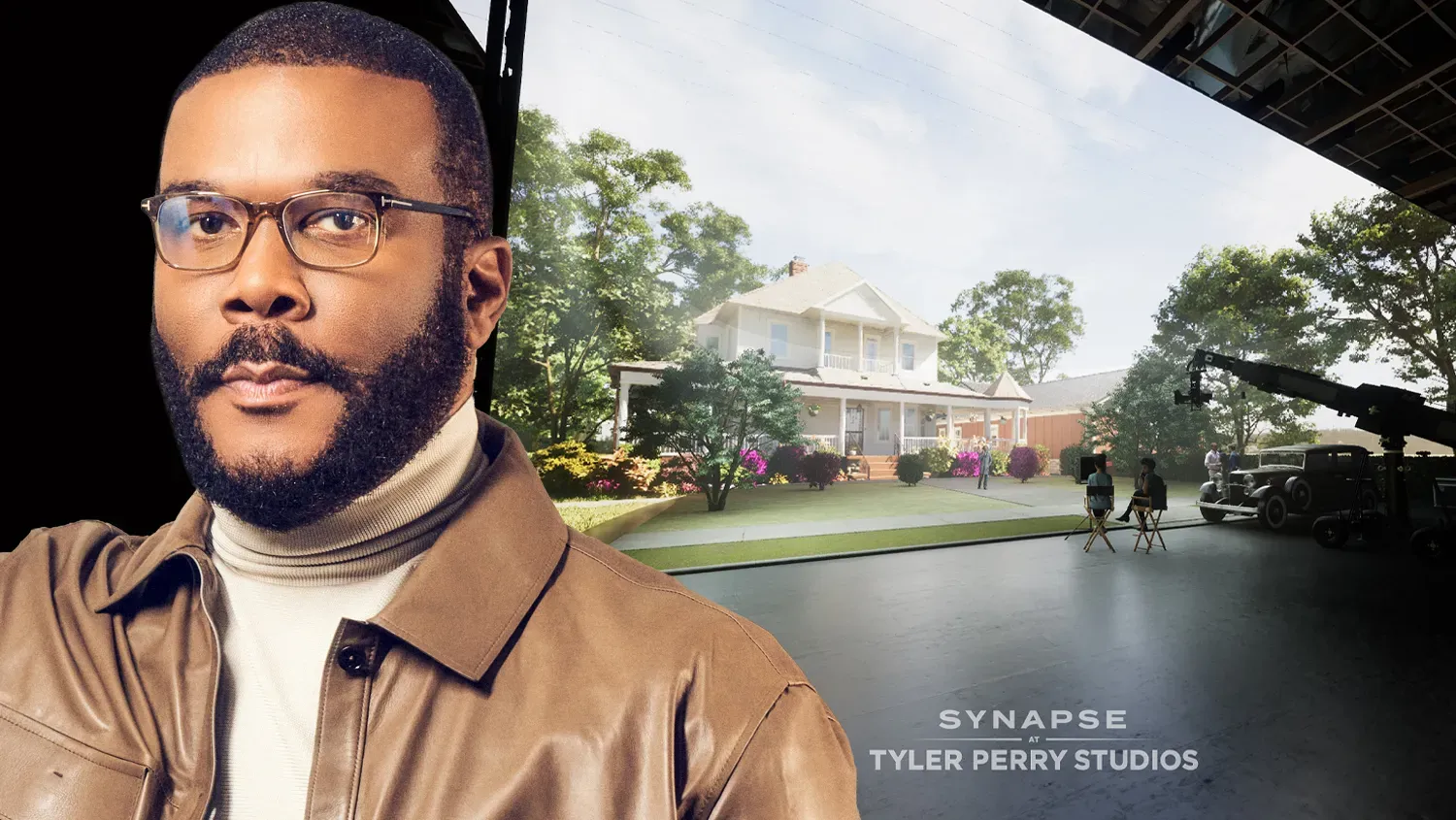
Tyler Perry Studios is striking a multi-year deal to launch a virtual production soundstage in partnership with Synapse. For decision-makers, it signals how studios are reallocating capex and workflow to reduce on-set friction and increase production flexibility.
Tyler Perry Studios is taking a multi-year step into virtual production, launching a new soundstage in Atlanta in partnership with Synapse. The “EXCLUSIVE” Deadline report frames it as another adaptation move for Perry’s production operation, one built on restarting filming early in the pandemic with Covid protocols, then evolving again as the industry’s tooling changed.
In plain terms: Perry’s studio is adding a virtual production capability, and it is doing it via a multi-year partnership rather than a one-off pilot. That matters because virtual production is not just a new camera trick. It is a workflow shift that can change how teams plan shoots, how production schedules get locked, and how much work happens off-set before a scene ever starts rolling.
To understand why executives should care, it helps to map what virtual production is trying to solve. Traditional productions are hostage to many variables: weather, locations, crew availability, and the reality that physical environments take time to build. Virtual production aims to compress those variables by using digital environments and real-time visual rendering. The biggest operational payoff is usually schedule and control, because the set becomes more like a production system than a construction project.
Deadline also situates this move in a broader pandemic-era pattern. Tyler Perry Studios in Atlanta was among the first to restart filming during the pandemic using Covid protocols. That detail signals something important about incentives. Studios that learned to operate safely and consistently in uncertain conditions were more likely to invest in technologies that reduce uncertainty rather than add complexity. If you can run a disciplined set under strict health constraints, you are primed to ask whether virtual pipelines can further standardize production output.
There is also a partnership angle that boards and CFOs will read between the lines. A multi-year deal with a specific partner, in this case Synapse, suggests the studio is betting on a repeatable capability, not an experimental phase. Multi-year commitments tend to reflect pricing structure, resource planning, and integration timelines. In other words, Perry Studios is signaling that virtual production is becoming part of its long-term production strategy, which affects vendor relationships, budgeting assumptions, and internal staffing needs.
The Synapse partnership also underscores how the virtual production ecosystem is consolidating around specialized providers. Virtual production requires more than software. It involves technical direction, production design workflows, and the integration of capture, rendering, and on-set playback. For decision-makers, that can mean dependency risk, but it can also mean faster iteration and less in-house trial-and-error. The trade is straightforward: you lock in a partner for operational leverage, and you accept that your performance is tied to that partner’s platform and support.
From a capital allocation perspective, virtual production soundstages can be attractive because they potentially increase throughput. The pitch executives usually hear is higher production efficiency, improved pre-production planning, and the ability to pivot without rebuilding everything from scratch. Even without getting into unreported financial figures, the direction is clear: a soundstage is a long-lived asset. Launching it as part of a multi-year deal suggests Perry Studios expects ongoing demand that justifies the investment.
Finally, this is the kind of move that changes how peers think about production resilience. The pandemic taught the industry that “business as usual” can disappear quickly. Virtual production is positioned as a technology response, but it is also an organizational one. Perry Studios is treating workflow modernization as a competitive advantage, much like it did with Covid protocols when the industry was scrambling to restart. If more studios follow the same path, executives across entertainment, tech, and content production will feel pressure to modernize planning cycles, vendor stacks, and operational KPIs. The strategic stakes are simple: the studios that can produce reliably, with fewer surprises, tend to win the calendar. Perry Studios is building its way toward that future, starting with a Synapse-powered soundstage in Atlanta.
This story's Key Insights and Take-aways are locked.
Create a free account to unlock Executive Actions for one credit.
Register to UnlockAlways free for Executives Club members. Join the Club
More in Entertainment

12TB Steam 'teraleak' goes beyond Valve: GTA 3, Mafia 2 prototypes exposed
A 12-terabyte dump of Steam data reveals prototypes and builds of third-party classics like GTA 3 and Mafia 2, plus unreleased Valve content, rewriting game history.

LinkedIn's romance problem: 1 in 4 workers say dating on it is fair game
A new survey shows a quarter of U.S. employees treat the professional network as fair game for romance, even as LinkedIn bans it and removes hundreds of thousands of offending posts.

Enhypen's first No. 1 album breaks K-pop's Billboard 200 streak
The K-pop group's 98,000-unit debut tops the chart while Dolly Parton's catalog reentry shows how death reshapes streaming.