

U.S. launches “swiftly punish” Iran airstrikes after Jordan deaths, targeting Strait of Hormuz leverage
Central Command says strikes aim to degrade Iran’s ability to disrupt oil tanker traffic through Hormuz amid rising regional attacks.
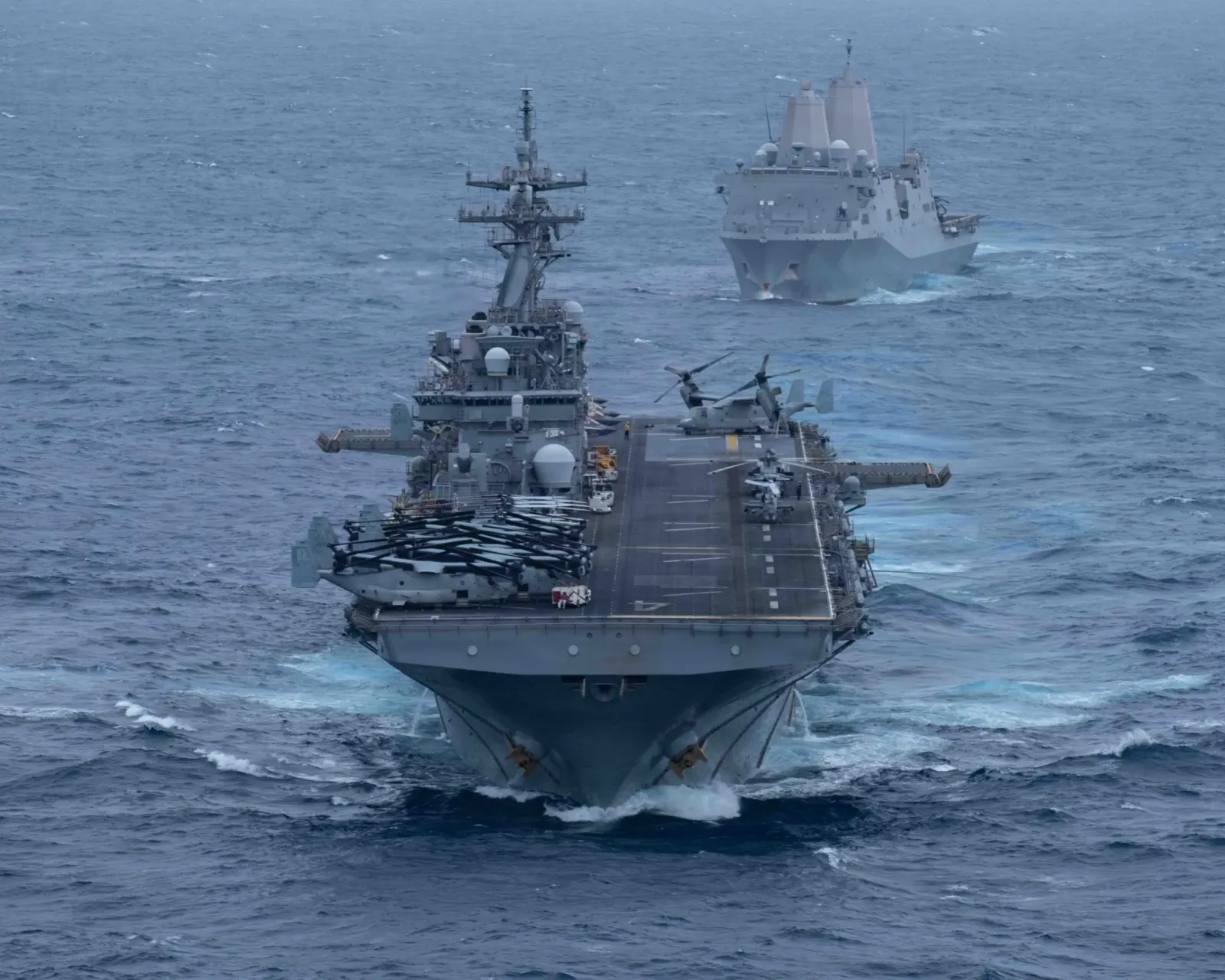
U.S. Central Command announced it launched new airstrikes against Iran’s Revolutionary Guard after an attack in Jordan killed two American service members, left one missing, and hospitalized four. The consequence for decision-makers: the fight now directly targets Strait of Hormuz disruptions, raising shock risks for energy, infrastructure, and global logistics.
The U.S. military launched new airstrikes against Iran, describing the move as a way to “swiftly punish” the Revolutionary Guard after an attack in Jordan that killed two American service members, left one more missing, and hospitalized four. U.S. Central Command also said the strikes are designed to further degrade Iran’s ability to restrict the traffic of oil tankers through the Strait of Hormuz, a chokepoint that accounted for roughly 20% of global oil supplies before the war.
This is not just another tit-for-tat headline in a widening conflict. Central Command is aiming at the mechanism that changes energy prices and reroutes global trade: if Iran can restrict tanker traffic through Hormuz, the world feels it quickly. The story puts that leverage front and center while also underscoring how fast the casualty count is climbing, with the U.S. saying that since the war began 16 U.S. service members have been killed and over 430 wounded. The dead were not identified. Minutes before the announcement, Iran’s supreme leader warned of “unforgettable lessons” if the U.S. keeps attacking the Islamic Republic, and those remarks were read out on state TV and attributed to Mojtaba Khamenei, still unseen since the war began.
Why executives should care: once both sides treat control of infrastructure and sea lanes as strategic weapons, the “cost” of escalation stops being abstract and starts showing up in power systems, water supplies, shipping schedules, and insurer risk models. The U.S. said the strikes are meant to reduce Iran’s ability to restrict oil tanker traffic through Hormuz, while Iran, through state-linked channels, framed the U.S. action in terms of retaliation risk and broader regional lessons, including warnings tied to what it calls the “Axis of Resistance.” At the same time, the U.S. issued a global travel alert over rising tensions, a reminder that even corporate travel and staffing planning are not insulated from battlefield geography.
The oil and shipping stakes are amplified by how Hormuz has already changed since the war started. The waterway was effectively closed to shipping traffic after U.S. and Israeli strikes on Feb. 28, and that has given Tehran significant leverage in negotiations. Iran has said the strait must be under its sole control and that vessels should pay fees to Tehran, even though the world for decades has considered it an international waterway. Iran also fired on ships on recent days and transits fell to a three-week low, according to an international shipping tracker. So when Central Command talks about degrading Iran’s ability to restrict traffic, it is aiming at the very levers that drive real-world shipping routing and availability.
Meanwhile, the operational pattern described in the reporting shows the conflict increasingly intersecting with civilian and economic infrastructure. In Kuwait, the most significant damage from Iranian strikes occurred Saturday: a water desalination plant and an oil facility were hit, according to Kuwait authorities and the Kuwait Petroleum Corporation. Kuwait depends on desalination for 90% of its drinking water, and this was the second attack against a desalination plant in two days in the tiny desert nation. Fire forces reported that a fire at the desalination plant forced several power generation units offline, and several firefighters and a worker were injured while battling two other blazes sparked by Iranian strikes. Kuwait briefly closed its airspace due to missile threats, and Kuwait Airways said it was rescheduling most flights to and from the capital.
Those details matter for boards because infrastructure damage often has persistence. A power or desalination hit is not a one-day operational inconvenience; it can become a multi-week reliability problem, especially when secondary systems go offline and repair capacity is constrained. The same theme appears on the U.S. side in the description of targets in the seventh straight night of strikes: U.S. Central Command said hits included “surveillance sites, military logistics infrastructure, underground weapons storage, and maritime capabilities,” and it also reported airstrikes hitting an electricity and desalination plant in Iran’s southern Hormozgan province, with Iranian state TV reporting the Bonji desalination plant was destroyed and cutting off water supplies to about 10,000 people. State-run reporting also said a desalination plant on strategic Qeshm Island inside the strait was damaged.
Diplomacy, too, is wobbling. The reporting says an Iranian negotiator stated Tehran was suspending its commitments to the interim deal signed about a month ago and aimed at permanently ending the fighting, calling it a broken thread in fragile mediation efforts. It also says Kazem Gharibabadi, Iran’s deputy foreign minister, told state TV that the U.S. had violated its commitments under the deal and that Iran is “no longer implementing them.” There was no new word on mediation efforts. Add to that the U.S. resuming threats to target Iran’s power stations and bridges to compel Tehran to loosen its hold, and you have a picture where military pressure and political pressure reinforce each other rather than clearing a path to negotiation.
For executives in energy, logistics, travel, and defense-adjacent industries, the strategic takeaway is stark: the U.S. is explicitly tying punitive strikes to the ability to interfere with Hormuz tanker traffic, while Iran is signaling that power infrastructure and civilian facilities are not off-limits in its own messaging. The conflict has already brought repeated attacks into the broader region, including reported drone interceptions over Erbil in Iraq, missile downing by Jordan’s air defense systems reported by Petra, and sirens in Bahrain and Saudi Arabia, according to their governments. And even in Iran, the reported shift includes acknowledging “attacks on power infrastructure,” with the Energy Ministry urging people to use less power in southern provinces “experiencing extreme heat.”
In other words, this escalation is not only about satisfying immediate political demands after the Jordan attack. It is about controlling choke points and chokepoint-adjacent systems that keep economies moving. With Trump facing political pressure to end the war and avoid a prolonged Middle East conflict he campaigned against, the next moves could be decisive for market stability, operational risk, and the investment assumptions that many companies quietly rely on. If you run a supply chain, a shipping schedule, a grid-adjacent facility, or a business exposed to energy shocks, this is the kind of conflict where “small” infrastructure hits can turn into big, prolonged cost curves.
This story's Key Insights and Take-aways are locked.
Create a free account to unlock Executive Actions for one credit.
Register to UnlockAlways free for Executives Club members. Join the Club
More in Politics

LA County: DOJ's 20,000 'noncitizen' voter list is 'unreliable,' includes U.S.-born
Preliminary review by Los Angeles County election officials finds errors in the federal list, raising the stakes for voter roll integrity ahead of November.

Trump's $1.5B Pentagon chip investment lands in North Carolina
A $1.5 billion defense infusion for North Carolina chipmaking signals a new era of Pentagon-backed reshoring - here's what it means for the industry.

Nigeria confirms first Ebola case in Abuja, a woman just off a Uganda flight
Health Minister Muhammad Ali Pate says the patient flew in from Uganda, putting Africa's latest outbreak on Nigeria's doorstep.