
UL 3700 compliant plug-in solar microinverter ships in the US, opening renter-friendly solar
A new plug-in microinverter now meets UL 3700, lowering safety friction for smaller solar setups in the US.
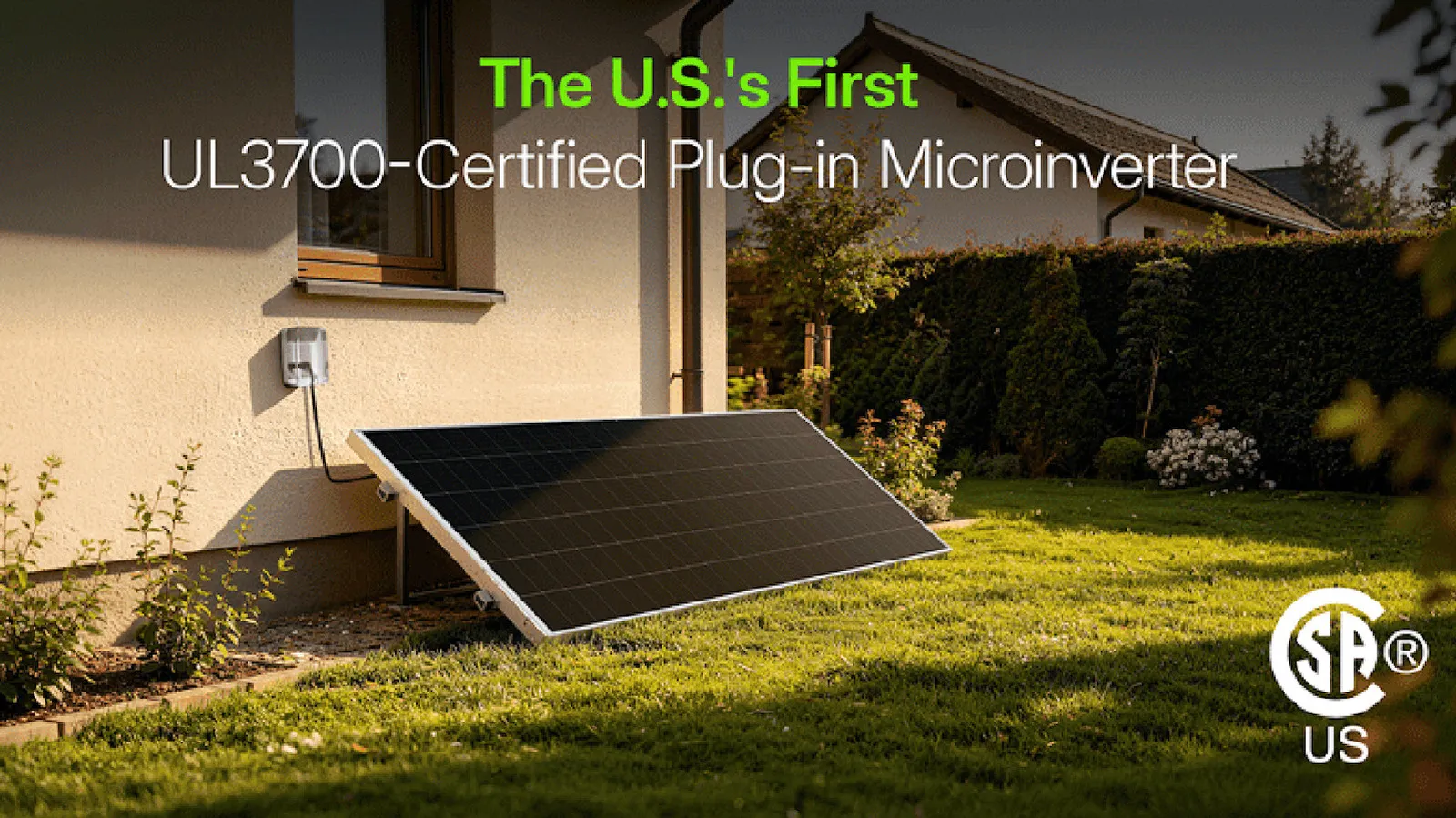
Engadget reports that the first UL 3700-compliant plug-in solar microinverter is now available in the US. The consequence for decision-makers: safer, smaller-scale solar can be easier to deploy in homes where renters and incremental installs matter.
The first UL 3700-compliant plug-in solar microinverter is now available in the US, and it signals a real shift in how “rooftop solar” can show up in everyday life. This is not another headline about big utility projects. It is about making solar hardware friendlier for smaller, plug-in, renter-friendly setups, where safety and installation simplicity are the whole game.
Why does UL 3700 matter here? Because it is a safety and compliance milestone. When a product aligns with a recognized standard, it reduces uncertainty for the people who have to say yes: installers, building stakeholders, and anyone who worries about electrical safety in the messy real world of homes. Engadget’s point is straightforward, and important. This is a step toward making alternative energy accessible on a smaller scale, which is exactly where friction tends to be highest. If your scenario is a limited roof, a lease agreement, or an owner who is cautious about modifications, compliance and straightforward deployment are not “nice to have.” They are prerequisites.
To understand why this launch deserves executive attention, zoom out. The solar market in the US is huge, but deployment is uneven. Utility-scale projects typically have professional teams, established engineering workflows, and clearer pathways for permitting and responsibility. Homes are different. The “last mile” often depends on whether a system can be installed with fewer complicated steps, whether it can plug into existing setups, and whether it avoids complicated rewiring. A plug-in microinverter approach is tailored to that world. It is not trying to replace the industry. It is trying to lower the barrier for incremental solar that fits how people actually live.
Microinverters also matter because they change what “solar on a home” can mean. Rather than putting all the conversion in one central unit, microinverters are tied to individual panels. That can improve performance flexibility, especially when panel-level conditions vary. In practical terms, the reason executives care is reliability of output and ease of integration. The UL 3700 compliance angle adds another layer: the ability to move from “interesting idea” to “installable product” without forcing every stakeholder to invent their own safety framework.
There is also an adoption story hiding inside the compliance story. Standards are a bridge between innovation and scaling. A new category, especially one aimed at smaller installs, needs trust. UL marks are one of the mechanisms the US market understands quickly. For companies in adjacent roles like installers, distributors, retailers, or home electrification platforms, a UL-compliant product can simplify procurement and reduce internal review cycles. For boards and investors, the second-order effect is that compliance milestones often widen the addressable market, because fewer customers get blocked by uncertainty.
Now bring renters into the picture. Rental housing is a massive portion of the US housing stock, and it shapes how energy upgrades get adopted. Tenants usually cannot make permanent modifications. Landlords may be hesitant to approve upgrades that create maintenance obligations or require electrical work that is hard to unwind later. A plug-in, smaller-scale approach is designed to be more reversible, more incremental, and easier to negotiate. Engadget frames this directly as “a step toward making alternative energy accessible on a smaller, renter-friendly scale,” and the logic is clear: the more a product behaves like an appliance rather than construction, the more likely it can fit lease realities.
For executives watching the electrification and distributed energy ecosystem, the strategic stake is simple: who wins the next wave of distributed adoption. If safety standards and plug-in designs make it easier to roll out smaller solar setups, the competitive center of gravity can shift. It can move from only the biggest installers to a broader set of players that can sell, deploy, and support incremental systems. That also changes customer expectations. Once a renter-friendly, standards-compliant product exists, the baseline for “how hard is it to go solar” quietly rises across the market.
Engadget is reporting availability, not claiming the solar revolution is complete. But availability of the first UL 3700-compliant plug-in solar microinverter in the US is an indicator that the industry is working through the regulatory and practical constraints that have kept small-scale solar from feeling truly mainstream. For decision-makers, that is the signal to track: when compliance meets plug-in practicality, adoption stops being a promise and starts being a product category you can plan around.
This story's Key Insights and Take-aways are locked.
Create a free account to unlock Executive Actions for one credit.
Register to UnlockAlways free for Executives Club members. Join the Club
More in Technology

Google quietly links your phone number to every Android account on your SIM
Adding a SIM now ties your phone number to all Google accounts - and future accounts inherit it. Here's the security and privacy stakes.

Hijacker AI 'Skynet mode' runs 100,000 attack steps against exposed models
Symantec caught a criminal AI agent that borrows other models, steals data, and mines crypto; the only relief is no confirmed victims yet.

Nvidia's AI-financier shift faces its first big test as neoclouds stumble
A rout in neocloud stocks is forcing investors to weigh Nvidia's hidden exposure as both supplier and lender to the AI buildout.