

“Ulysses 31” trained a generation on Homer, then made Zeus purge the ship’s databanks
A French-Japanese space opera riffed on Greek myths, and its “always fighting” theme kept it stuck in your head for decades.
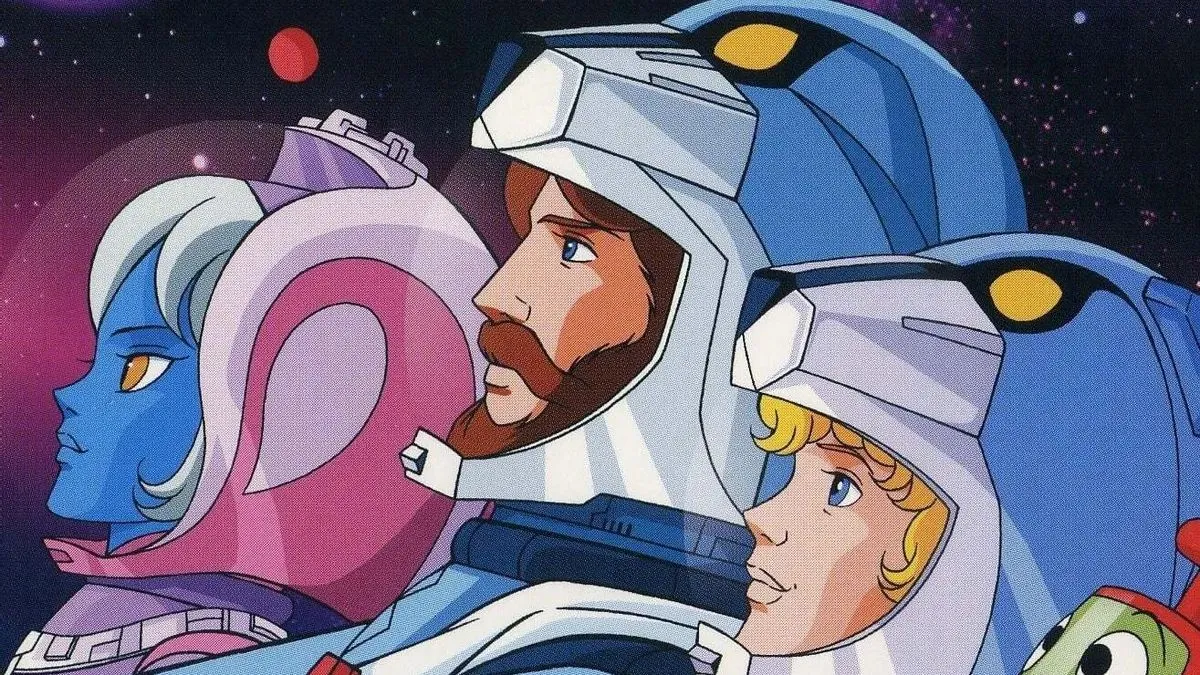
“Ulysses 31” was a French/Japanese co-production that brought Homer’s “The Odyssey” to ’80s kids via a futuristic, outer-space retelling. Its central twist, including Poseidon and Zeus’s punishment that sends Ulysses to “travel among unknown stars,” shows how myth got retooled for a different kind of audience.
If your childhood memories include an earworm that feels like a patriotic slogan from Mount Olympus, you’re not imagining it. “Ulysses 31” is the ’80s cartoon space opera built around Homer’s “The Odyssey,” and it doesn’t just remix the plot for TV. It turns the punishment into a literal systems wipe: Ulysses’ ship, the Odyssey, has its navigational databanks purged, and he’s sentenced to “travel among unknown stars.”
That’s the moment the series makes its real pitch. Ulysses (spelled with the Roman name rather than the original Greek Odysseus) is already racing to get home, but the story escalates when Poseidon and Zeus step in. Poseidon takes offense at Ulysses fighting the wrong giant robot Cyclops, then recruits Zeus, the “head honcho in Olympus,” for divine retribution. The result is a cosmic scramble where the usual heroic quest becomes a survival checklist: find the Kingdom of Hades before the 26-episode run comes to an end.
This is, at heart, the familiar Odyssey engine. A ship’s captain is trying to get home from Troy before Penelope marries another man. But “Ulysses 31” puts a bright sci-fi frame around those basics. Ulysses’ son, Telemachus, is abducted to become a sacrifice to a giant robot Cyclops. Once Ulysses vanquishes that one-eyed menace and rescues Telemachus, he also accidentally picks a fight with a Cyclops who belongs to Poseidon. Zeus then forces the punishment that changes the entire game: Ulysses must wander without reliable navigation, while his “companions” are put into perpetual slumber.
From an adaptation standpoint, that matters because it explains why the show feels like both “Star Wars” and Greek myth at the same time. The series looks more like classic space opera than Homer’s epic, but the clue really is in the title: Ulysses in the 31st century, dragging ancient moral drama into a futuristic setting. Character names echo the Classics, too. Priam is the commander of the Troy starbase, Nestor is Ulysses’ second in command, and Shirka, the computer on Ulysses’ ship, takes her name from Circe, the sorceress. Purists may bristle at some of the liberties, but the connective tissue is there.
And the liberties are not subtle. Homer’s Telemachus spends much of the story separated from his father. “Ulysses 31” keeps Telemachus as a constant presence. Homer’s shipmates mostly wind up dead. Here, they are instead placed in suspended animation, floating lifelessly in the ship’s hold. Ulysses is also already aware of the Greek gods before first contact, including an episode where he travels back thousands of years in time to meet his namesake. So while it’s an “update” in the broad sense, it’s really a riff on the greatest hits, with additional myth figures woven in.
That’s how you get encounters with the Sirens and Lotus Eaters, plus beyond-Homer detours featuring Sisyphus (doomed to a repetitive, pointless task), Orpheus (going to rescue Eurydice), and Cerberus reimagined as an interceptor satellite with three heads. The show turns ancient punishment and underworld dread into visual sci-fi set pieces, sometimes to genuinely freaky effect for a kids’ cartoon: levitating lifeless bodies, grotesque monsters, and gods presented as omnipresent forces who treat humans like playthings. The gods view Ulysses’ suffering as some twisted spectator sport, and unlike several other big ’80s sci-fi cartoons, the good guys are not guaranteed to win.
Of course, “Ulysses 31” is also remembered for what it sounded like. The series ran to 45 years old now, and it didn’t land on British and American TV screens until the mid-’80s, after it existed as a concept in the French/Japanese co-production ecosystem. But the music is the reason it still shows up in people’s heads. The soundtrack is credited to Denny Crockett, Ike Egan, and on selected tracks, Shuki Levy and Haim Saban. Levy and Saban also worked on other cartoon classics like “Masters of the Universe” and “Jayce and the Wheeled Warriors,” and the “Ulysses” score carries that same high-drama energy: “The Curse of the Gods” refrain is loaded with menace, and the theme song is the earworm. In fact, the article argues that for some generations, hearing “Ulysses” alone is enough to start singing “Ulysee-ee-ee-ee-ees.”
If you’re trying to understand why this adaptation sticks, it’s not just nostalgia. It’s structural. The series is science fiction with ancient stakes, built on recurring quests, repeated trials, and mythic punishment that functions like plot-level “system constraints.” In executive terms, it’s a reminder that retooling content for a new audience does not have to dilute the premise. It can change the interface, not the engine. The tradeoff is visible in the show’s age: animation can be rudimentary, outer-space scenes sometimes look like a cut-out starship dragged over a stellar background, and dialogue is played hilariously straight, often reduced to characters shouting names like “Telemachus!” and “Father!” Still, that straight delivery becomes part of the identity.
And for today’s creators, executives, and investors working on myth, IP, or any “heritage meets future” product, the key takeaway is simple: when you adapt a classic, the high-level theme is not the only asset. The punishment mechanics matter. The way Zeus wipes the ship’s databanks and forces a “travel among unknown stars” arc turns a story into a system, and that system is what keeps an entire generation humming the theme long after the episodes are gone. “Ulysses 31” is not on any major streaming service, but there are fan uploads on YouTube if you want the full experience. The theme song will meet you there first.
This story's Key Insights and Take-aways are locked.
Create a free account to unlock Executive Actions for one credit.
Register to UnlockAlways free for Executives Club members. Join the Club
More in Entertainment

12TB Steam 'teraleak' goes beyond Valve: GTA 3, Mafia 2 prototypes exposed
A 12-terabyte dump of Steam data reveals prototypes and builds of third-party classics like GTA 3 and Mafia 2, plus unreleased Valve content, rewriting game history.

LinkedIn's romance problem: 1 in 4 workers say dating on it is fair game
A new survey shows a quarter of U.S. employees treat the professional network as fair game for romance, even as LinkedIn bans it and removes hundreds of thousands of offending posts.

Enhypen's first No. 1 album breaks K-pop's Billboard 200 streak
The K-pop group's 98,000-unit debut tops the chart while Dolly Parton's catalog reentry shows how death reshapes streaming.