
UNHCR and Ethiopia open new Addis Ababa support centre for free legal aid
Refugees get help with documents, bureaucracy, and services, as Ethiopia hosts more than one million.
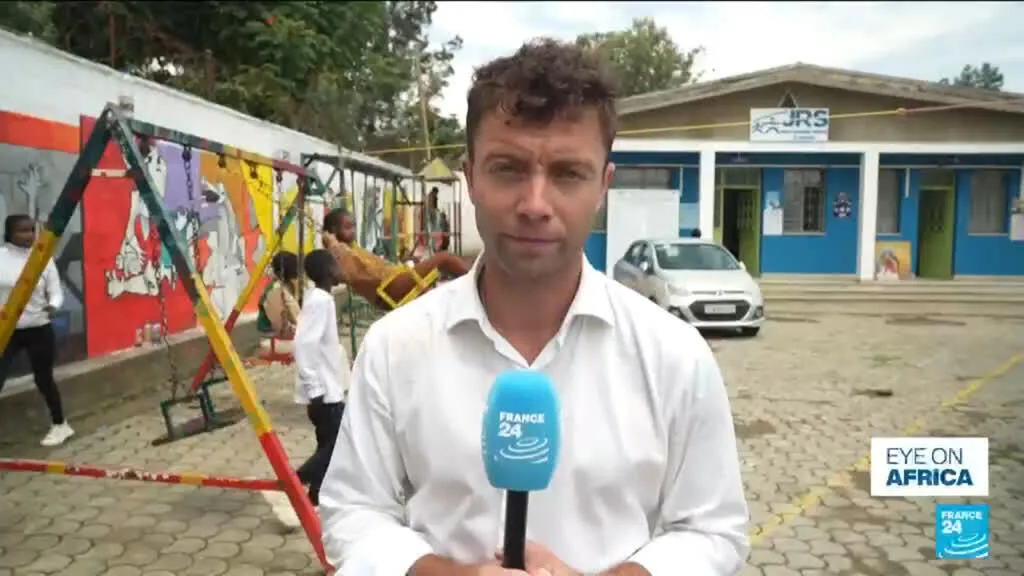
The UN refugee agency, working with the Ethiopian government, opened a new support centre in Addis Ababa to provide free legal advice and access to essential services. For decision-makers, it is a practical infrastructure move that can reshape how refugees navigate paperwork, pursue work, and integrate into local systems.
A new support centre in Addis Ababa is now offering refugees free legal advice, plus access to essential services, through a joint initiative by the UN refugee agency and the Ethiopian government. The core idea is simple but high-impact: when people are forced to flee, the hardest part is often not survival, it is paperwork. This centre is meant to help refugees navigate bureaucracy, obtain vital documents, and improve their chances of finding work.
The stakes are immediate. Ethiopia hosts more than one million refugees, making it Africa's third-largest refugee-hosting country. In that kind of scale, even “small” friction points like missing documents or unclear legal pathways can ripple outward, affecting access to services, employability, and the everyday functioning of local institutions. A support centre designed specifically to reduce those blockers is not just humanitarian. It is operational.
To understand why this matters, zoom out to how refugee administration usually works. Refugees typically need documentation to access services, formalize status, enroll with agencies, and move through systems that were built for citizens or residents with standard identification. When documents are delayed, contested, or hard to obtain, people end up stuck in long bureaucratic loops. That can reduce the time they can spend building stability, including searching for work. The centre described in the report is built to tackle that failure mode directly, by bundling legal guidance with “essential services” access in one place.
There is also a governance angle. When an initiative involves both the UN refugee agency and the Ethiopian government, it signals a coordination model. The government brings the local regulatory reality, while the UN agency brings refugee-specific legal and administrative support. That combination matters because legal advice for refugees cannot be purely theoretical. It has to connect to how Ethiopian systems actually process claims, documents, and requests for service. By placing the service in Addis Ababa, the initiative also acknowledges where administrative capacity and service networks are concentrated, and where the highest-volume questions tend to land.
Employment is where second-order effects get especially interesting. The report says the initiative aims to improve refugees’ chances of finding work. That is a chain reaction: better access to essential services and better documentation can make it easier to pursue jobs through regular channels rather than informal work alone. When refugees can more reliably participate in economic life, the local impact is twofold. First, individual outcomes improve. Second, local employers and service providers can interact with a more legible population, meaning fewer avoidable disruptions caused by document gaps.
For decision-makers, the “centre” is also a clue about risk management. In large refugee-hosting countries, bureaucratic friction is a predictable pressure point for governments and agencies alike. When large numbers of people need legal clarity and documentation support, waiting times and backlogs can strain systems that already have limited capacity. A dedicated support centre can act like administrative load-balancing, shifting certain tasks away from overstretched general services and toward specialized processing. Done well, it can reduce bottlenecks and improve both fairness and efficiency.
Finally, there is a strategic signal to peers. Ethiopia hosting more than one million refugees makes it a bellwether for how countries in similar situations can handle large-scale displacement without pretending paperwork is optional. For other governments, UN counterparts, and organizations working in refugee contexts, the Addis Ababa centre points to an approach that is practical, document-forward, and integrated. If your system is large enough to hold more than one million refugees, you do not just need aid. You need administrative pathways that people can actually access, understand, and use.
This story's Key Insights and Take-aways are locked.
Create a free account to unlock Executive Actions for one credit.
Register to UnlockAlways free for Executives Club members. Join the Club
More in Politics

LA County: DOJ's 20,000 'noncitizen' voter list is 'unreliable,' includes U.S.-born
Preliminary review by Los Angeles County election officials finds errors in the federal list, raising the stakes for voter roll integrity ahead of November.

Trump's $1.5B Pentagon chip investment lands in North Carolina
A $1.5 billion defense infusion for North Carolina chipmaking signals a new era of Pentagon-backed reshoring - here's what it means for the industry.

Nigeria confirms first Ebola case in Abuja, a woman just off a Uganda flight
Health Minister Muhammad Ali Pate says the patient flew in from Uganda, putting Africa's latest outbreak on Nigeria's doorstep.