

Unilever's Leandro Barreto says creators turned 155-year-old Vaseline into a growth engine
The CMO explains how listening to real use cases unlocked new meanings, channels, and community-led execution for a legacy brand.
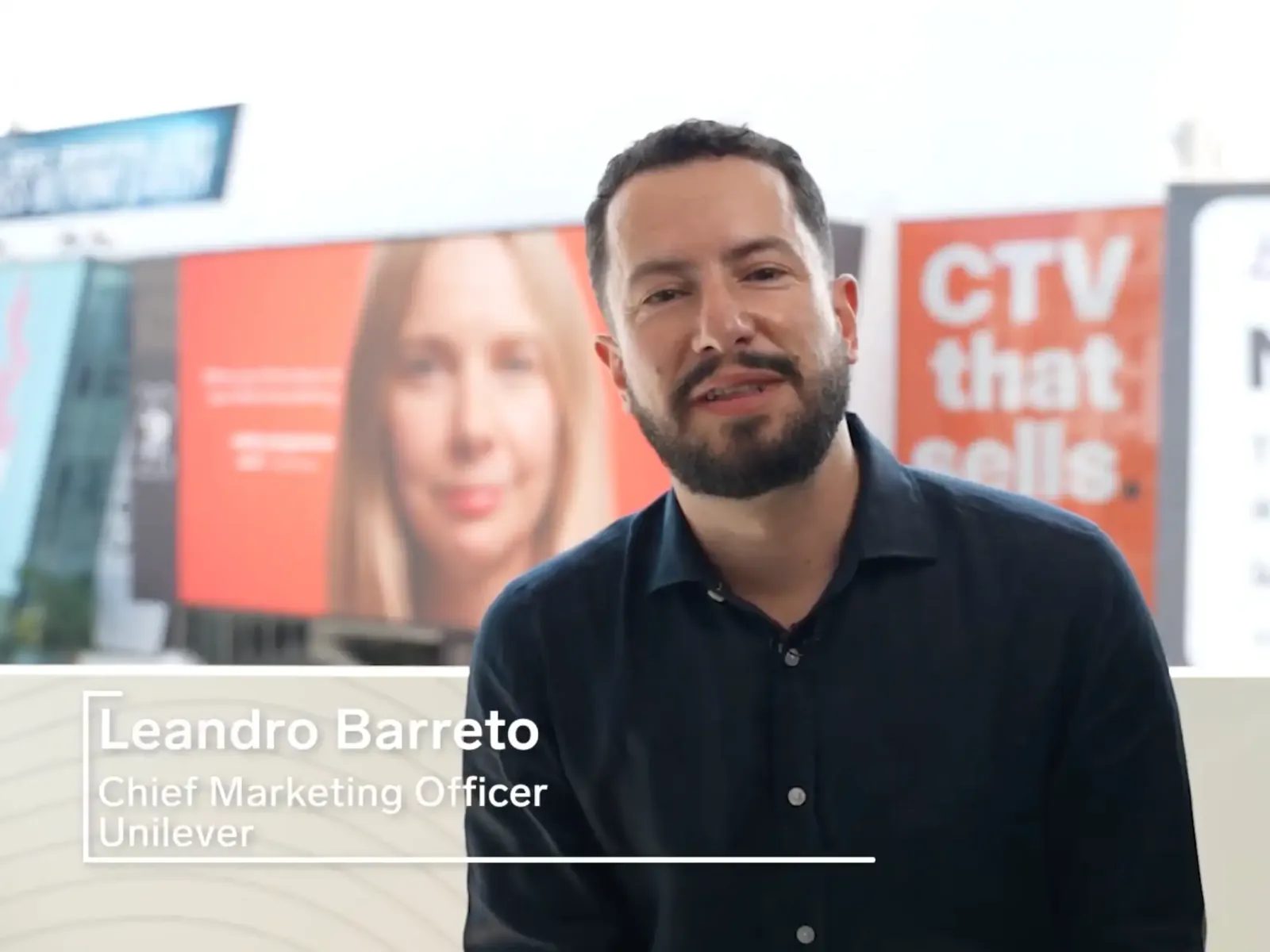
Leandro Barreto, chief marketing officer at Unilever, said Vaseline, a 155-year-old brand, was “reinvented through the hands of creators.” He argues the growth came after leaders learned customers used Vaseline far beyond a traditional beauty routine, including on a dog’s nose and in shoes.
Unilever CMO Leandro Barreto says a 155-year-old brand just proved something modern marketers struggle with: audiences do not need you to define their use cases. Barreto described Vaseline as “reinvented through the hands of creators,” and he tied the brand’s momentum to a shift in what Unilever thought it was selling versus what customers actually do with it.
In Barreto’s telling, brand leaders initially viewed Vaseline as a straightforward beauty product. Then they learned customers used it in many different ways, like “on their dog’s noses or in their shoes.” That discovery forced an operational conclusion, not just a creative one. Barreto said, “We started understanding we should give the brand back to the communities and let them do with it what was more relevant for them.”
That line matters because it is basically a playbook for turning “old brand equity” into “new distribution of meaning.” When a legacy product is treated as a narrow category, the marketing machine pushes one story, one audience, one usage ritual. But if the brand is actually a tool for many daily problems, the growth question becomes less about inventing demand and more about recognizing and scaling it. Barreto’s framing is that the creators were not decoration, they were the mechanism for rediscovery.
He also gave a compact diagnostic for why the approach worked: it was “a proof for us of consistency of meaning, flexibility of the execution and culture.” In plain English, Unilever kept the core promise consistent while allowing execution to flex across contexts. That is a subtle distinction, and it is one that boards and investors usually worry about when marketing shifts from brand-led messaging to community-led content. If meaning splinters, you lose brand strength. If execution stays rigid, you lose relevance. Barreto claims Vaseline avoided both problems by keeping the “meaning” consistent while handing over the “execution” to the communities generating new usage stories.
From an incentives perspective, this kind of strategy also changes how internal teams measure success. A classic beauty brand campaign is evaluated on predictable funnel movement, category awareness, and sales lift in a defined segment. A creators-first strategy requires you to trust that the market can articulate its own narratives, then you adapt marketing to the signals. That can be uncomfortable for brand leaders who are used to controlling every touchpoint, especially when the product spans both traditional consumer beauty perceptions and nontraditional, everyday applications.
There is also a regulatory and compliance angle lurking under the creativity. Vaseline is used on skin, and consumer product claims are scrutinized in many markets. Even without adding new details, the second-order point for executives is that “community use cases” do not automatically become “marketing claims.” Companies still need to translate what customers do into safe, supportable messaging that fits applicable advertising and product-claim rules. Barreto’s comments emphasize community relevance and execution flexibility, not a blanket promise that anything people do becomes an official brand statement. The governance challenge is to give communities room to create without giving compliance teams a nightmare.
Look at what this strategy implies for Unilever’s broader portfolio management. Unilever has to keep legacy brands relevant while also investing in new ones. A brand like Vaseline, which is 155 years old, provides a rare case study: growth does not always require reinvention through new products. Sometimes reinvention means changing who is allowed to interpret the product, then aligning internal execution to that interpretation. For peers, that can reshape how you think about creative budgets, measurement, and even how quickly teams should react to qualitative customer behavior.
For decision-makers, the stakes are simple: if your organization insists the market only uses your product “correctly,” you can miss the real engine of adoption. Barreto’s example suggests the opposite approach can unlock faster category expansion without changing the product itself. It also offers a template for how a board can evaluate brand strategy. Not by how cool the creative looks, but by whether the company can demonstrate consistent meaning, flexible execution, and a culture that can learn from communities in real time.
This story's Key Insights and Take-aways are locked.
Create a free account to unlock Executive Actions for one credit.
Register to UnlockAlways free for Executives Club members. Join the Club
More in Business

Comcast shares jump 25% as it plans to split NBCUniversal and Sky
The tax-free spin-off could reshape focus, funding, and competition across media and tech for years.

Bungie cuts most Destiny 2 staff as Sony says Marathon still matters
Herman Hulst confirms layoffs affecting most Destiny and some Marathon teams after Bungie admits Destiny fell short.

SK Hynix jumps 11% after seeking up to $29.4B in Nasdaq listing
The chip giant filed for a Nasdaq listing plan that could raise $29.4 billion, instantly reshaping investor expectations.