

Unity 7 hits beta in Dec 2026, fully launches in Q1 2027 as a “continuation”
A new major version is coming fast, but Unity is positioning it as an evolutionary hop from Unity 6, not a rebuild.
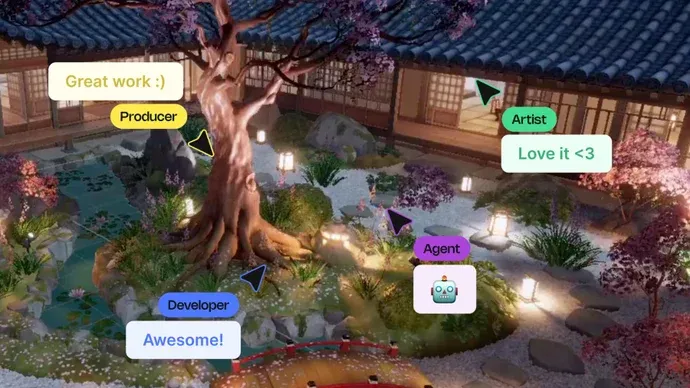
Unity 7 is set to enter beta testing in December 2026, with a full release planned for Q1 2027. For decision-makers, the schedule and framing change how teams should plan upgrade risk, production timelines, and budget cycles.
Unity 7 will enter beta testing in December 2026, with its full release scheduled for Q1 2027, according to GamesIndustry.biz. In other words: the “next” Unity drop is not some distant future event, it is a near-term milestone that studios and platforms can start to model into roadmaps.
What makes this more than a simple release calendar update is Unity’s positioning of the new engine. Unity 7 is described as a "direct continuation" of Unity 6, which signals Unity wants developers to treat it as a step forward from a currently shipping generation, not as a brand-new engine that forces everyone to relearn fundamentals overnight.
For executive teams, that matters because upgrade planning in game engines is rarely just technical. It is operational. Every major engine generation tends to ripple through tooling, build pipelines, QA test matrices, asset pipelines, and staffing plans. When the publisher and engine provider frame the move as a continuation, it usually nudges the internal calculus from “do we migrate at all?” to “when do we start validating, and how much do we allocate for verification?” With beta arriving in December 2026, there is a concrete window to run controlled trials, validate performance targets, and stress-test critical workflows before the Q1 2027 release becomes unavoidable.
It also changes how risk is distributed across stakeholders. Studios typically have multiple projects moving at once. Production schedules often include long runway development, live ops commitments, and content pipelines that cannot simply stop while an engine update is absorbed. If Unity 7 is truly “direct continuation” territory, board-level conversations can shift away from existential migration fear and toward budgeting for incremental adoption. That is still work, just less chaos. It can mean fewer hard resets and more parallelization, like keeping existing production on Unity 6 while new features and experimental branches explore Unity 7 during beta.
Zooming out, Unity’s timing lands in a moment when the industry is extremely sensitive to platform and tool stability. Developers are juggling changing expectations around performance, scaling, cross-platform delivery, and tooling reliability. When an engine vendor introduces a new major version, even with a continuation narrative, studios still need to know whether the upgrade will disrupt shaders, rendering behavior, physics edge cases, serialization, or editor tooling. The schedule given here, beta in December 2026 and a full release in Q1 2027, gives executives something they can actually manage: a calendar to build internal gates around.
There is also a regulatory and governance angle, even for something that sounds purely technical. Game engines increasingly underpin business-critical operations, from digital goods delivery to data pipelines. When major versions shift, companies need to ensure compliance processes and security reviews can be repeated with confidence. That is not about predicting policy, it is about designing governance that can survive change. A beta period creates a practical staging ground for internal review, so that when the Q1 2027 release hits, organizations are not attempting year-end compliance and engine migration at the same time.
Second-order implications extend to ecosystem partners too: middleware vendors, content creators, and services that integrate tightly with Unity workflows. If Unity 7 is positioned as a continuation of Unity 6, ecosystem partners may expect smoother compatibility paths, which can translate into faster support cycles for plugins, tools, and integration layers. For studio executives, that can reduce the “integration downtime tax” that often appears when a new engine version breaks assumptions. The continuation framing suggests Unity is trying to keep that ecosystem friction from spiking.
Ultimately, this is a story about timing and trust. Unity 7 has a clearly stated beta start of December 2026 and a full release in Q1 2027, and Unity is branding the change as a direct continuation of Unity 6. For executives at studios, platform teams, and investors monitoring development tools, the strategic stakes are clear: plan the upgrade path early enough to protect production, but start validation in time to avoid surprise costs right before release becomes mandatory across projects. If you are not building that plan, Q1 2027 arrives faster than your internal tooling backlog can say “what changed?”
This story's Key Insights and Take-aways are locked.
Create a free account to unlock Executive Actions for one credit.
Register to UnlockAlways free for Executives Club members. Join the Club
More in Entertainment

12TB Steam 'teraleak' goes beyond Valve: GTA 3, Mafia 2 prototypes exposed
A 12-terabyte dump of Steam data reveals prototypes and builds of third-party classics like GTA 3 and Mafia 2, plus unreleased Valve content, rewriting game history.

LinkedIn's romance problem: 1 in 4 workers say dating on it is fair game
A new survey shows a quarter of U.S. employees treat the professional network as fair game for romance, even as LinkedIn bans it and removes hundreds of thousands of offending posts.

Enhypen's first No. 1 album breaks K-pop's Billboard 200 streak
The K-pop group's 98,000-unit debut tops the chart while Dolly Parton's catalog reentry shows how death reshapes streaming.