

Upton Lovell Shaman DNA overturns “male” exhibit depictions, showing the 4,000-year-old burial was female
Ancient DNA analysis upends museum assumptions about a famed Bronze Age figure and forces a rethink of how stories are curated.
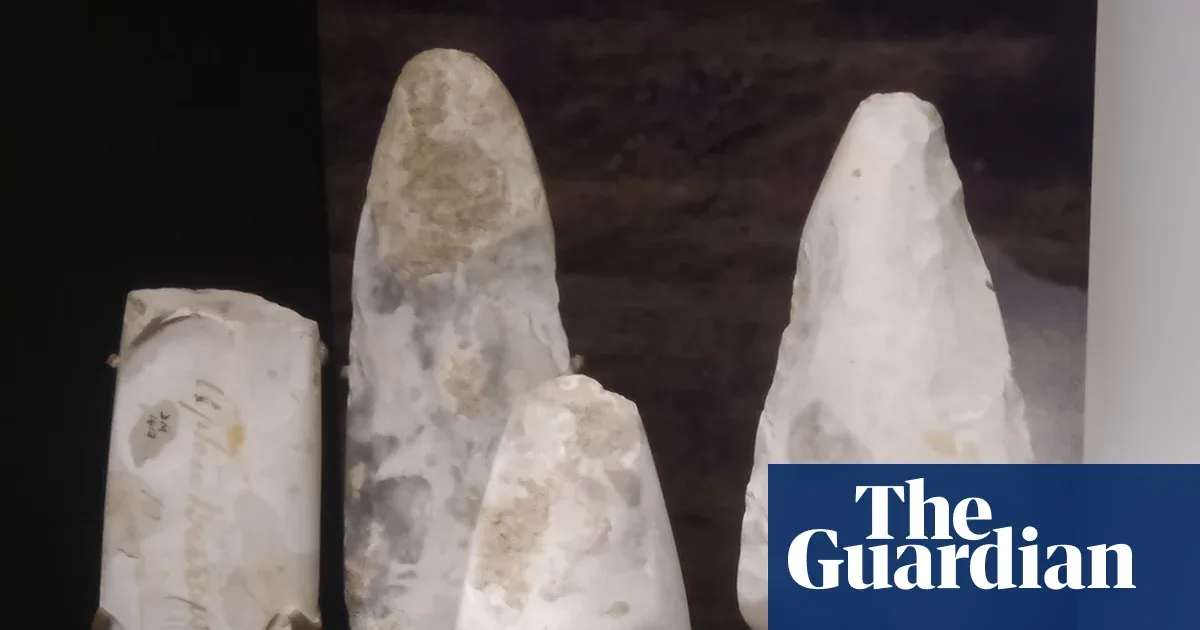
Ancient DNA analysis has revealed that the Upton Lovell Shaman, a 4,000-year-old Bronze Age individual long depicted as male, was female. The finding challenges prior assumptions based on the burial’s famous grave goods and how museum exhibits have framed them.
The “Upton Lovell Shaman” long presented in British museum exhibits as a bearded spiritual leader and metalworker has a new identity. Ancient DNA analysis has revealed the 4,000-year-old skeleton was female, overturning the previous assumption that the Bronze Age individual was male.
Why this matters beyond a single historical correction: the burial is described as among the most significant Bronze Age burials in Britain. The evidence sits in the grave itself, including the skeleton and an extensive assemblage of items like stone axes, metalworking tools, and the remains of an elaborate ceremonial cloak. When a burial of that stature gets its gender interpretation rewritten, the ripple goes straight into how institutions decide what the public is “supposed” to see.
To understand the shock, you have to understand the old logic. In many archaeological contexts, gender has often been inferred from skeletal observations and, when available, from context like grave goods and iconography. Here, the Upton Lovell Shaman’s mix of what looks like spiritual leadership cues and what looks like metalworking craft cues appears to have anchored the “male” depiction. That is the key tension in the new report: the analysis is described as “smoking gun evidence” that overturns the earlier assumption.
The Bronze Age burial’s inventory is not casual. Stone axes and metalworking tools imply skill, access, and status, while the ceremonial cloak points to ritual importance. Put together, those elements have likely helped the museum narrative gain traction: a single, vivid character for a complex world. But DNA evidence pulls a different thread. It does not just refine a label. It changes the central character in a story people have been shown in galleries.
For decision-makers in culture, research, and the businesses that support them, this is a familiar kind of governance problem: who updates the narrative, how quickly, and how explicitly. Museum exhibits are not just displays. They are operational commitments, built on years of curation, design decisions, and public-facing education. When new evidence emerges, the organization has to balance credibility with continuity. The headline version is simple, but the implementation is not: exhibit text, interpretive materials, catalog entries, and educational programming all need to align with the updated finding.
There is also a broader ecosystem question. Ancient DNA analysis is powerful because it can directly test assumptions that were previously made from physical appearance or from artifacts. In that sense, the Upton Lovell Shaman case is a reminder of how scientific methods act like regulators of narrative accuracy, even without an agency stamping the result. The “Exclusive” framing and the claim of “smoking gun evidence” underscore that this is not presented as a minor tweak. It is framed as a reversal with high confidence.
And it lands at a moment when public interest in science communication is being actively leveraged. The source notes that “We Go Way Back” opens at the Francis Crick Institute on 16 July. That is the kind of institutional context that can amplify the impact: exhibits are timed to draw crowds, and crowds bring repeat exposure. If a high-profile figure is depicted incorrectly, the cost is not only scholarly. It becomes reputational, especially when the corrected interpretation was previously treated as settled enough to be shown publicly.
Second-order implications are real for boards and leaders who care about trust. In the modern era, audiences expect museums and research institutions to be evidence-led. When a widely circulated assumption flips, the organization’s challenge is demonstrating that evidence updates are treated as normal, not exceptional. The Upton Lovell Shaman story becomes a stress test: can institutions metabolize new data quickly and transparently, without losing the magic of compelling storytelling?
For peers managing similar institutions or science communication platforms, the lesson is strategic. Major findings do not just revise a footnote; they rewrite the character driving public understanding. In a world where exhibits can shape perceptions of who did what, who belonged where, and who held roles, a gender correction in a burial described as among the most significant in Britain is not small. It is a governance and trust moment, powered by ancient DNA, played out in museum glass.
This story's Key Insights and Take-aways are locked.
Create a free account to unlock Executive Actions for one credit.
Register to UnlockAlways free for Executives Club members. Join the Club
More in Science

Alaska's 1,580-foot tsunami had warning signs. Scientists just found them.
Rapid glacier retreat, heavy rainfall, and thousands of tiny tremors preceded Alaska's 1,580-foot tsunami, a warning for every coastal community in a warming world.

The rare mutation that lets high-risk brains dodge Alzheimer's
Scientists found a natural defense against protein buildup, opening a new path to preventive treatments.

3,000 steps a day may halve Alzheimer's decline, study finds
New research links a modest daily walk to less tau buildup and nearly half the cognitive and functional decline, even for those with early signs.