
US strikes Iran Wednesday, then Tehran retaliation hits Jordan, Kuwait, and Bahrain
The port blockade resumes as waves of airstrikes spread across the region, tightening risk and liquidity for decision-makers.
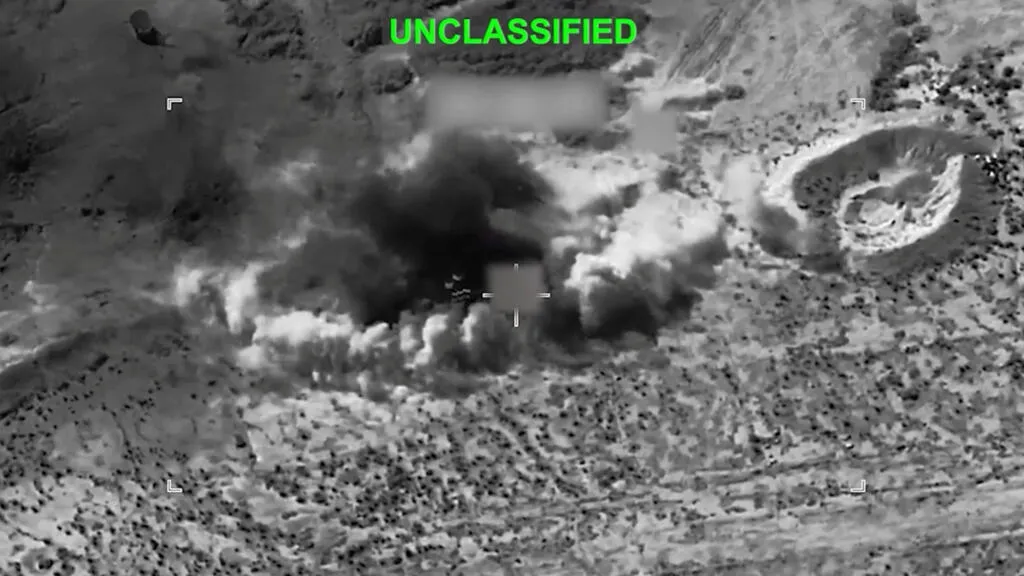
The United States launched strikes against Iran on Wednesday, with bombings reported in Bandar Abbas, on the island of Qeshm, and in the city of Ahvaz. Tehran retaliated quickly, with Jordan, Kuwait, and Bahrain all reporting attacks, as the US resumed a naval blockade on Iranian ports.
On Wednesday, the United States launched strikes against Iran. France 24 reported bombings in Bandar Abbas, on the island of Qeshm, and in the city of Ahvaz. Tehran moved fast in response, and the regional spillover was immediate, with Jordan, Kuwait, and Bahrain all reporting attacks.
The timing matters because these strike exchanges come alongside a second major pressure point: the resumption of the US naval blockade on Iranian ports. When military action and maritime disruption run in parallel, it changes the risk math for everyone who has to finance shipping, insure cargo, price energy, or maintain supply chains that pass through the Middle East.
For executives, this is not just “headline risk.” Naval blockades translate into practical constraints. Even without knowing the exact operational rules, a blockade usually means reduced port access, longer routing, higher waiting times, and more friction at the boundaries where goods and payment systems intersect. In markets, that can mean faster repricing across shipping insurance, freight rates, and anything tied to regional logistics. For companies with exposure to energy flows, refined products, chemicals, or shipping services, the key is that blockade risk can become self-reinforcing: the moment insurers, carriers, or counterparties pull back, costs rise, liquidity tightens, and delivery schedules become harder to guarantee.
The strike locations France 24 named also point to a direct linkage between military action and trade-relevant geography. Bandar Abbas is a major Iranian port hub, Qeshm is strategically positioned near critical maritime lanes, and Ahvaz is in southwestern Iran. When bombings are reported around port-adjacent nodes like Bandar Abbas and Qeshm, the implication for commercial planners is straightforward: the logistics network is no longer stable. Even if a specific cargo shipment is not directly hit, uncertainty can be enough to disrupt schedules and force rerouting or delays.
Then there is the retaliation layer. France 24 reported that Tehran was quick to respond, with Jordan, Kuwait, and Bahrain all reporting attacks. That expansion matters because it broadens the set of jurisdictions where operational risk is being priced. For boards and risk committees, cross-border retaliation raises the probability of additional restrictions on movement, tighter controls at borders, and heightened scrutiny by governments and regulators. It can also affect how firms think about counterparties. If you trade or contract across the region, your ability to enforce delivery terms or collect payments can become entangled with government actions and evolving compliance expectations.
Regulatory and compliance teams typically view this kind of escalation through two lenses: sanctions risk and operational feasibility. Sanctions frameworks often intersect with “who can pay whom” and “how goods can legally move,” while operational feasibility focuses on whether shipping routes, ports, crews, and logistics providers are willing or able to run business under heightened security conditions. When the US naval blockade resumes, compliance and finance leaders usually have to revisit exposures quickly, including whether existing contracts require amendments, how force majeure clauses might be interpreted, and how to document risk assessments for internal governance.
Second-order effects can also hit capital allocation. In moments like this, CFOs may find working capital needs increase because deliveries slip, inventories become harder to replenish on schedule, and payment cycles stretch. Boards can face pressure to adjust guidance or risk appetite even before the financial impact is fully visible. Meanwhile, companies in shipping, defense-adjacent services, energy, and insurance may experience demand shocks in both directions, depending on whether customers pull forward purchases or pause them due to uncertainty. The same event can be bullish for some segments and toxic for others, which is why getting the scenario planning right matters.
Finally, the strategic stakes extend beyond immediate markets. Strike exchanges between the United States and Iran, paired with a resumption of the US naval blockade on Iranian ports, signal a broader posture shift that can influence how governments and firms prepare for the next phase. The question for decision-makers is simple: how quickly can your organization identify which dependencies are most vulnerable to maritime disruption and regional escalation, and how quickly can you adjust to keep customers supplied, insured, and paid.
Today, France 24’s report gives a clear sequence: US strikes in Bandar Abbas, Qeshm, and Ahvaz, followed by Tehran retaliation with reported attacks in Jordan, Kuwait, and Bahrain, occurring at the same time as the US resumes a naval blockade on Iranian ports. That combination is what executives cannot ignore, because it tightens the window for reaction and increases the chance that logistics risk becomes financial risk before anyone has time to build a response plan.
This story's Key Insights and Take-aways are locked.
Create a free account to unlock Executive Actions for one credit.
Register to UnlockAlways free for Executives Club members. Join the Club
More in Politics

LA County: DOJ's 20,000 'noncitizen' voter list is 'unreliable,' includes U.S.-born
Preliminary review by Los Angeles County election officials finds errors in the federal list, raising the stakes for voter roll integrity ahead of November.

Trump's $1.5B Pentagon chip investment lands in North Carolina
A $1.5 billion defense infusion for North Carolina chipmaking signals a new era of Pentagon-backed reshoring - here's what it means for the industry.

Nigeria confirms first Ebola case in Abuja, a woman just off a Uganda flight
Health Minister Muhammad Ali Pate says the patient flew in from Uganda, putting Africa's latest outbreak on Nigeria's doorstep.