
V. Trent manually scanned a rare IMAX 70mm 'Star Wars' trailer, one frame at a time
IndieWire profiles how a filmmaker protected fragile Episode II history by turning missing IMAX footage into preservation-grade scans.
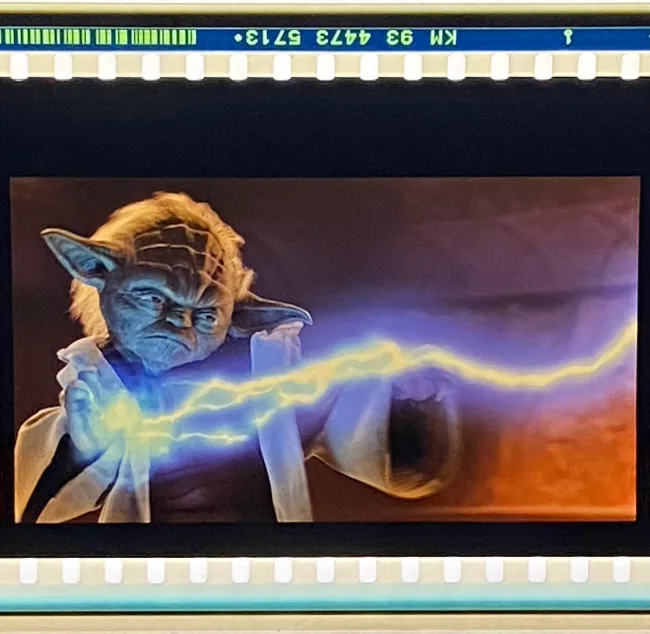
Filmmaker V. Trent tells IndieWire about rare IMAX 70mm trailer footage from 'Star Wars Episode II: Attack of the Clones' that fell into his possession. He manually scanned it to preserve the footage for future generations, after it otherwise risked disappearing from reach.
A filmmaker, V. Trent, got his hands on rare IMAX 70mm trailer footage from 'Star Wars Episode II: Attack of the Clones.' Then he did something that sounds almost too careful to be real in a world run by streaming: he manually scanned the film frame by frame to preserve it for future generations.
IndieWire reports that Trent describes this footage as “rare” and specifically tied to the IMAX 70mm trailer version of Episode II. The key is not just that the material exists, but that it “fell into his possession,” and once that happens, the clock starts ticking on the physical artifact. His preservation method was manual scanning, which implies hands-on work and a direct bridge between a fragile analog format and a longer-lived digital future.
Why this matters beyond one collector story: film preservation is a classic problem of incentives. The industry can be great at producing new content and distributing it widely, but the preservation of low-frequency, high-format, high-value materials like IMAX 70mm trailers often depends on who happens to have the physical reels, where they are stored, and whether someone has both the motivation and the patience to treat them as cultural infrastructure. When Trent “preserved” the footage by scanning it manually, he effectively filled a gap that production schedules and corporate cataloging do not always cover, especially for derivative assets like trailers that are less visible than the main theatrical release.
There is also a practical technical angle that executives should recognize, even if they are not scanning film themselves. Analog formats have physical decay modes, while digital files have version and bit-rot risks, plus the more modern threat: loss through neglect, poor handling, or unmanaged storage. A manual frame-by-frame scan is time-intensive, but it can also be seen as an approach that prioritizes fidelity and continuity. In other words, it is the opposite of “good enough for today,” because the objective is “for future generations,” not just an immediate viewing copy.
For boards and operators, this story lands in an area that is increasingly relevant: how cultural and media assets become long-term liabilities or long-term resources, depending on preservation choices. If an asset is rare and physically constrained, the cost of ignoring it can show up later as irreversible loss. If it is preserved, it can potentially be reintroduced, remastered, verified, or archived in ways that preserve provenance and quality. Even when no one is selling the asset that week, preservation can lower operational risk by keeping options open.
The regulatory background is not the headline of this piece, but the theme is still tied to governance. Preservation touches record-keeping norms, custody chains, and archival responsibility. While the source does not cite statutes or regulators, the underlying governance question is familiar in other domains: who is accountable for retaining originals, and what does “ownership” mean when the object is a one-of-a-kind physical format? Trent’s actions show a model where an individual assumes a custodial role that institutions often can struggle to operationalize quickly, especially when something is rare, niche, and outside the normal pipeline.
Second-order implications for decision-makers: stories like this can change how creators, rights holders, and technology teams think about what deserves tooling budgets. Manual scanning is a labor decision. It signals that quality and completeness can justify slower, higher-touch workflows. For media companies and investors watching the IP lifecycle, that is a reminder that competitive advantage can come from stewardship, not only from production. The “history” here is literally one frame at a time, and the strategic stakes are that the difference between preserving and losing is often measured in days, not years.
If you are in a leadership role in media, entertainment tech, or archival services, the question is simple: when valuable artifacts are floating outside institutional control, do you have a pathway to preserve them? Trent’s story answers that the pathway can start with one person who treats a fragile format as future infrastructure. And if your organization depends on legacy content, the cost of not caring is not abstract. It is the moment when rare footage stops being recoverable, even if the brand is still famous.
This story's Key Insights and Take-aways are locked.
Create a free account to unlock Executive Actions for one credit.
Register to UnlockAlways free for Executives Club members. Join the Club
More in Entertainment

Russell Brand's accuser 'bewildered and confused' as he denies 7 sex charges
The criminal case against the comedian is a live test of how media companies manage talent risk when serious allegations go public.

'It's a Magic Trick': Ballet Experts Say Rosalía's SNL Pose Is Impossible
Three ballet experts tell Rolling Stone Rosalía's gravity-defying SNL stillness shouldn't be possible - and why the debate is now part of the show.

Activision CMO: GTA 6 Will Boost Call of Duty, Not Bury It
Activision's top marketer says Rockstar's blockbuster will drive players back to consoles and into Modern Warfare 4, even as the company admits its recent strategy failed.