

Valve engineer says retail memory lag is 3 to 6 months, and prices keep rising
The Steam Machine launch hit memory limits, and Valve expects the hardware crunch to worsen before it improves.
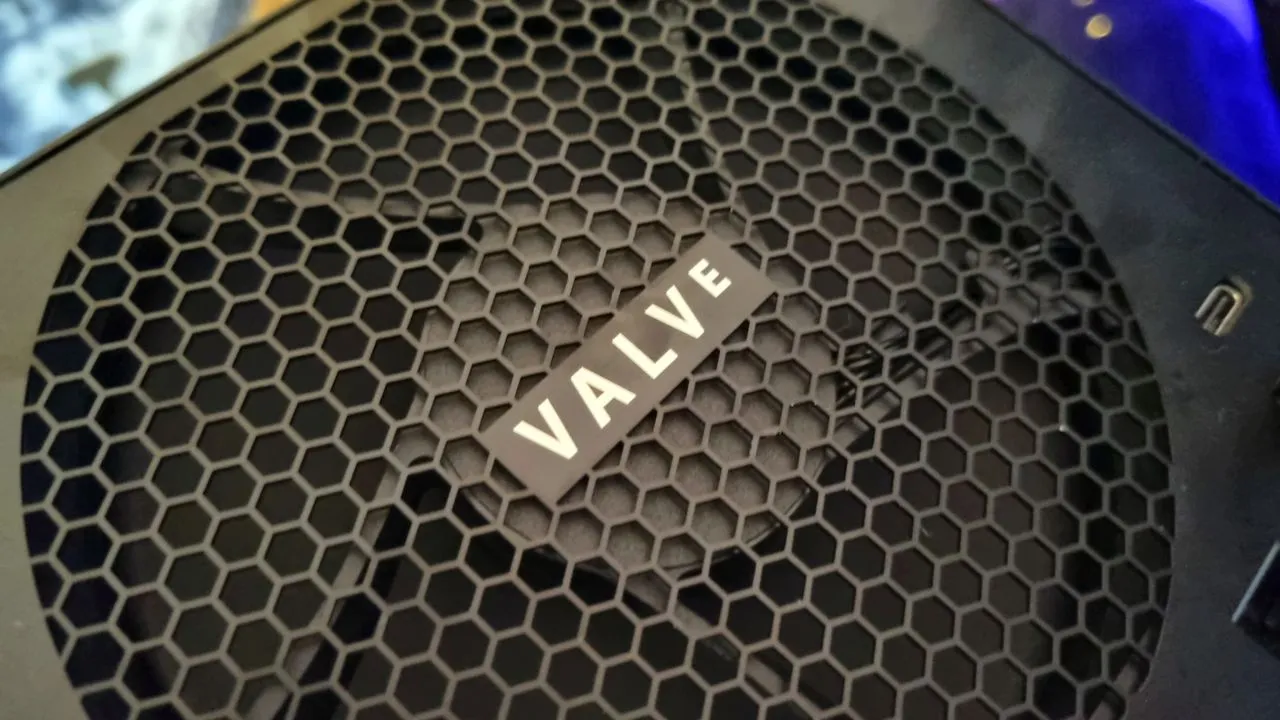
Valve engineer Yazan Aldehayyat tells Bloomberg that retail memory availability lags bulk supply by at least three to six months, with prices only rising in the short to medium term. For decision-makers, the implication is clear: hardware planning, launch timing, and cost forecasts must assume a prolonged shortage.
Valve is basically telling PC builders and hardware buyers to stop refreshing price charts like they owe you money. In a chat with Bloomberg's Jason Schreier about Valve's long road to the Steam Machine, Valve engineer Yazan Aldehayyat laid out a blunt reality for the memory market: “Honestly, it's still getting worse,” and the reason is operational, not imaginary. What you see on retail shelves is delayed versus what Valve is seeing in bulk supply, “by at least three to six months.”
That three to six month gap is the headline stake because it flips the usual expectation. When a shortage eases in bulk, the retail world typically lags behind. Valve says that lag is already at least three to six months, meaning even if procurement improves, the average buyer, store, and downstream hardware maker do not get the relief on the timeline they want. In Aldehayyat's words, the near-term and medium-term outlook is upward on prices. For anyone budgeting for components, planning launches, or managing margins in PC-adjacent products, that is a procurement risk, not just a consumer inconvenience.
Zoom out and the memory crisis starts to look less like a one-off disruption and more like a structural tug-of-war. The PC Gamer framing points to the AI boom as a driver consuming “graphics cards, SSDs, memory sticks and more,” pushing the cost of building a gaming PC “eye-wateringly expensive,” a situation that was not exactly known for being cheap in the first place. Separate research, also noted in the piece, predicts memory prices rising sharply between now and 2027, with no reductions expected until 2028. Valve is aligning with that broader direction of travel, but with a more concrete supply-chain tell: retail shelves are catching up late, and the backlog is long.
Valve's comments also connect the macro problem to a specific product reality: the Steam Machine. Valve does not give a detailed production or sales tally in the source, but Bloomberg's coverage (as relayed here) says initial Steam Machine supply was impacted by memory availability. Pierre-Loup Griffais, another Valve engineer, explained the internal bottleneck in straightforward terms: “We're basically building everything we can,” and “We're limited by memory capacity, for sure.” Translation: even if Valve wanted to accelerate shipments, the limiting factor was memory, not demand marketing. That matters for executives because it turns a market-level shortage into a company-level capacity constraint. When the constraint is memory capacity, you cannot fully “optimize” your way out. You build what the supply lets you build.
There is a second-order strategic layer here too, and Valve actually telegraphs it. The piece notes that Valve does not view Steam Machine success purely through raw sales figures. According to Bloomberg, the company frames the device as a way to provide players a viable option for open-source PC gaming in their living rooms. Aldehayyat puts the thesis in a success metric that is less about unit counts and more about solving a real problem: “We suspect that the Steam Machine is a really good way to solve a very real problem that people have,” and “If that's borne out to be true, from our opinion, it's a success.” For boardrooms and product leaders, this is an incentive alignment signal. When the environment is shortage-driven, you may shift from “ship as much as possible immediately” to “validate the category and learning loop,” because the market ceiling imposed by inputs is outside your control.
Valve also says the memory crisis has not changed its future plans for the device. Griffais states, “Users are getting their machines,” and adds that “for a lot of the experience, the work starts,” with Valve “doing that for years to come.” That is not a technical detail. It is a strategic patience statement. If the supply chain remains constrained, the work becomes software, ecosystem, support, and iterative improvement rather than frantic hardware expansion. Executives in gaming, computing, consumer electronics, or any hardware-plus-software product should read this as a template for how to respond when components become the limiting factor: keep shipping into customers who can receive units, then concentrate on the parts you can actually influence.
Finally, Valve's discussion covers a related product decision: why it opted against launching an exclusive game for the Steam Machine. The source says the company was “much more interested in ‘having the whole PC catalog’” as its “‘launch exclusive’.” That framing matters amid a memory crunch because it changes the pitch you can make to consumers and partners. Instead of betting that one exclusive title can carry launch momentum through a supply constrained hardware moment, Valve leans on content breadth. In a world where you may not be able to ship quickly, reducing reliance on a single launch asset can help mitigate the volatility of hardware timing.
Taken together, Valve's message is that the memory crisis is not a short sprint to relief. Retail availability lags bulk supply by “at least three to six months,” Aldehayyat says prices are headed up in the short to medium term, and the Steam Machine experience has already been constrained by memory capacity. For peers making hardware commitments, managing inventory, or underwriting product roadmaps, the operational takeaway is brutal but useful: assume prolonged mismatch between where supply improves and where consumers and partners feel it, then plan launches, margin models, and capacity scenarios accordingly.
This story's Key Insights and Take-aways are locked.
Create a free account to unlock Executive Actions for one credit.
Register to UnlockAlways free for Executives Club members. Join the Club
More in Business

Uber buys Delivery Hero for nearly $15B, vaulting to top food delivery outside China
The deal doubles Uber's dual-services footprint and pushes a ride-and-eats bundling play into 50 more markets.

Epic and Google drop settlement bid, forcing rival Android app stores by July 22
Google told the court it is ready to carry third-party app stores starting Wednesday, July 22.
SK Hynix opens at $170, raises $26.5B, and tops foreign IPO records
In Friday's Wall Street debut, SK Hynix turns AI RAM demand into a $26.5B fundraising moment that rewrites comps.