
Valve rewired CS2’s bomb in Season 5, adding a shockwave that can spare survivors
The detonation now sends a wave that dissipates around corners, plus an in-match HUD warning.
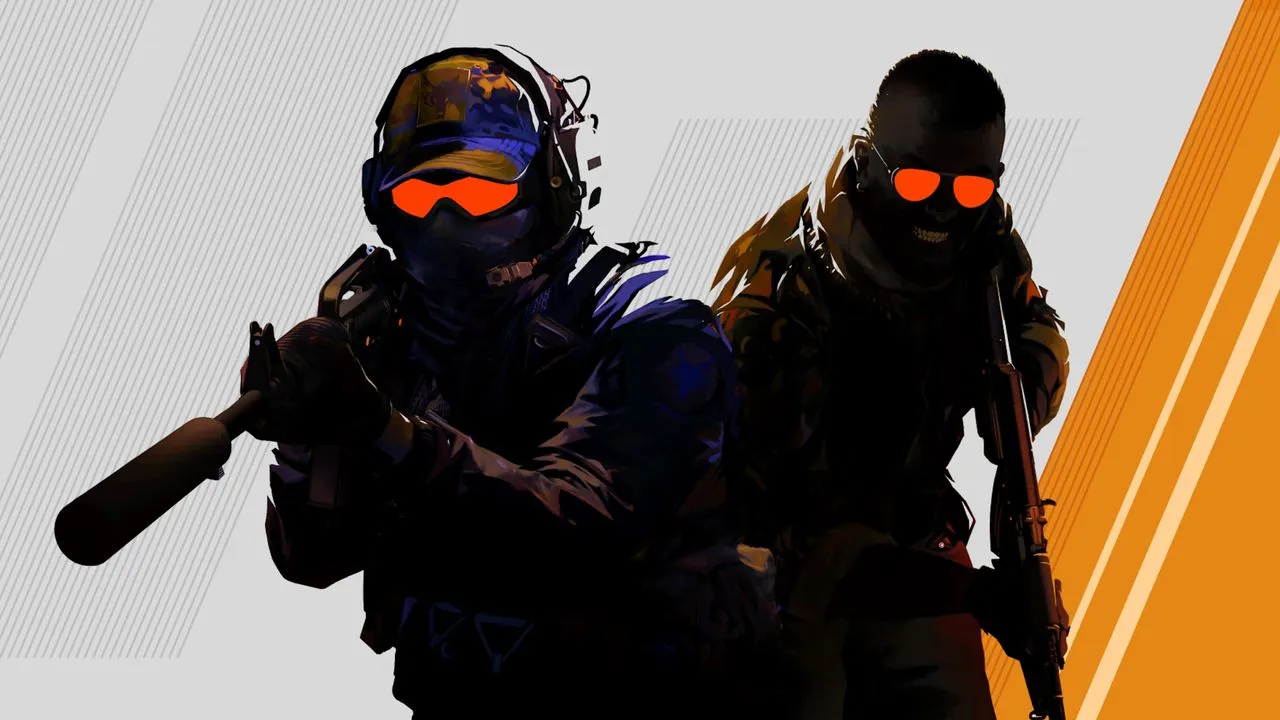
Valve has changed how the Counter-Strike 2 bomb works in Season 5, altering what happens when the device detonates. For decision-makers and operators watching live-game balance, it shifts risk patterns from “everyone dies” to “position matters,” with knock-on effects for competitive play.
Valve has rewired Counter-Strike 2’s bomb in Season 5, and the change is subtle enough to miss unless you’re watching the damage model like a hawk. When the bomb detonates now, “an explosive wave of destruction will flow from the bombsite through the map.” In plain English, the blast is no longer a simple, all-in instant event. It behaves more like a traveling shockwave that spreads outward, and that is where the potential life-saving twist lives.
Valve also makes the trade clear: right next to the bomb, “you’re toast.” But the shockwave “dissipates around corners and doesn't go through walls.” That means smart positioning after detonation can preserve your health, and with it, your loadout for the next round. Valve even adds an immediate feedback mechanism so players can anticipate whether a hiding spot will hold: as the bomb counts down, “your health bar will flash to highlight how much damage you'll receive in your current position once it goes off.” For competitive teams, this matters because it converts a previously opaque outcome into something closer to informed decision-making.
Zoom out and this is a classic live-ops balance move: change the geometry of consequences, then adjust player behavior with better in-game signaling. CS2 already runs on hyper tense battles where a single elimination can swing an entire round. True 3D smoke has long been a headline factor because it can create or erase sightlines and control how fights unfold. Now Valve is making the bomb itself participate in that same logic, turning blast damage into something that can be influenced by map layout rather than purely by raw distance.
The details go further. Valve says the shockwave effect has been “pre-calculated for all defusal maps,” which strongly implies the behavior is consistent across attempts on each map. That kind of determinism is important in competitive ecosystems. It enables teams to practice, memorize, and build strategies that depend on repeatable rules. Even though Valve has not posted clips showing the new bomb tech in action, Gabe Follower, a Valve YouTuber, has uploaded a video detailing the Season 5 changes and showing footage of the shockwave. That kind of community validation often becomes the real rollout mechanism in games like CS2, because top players and analysts need visual proof before they trust new mechanics.
There is also a second-order feature in Season 5 that expands how players can interact with grenades, though it is currently limited. Gabe Follower’s video covers another new feature available “only in private testing”: “A new console command that enables players to detonate grenades remotely by shooting them.” Even if most players do not have access yet, the existence of the command is a signal. It hints that Valve is exploring mechanics that allow more controlled grenade timing within fights. In a tactical shooter, remote detonation systems can change everything from utility usage to the timing of map control, because grenades stop being just throw-and-wait tools and become something closer to remotely triggered events.
Season 5 is not only about bombs. Valve also added “two new weapon and sticker collections,” one with an Arabian theme and another focused on spy tech. On the competitive map side, Season 5 introduces a new map called Cache, which “replaced Overpass in the active-duty map pool,” plus five community maps added to various modes. These additions matter for player incentives and for how communities re-engage. When you swap active-duty maps and introduce new collections, you influence both competitive prep and the broader engagement loop that brings players back for the season lifecycle.
If you are tracking the broader Counter-Strike ecosystem, there is an extra layer worth noting. The source points out that while CS2 remains “the biggest game on Steam,” it is not the only one doing well. Its predecessor, Counter-Strike: Global Offensive, has accumulated an impressive player count after it was de-absorbed from CS2, attracting “tens of thousands of players despite not being listed on the steam store.” That matters to executives and investors because it shows there is still enough demand for the franchise that mechanics changes in CS2 are happening in a competitive attention environment, not a vacuum.
So what does this mean strategically? Valve’s bomb change turns the detonation into a spatial event where walls and corners matter for survivability, while the flashing health bar reduces uncertainty right before the blast. That combination can reshape how teams execute late-round plans, how players choose cover, and how analysts coach positioning. For anyone in live games, the lesson is clear: changing one “tiny” interaction in a high-stakes system can ripple through rounds, meta strategies, and community knowledge transfer. The bomb did not get weaker or stronger in a simple way. It got smarter, and so now do the players around it.
This story's Key Insights and Take-aways are locked.
Create a free account to unlock Executive Actions for one credit.
Register to UnlockAlways free for Executives Club members. Join the Club
More in Entertainment

12TB Steam 'teraleak' goes beyond Valve: GTA 3, Mafia 2 prototypes exposed
A 12-terabyte dump of Steam data reveals prototypes and builds of third-party classics like GTA 3 and Mafia 2, plus unreleased Valve content, rewriting game history.

LinkedIn's romance problem: 1 in 4 workers say dating on it is fair game
A new survey shows a quarter of U.S. employees treat the professional network as fair game for romance, even as LinkedIn bans it and removes hundreds of thousands of offending posts.

Enhypen's first No. 1 album breaks K-pop's Billboard 200 streak
The K-pop group's 98,000-unit debut tops the chart while Dolly Parton's catalog reentry shows how death reshapes streaming.