
Valve sent a free Steam Deck case after a newborn’s vomit ruined his original
The case wasn’t a product demo. It was customer service that treats retention like a core feature.
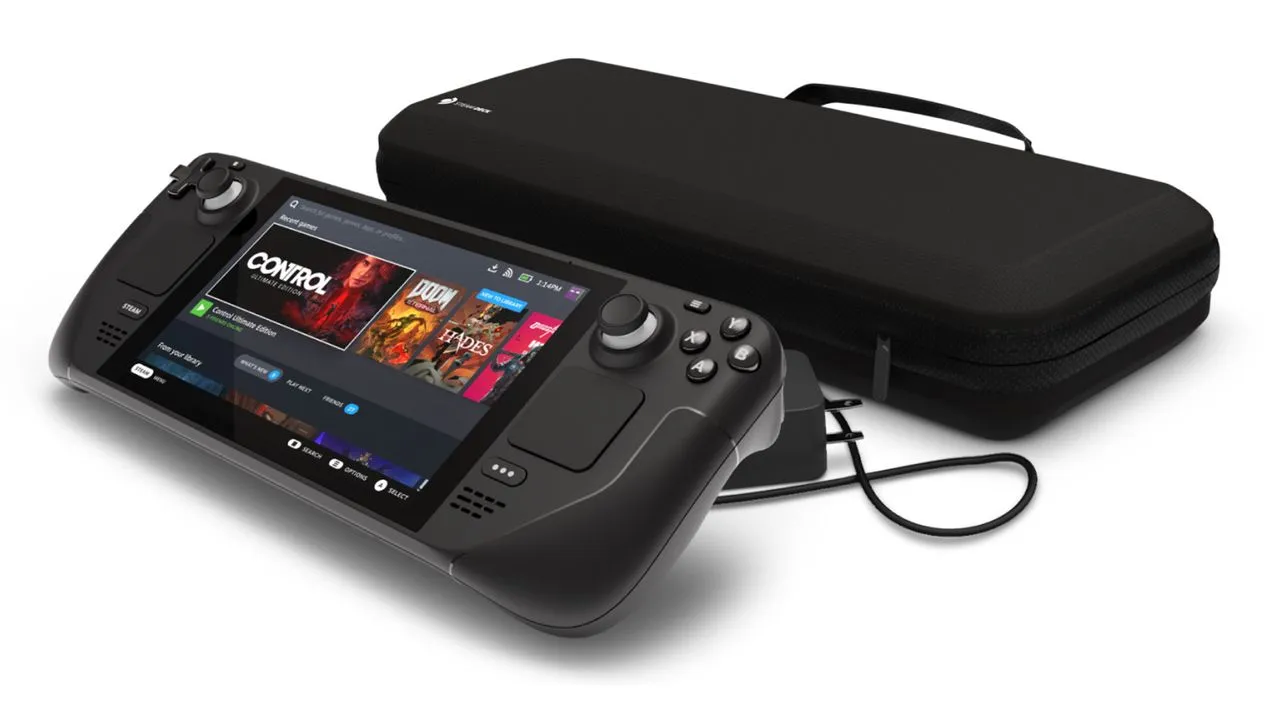
A dad reported that his newborn threw up on his original Steam Deck case, and Valve sent him a free replacement. The story matters for decision-makers because it shows how Valve can turn basic support into long-term customer loyalty.
A dad says Valve sent him a free Steam Deck case after his newborn threw up on the original one. It is the kind of “small” fix that actually lands because it is personal, immediate, and very clearly not a generic automation message. In a market where most customer support is built around deflection, this is the opposite vibe: Valve, the company behind Steam, made good on a real-life problem with an actual replacement.
The stakes are obvious if you run a subscription business, a platform, or any hardware ecosystem. Steam is not just a storefront. It is an identity layer for PC players, and Steam Deck is the bridge between living rooms and gaming libraries. When Valve steps in with a free case, it reinforces the relationship around the device, not just the content. A customer does not forget that. And if you are a board member or operator, you notice something else too: Valve is not trying to “win” a one-off review. It is behaving like someone optimizing for lifetime value.
Why does that matter in 2026? Because the industry has gotten very good at the hard stuff and very mediocre at the human stuff. Hardware buyers have options, refund policies, and plenty of forums to complain in. But retention is still largely determined by friction: how quickly problems are resolved, whether support feels fair, and whether the company treats your money like it buys a partnership. Valve has built its reputation for gamer-first decisions for years, but a Steam Deck accessory replacement is a clean, concrete example of what “gamer-first” looks like in practice.
There is also a broader ecosystem angle. Steam Deck is a handheld PC in a world that expects consumer electronics to be plug-and-play. Anything that increases “device confidence” helps adoption. A case is not a headline feature, but it protects the investment. If a case is destroyed in a messy, unavoidable, real-home moment, the user experience can collapse instantly. Replace the case and you reduce the odds the customer starts hesitating, postpones future purchases, or tells friends to “wait.” In platform strategy terms, you prevent churn at the point of maximum vulnerability, which is right after something goes wrong.
And yes, there is an incentive and governance lens here too. Valve operates differently from traditional publishers and device makers, and it generally emphasizes autonomy, long-term thinking, and direct engagement with the customer base. Stories like this are interesting not because they are miraculous, but because they reveal the underlying operating philosophy. If you are an executive at a company with a subscription platform, a marketplace, or a hardware line, you can infer what this signals: the company likely treats customer goodwill as an asset worth spending on, not a cost to minimize at all costs.
Regulatory background is usually far away from customer service anecdotes, but the underlying principle is universal: regulators and policy makers care about fair dealing and consumer protection. In many jurisdictions, consumers have rights related to returns, warranties, and misleading practices. While this particular incident is not a legal story on its face, the operational behavior still matters to the risk picture. When a company resolves issues quickly and fairly, it reduces escalation risk, public complaints, and the kind of messy disputes that can grow beyond a single customer. That is second-order protection, even if no one is filing anything.
For executives and investors, the strategic stake is simple: the companies that win retention do it repeatedly, not occasionally. A free replacement case after a newborn’s vomit is not a scalable marketing stunt. It is a signal that Valve is willing to remove barriers in the customer journey. And for peers, the lesson is uncomfortable in a productive way. You can build great tech, but if your support and ecosystem care is thin, lifetime value collapses. Valve is showing that loyalty is not just a brand feeling. It is an operational choice that shows up when life gets messy.
This story's Key Insights and Take-aways are locked.
Create a free account to unlock Executive Actions for one credit.
Register to UnlockAlways free for Executives Club members. Join the Club
More in Entertainment

Russell Brand's accuser 'bewildered and confused' as he denies 7 sex charges
The criminal case against the comedian is a live test of how media companies manage talent risk when serious allegations go public.

'It's a Magic Trick': Ballet Experts Say Rosalía's SNL Pose Is Impossible
Three ballet experts tell Rolling Stone Rosalía's gravity-defying SNL stillness shouldn't be possible - and why the debate is now part of the show.

Activision CMO: GTA 6 Will Boost Call of Duty, Not Bury It
Activision's top marketer says Rockstar's blockbuster will drive players back to consoles and into Modern Warfare 4, even as the company admits its recent strategy failed.