

Versant quietly bought Full Swing for $530 million, betting golf simulator cash beats cable decline
Versant’s M&A spree is funding a push to 30% non-pay-TV revenue short term, 50% long term.
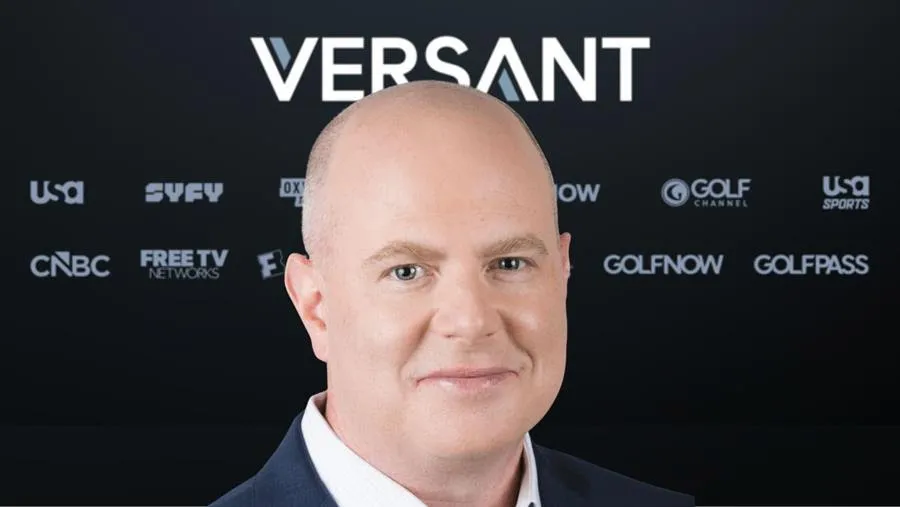
Versant Media Group, spun off from Comcast in January, has acquired five companies in recent months, including Full Swing for $530 million announced last week. The move is designed to reduce dependence on pay TV as cord-cutting shrinks linear cable economics.
Versant’s quiet buying spree just got loud: the company announced last week it will acquire Full Swing, a provider of sophisticated golf simulators, for $530 million. The thesis is straightforward and pretty aggressive for a media company facing cord-cutting pressure: use cash flow now to buy growth engines later.
Full Swing is Versant’s biggest deal so far, and it fits a specific strategy led by David Pietrycha, Versant’s chief revenue and business officer. Pietrycha told The Ledger that Versant likes cable networks because their cash flow funds acquisitions, but the company does not want to stay dependent on pay TV revenue forever. Versant’s goal is to reduce dependence on pay TV revenues and grow non-pay-TV revenues to 30% in the short term and 50% in the long term.
This is not Versant “going wide” into random categories. Instead, the company has been targeting acquisitions aligned with four main verticals: business news and personal finance built around CNBC; political news and opinion radiating from MS NOW (formerly MSNBC); golf with the Golf Channel; and sports and genre entertainment with USA Network, Syfy and other cable networks. Full Swing, notably, is not described as a media business. The logic is that it still plugs into Versant’s golf ecosystem through relationships with golf courses and promotion on the Golf Channel.
That ecosystem angle is central to how Versant expects Full Swing to move the needle. In its golf business, Pietrycha said more than 50% of revenue comes from operations other than the Golf Channel, which is basically the company explaining, “We’re already living in the future, we just need to buy more of it.” Analyst David Joyce of Seaport Research Partners added fuel to that framing. In a research note, Joyce said Versant’s plan is an “Experiential genre engagement expansion strategy,” leveraging declining Linear Network cash flows into something stickier. Joyce also described how Full Swing would connect to Golf Channel, golf tournament media rights, GolfPass instructional subscription and play benefits platform, and GolfNow transactional services.
If you’re a decision-maker trying to translate that into numbers, Joyce’s estimates matter. He estimated Full Swing provides Versant $144 million in revenue and $35 million in earnings before interest, taxes, depreciation and amortization in 2027, with growth expected to continue at a 4% annual clip after that. That’s the kind of detail executives crave when a company is spending real capital to reshape revenue mix. And Pietrycha is clearly trying to preempt skepticism around deal size. He said Versant wants to ensure it is not investing “a lot of time and energy and capital” into something that, even if successful, “doesn’t really move our metrics.”
This $530 million headline also lands on top of a pattern. Versant Media Group has been busy in M&A since its Comcast spinoff in January, buying or selling five companies in the past few months. The deal sheet starts with INDY Cinema, acquired in December and now called Fandango1. In January, Versant acquired Free TV Networks, which operates free ad-supported streaming networks. In April, it bought StockStory, an AI stock picker. In May, it sold Sports Engine, a youth sports technology company. Full Swing is the capstone, and the company is signaling it wants to keep doing deals, but only the ones that change the math.
What’s next is where Versant tries to manage expectations. Pietrycha said the company is not close to anything right now, emphasizing that Versant wants deals that generate strong shareholder returns. He also suggested there may be a future “transformative deal” that requires a bigger check and could vault the company into a new vertical. But for now, it’s more selective than the market sometimes assumes. When Versant’s spinoff was announced, some analysts thought it might buy more cable networks to boost scale, but Joyce suggested buying cable networks would make it harder to hit the 30% non-pay-TV target.
The larger media market is also shifting in the background. TheWrap’s “Deal Sheet” points to broadcast regulation moving. FCC Chairman Brendan Carr announced the commission will vote to remove the cap on TV station ownership next month, which sent broadcast stocks higher on Wednesday. E.W. Scripps stock jumped 10% to $3.09 a share Wednesday after resisting a takeover offer from Sinclair. Sinclair shares rose 4% to $14.36. Gray Media was up 6.6% to $4.06, Nexstar rose 4.4% to $183.20, and gains largely held into Thursday. This matters to executives at companies like Versant because it shapes the available M&A targets and the likely pricing environment across the broader media landscape.
In other words, Versant is not just choosing what to buy. It is choosing a lane. While regulators potentially unlock ownership consolidation in broadcast, Versant is leaning into vertical depth and non-pay-TV revenue mix, using M&A to accelerate rather than waiting for organic growth alone. For boards and investors, the question is simple: does this experiential, golf-centered expansion produce the cash flow and engagement lift that can offset the structural pressures on linear networks? Based on Joyce’s 2027 estimates and Versant’s stated non-pay-TV targets, the bet is that it can, one $530 million check at a time.
This story's Key Insights and Take-aways are locked.
Create a free account to unlock Executive Actions for one credit.
Register to UnlockAlways free for Executives Club members. Join the Club
More in Business

Uber buys Delivery Hero for nearly $15B, vaulting to top food delivery outside China
The deal doubles Uber's dual-services footprint and pushes a ride-and-eats bundling play into 50 more markets.

Epic and Google drop settlement bid, forcing rival Android app stores by July 22
Google told the court it is ready to carry third-party app stores starting Wednesday, July 22.
SK Hynix opens at $170, raises $26.5B, and tops foreign IPO records
In Friday's Wall Street debut, SK Hynix turns AI RAM demand into a $26.5B fundraising moment that rewrites comps.