
Victor Glover says skip the lunar south pole first, land near the equator instead
An Artemis II pilot warns NASA may be choosing the riskier touchdown location, and points to safer options tied to emergency access.
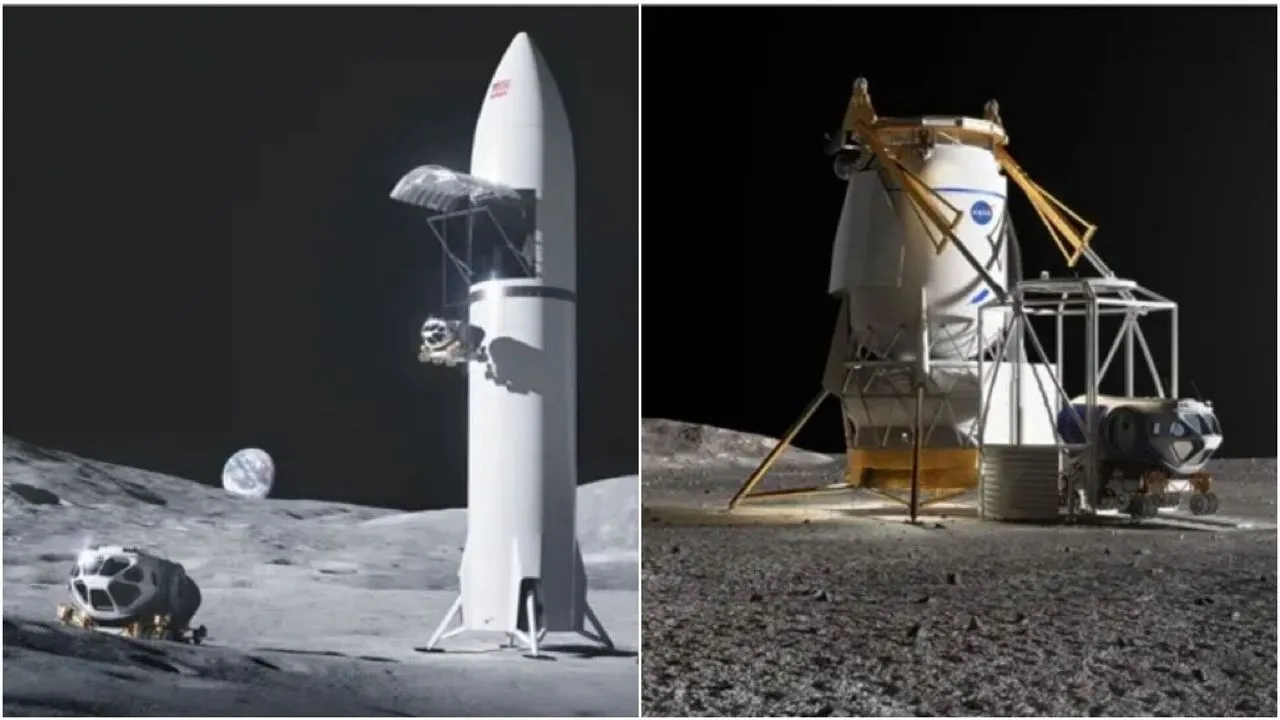
NASA Artemis II pilot Victor Glover, speaking at the NASA Exploration Science Forum at Ames on July 21, argued NASA should not rush to the moon’s south pole for its first crewed landing. The consequence for decision-makers: the landing site choice affects crew safety, mission timelines, and how fast NASA can match (or beat) China’s lunar progress.
Victor Glover, pilot of NASA’s Artemis II moon mission, basically asked NASA to reconsider its default plan: don’t make the moon’s south pole the first crewed landing target. Speaking at the NASA Exploration Science Forum at the agency’s Ames Research Center in California on July 21, according to a report published on Space News, Glover said NASA should “be realistic and work our way to the south pole, and maybe not try to go there first.” His proposed alternative was blunt and operational: aim closer to the moon’s equator, in areas that are not at risk of falling out of daylight, and that are reachable by orbits that allow for quicker return routes back to Earth in an emergency.
If you are tracking Artemis as an execution problem (not just a science dream), that argument lands hard because it ties “where we land” directly to “whether we can save someone.” Glover highlighted a safety nightmare tied to the mission architecture NASA previously laid out for south pole landings: a lunar near-rectilinear halo orbit (NRHO), where Orion would dock with the lunar Gateway space station, then crews would transfer to one of the Artemis landers to descend. The source lays out the key operational drawback. NRHO’s highly elliptical orbit and long orbital period mean launch opportunities to go from the south pole to rendezvous with Orion come only about once a week. In Glover’s hypothetical, if an astronaut needs medical evacuation just after landing at a south pole base, “You’re stuck for a week,” he said. “That’s a big deal to me, and I don’t like that plan … The equator gives me opportunity to save that person.”
To understand why this is more than a philosophical debate, zoom out to why NASA wants the south pole in the first place. The moon’s south pole has long been targeted because scientists believe permanently shadowed areas inside craters there harbor large deposits of water ice. NASA’s longer-term logic is clear: water ice can be used as a resource for essentials like potable water, radiation shielding, and rocket fuel. That ties into Artemis’ ultimate goal of building a sustainable, long-term base on the moon and using lessons from that outpost to enable an eventual push toward Mars.
But the source also makes clear there is a secondary incentive running in parallel, and it is political, commercial, and strategic. China is also moving quickly on lunar missions, and some U.S. officials have worried about the implications of Chinese astronauts reaching the south pole before American astronauts do. The source points to a Senate Commerce Committee hearing last year where space industry experts, including former NASA Administrator Jim Bridenstine, urged lawmakers not to let that happen. Mike Gold, president of civil and international space at Redwire, told senators that if China beats the U.S. back to the moon, it would mean “a global realignment that will impact our economy, our tax base, our ability to innovate and our national security.” In other words, even if the south pole is scientifically juicy, the first crewed “boots on the ground” outcome could carry outsized leverage in an international race.
Now fold in the execution math. Artemis III is scheduled for next year and is designed to launch four astronauts aboard the Orion capsule for rendezvous and docking tests with NASA’s two commercial lunar lander vehicles: SpaceX’s Starship and Blue Origin’s Blue Moon. If Artemis III goes according to plan, NASA is targeting late 2028 for the first moon landing on Artemis IV. To hit that date, the source notes NASA will depend on one (of the two) landers being up to task, while both have faced significant delays that have raised questions about readiness. Those delays mean architecture choices that reduce risk and simplify mission planning are not just nice-to-haves. They can be schedule insurance.
The NRHO plan illustrates why. Previously, NASA laid out NRHO as a way to facilitate south pole landings. But NRHO also introduces complications raised by SpaceX and Blue Origin, and it creates safety concerns for astronauts in potential emergency situations on the moon’s surface. The once-a-week window for south pole to rendezvous is exactly the kind of bottleneck that amplifies the downside of something going wrong.
Importantly, the source does not leave the reader in speculation land. It points to a concrete shift in the Artemis IV approach described by SpaceX and aligned with the general direction Glover advocated. During a June 9 event revealing the Artemis III plan, Jessica Jensen, SpaceX Customer Operations and Integration Vice President, outlined an Artemis IV mission plan with Starship that did not involve NRHO. Jensen said Starship would dock with Orion in Earth orbit instead of NRHO, and then Starship would be used to perform the translunar injection with Orion attached. She also emphasized the same benefit Glover argued for: the crew can abort off the lunar surface nearly any time, versus waiting up to days from NRHO. And the architecture change is framed with another execution advantage: it “significantly lower[s] the amount of propellant Starship needs to aggregate in space,” because of a more direct route to the moon, lowering schedule risk overall.
So where does that leave the question implied by the headline: should Artemis IV astronauts land near the south pole or pivot toward the equator first? The source suggests NASA has reasons to want the south pole, especially for water ice resources that support long-term base building. But it also shows the agency has to weigh those scientific incentives against crew safety constraints tied to NRHO, readiness challenges from lander delays, and the geopolitical pressure created by China’s rapid lunar progress. For executives watching Artemis as a program that touches suppliers, regulators, and national strategy, the practical stake is simple: landing site and mission architecture are now executive-level levers. The choice affects not just where humans go, but how quickly they can be brought back if things turn ugly.
This story's Key Insights and Take-aways are locked.
Create a free account to unlock Executive Actions for one credit.
Register to UnlockAlways free for Executives Club members. Join the Club
More in Science

Alaska's 1,580-foot tsunami had warning signs. Scientists just found them.
Rapid glacier retreat, heavy rainfall, and thousands of tiny tremors preceded Alaska's 1,580-foot tsunami, a warning for every coastal community in a warming world.

The rare mutation that lets high-risk brains dodge Alzheimer's
Scientists found a natural defense against protein buildup, opening a new path to preventive treatments.

3,000 steps a day may halve Alzheimer's decline, study finds
New research links a modest daily walk to less tau buildup and nearly half the cognitive and functional decline, even for those with early signs.