
Vinton Cerf steps down as Google’s chief internet evangelist next week
Cerf, a key architect of the internet’s protocol stack, is retiring from Google role, reshaping the story Google tells about connectivity.
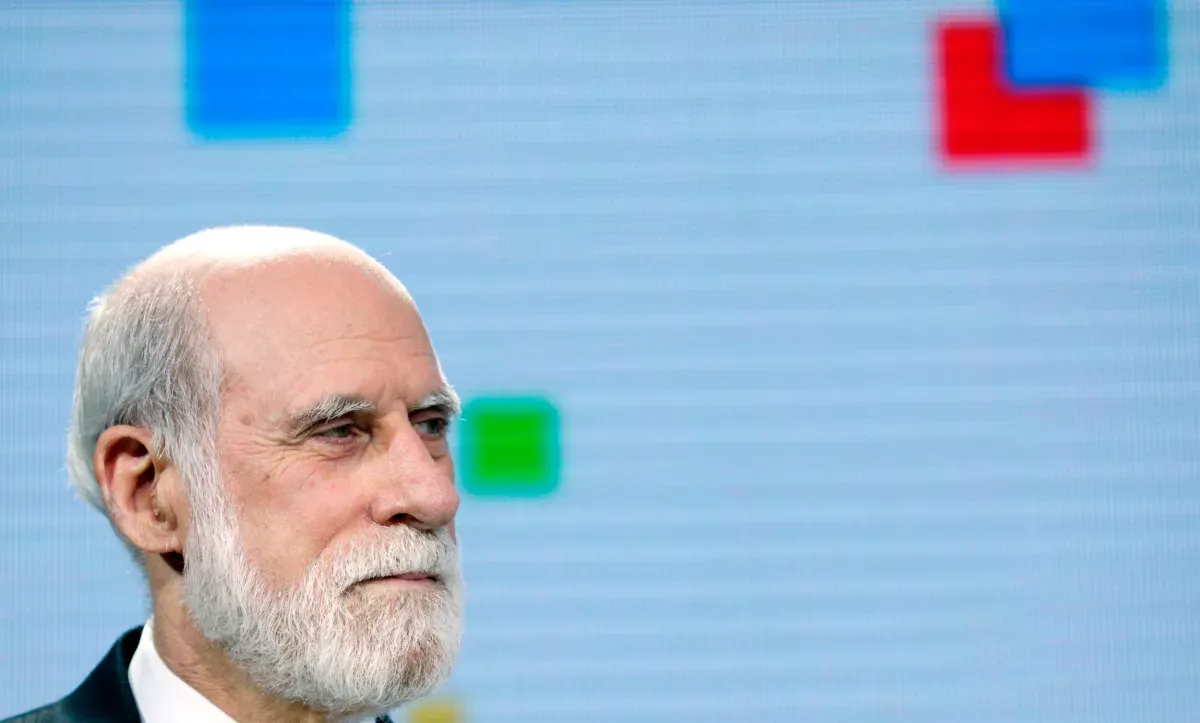
Vinton Cerf, one of the creators of the protocols underlying the internet, will step down as Google’s chief internet evangelist next week. For decision-makers, it signals a shift in how Google assigns ownership and visibility to internet standards and public connectivity narratives.
Vinton Cerf, one of the creators of the protocols underlying the internet, will step down as Google’s chief internet evangelist next week. That is not just a personnel change. Cerf is a name that carries technical authority, historical weight, and a rare credibility that spans both the engineering community and the public conversation about what the internet should do next.
So what happens when the “father of the internet” stops being Google’s face and institutional point person for internet evangelism? The immediate answer is straightforward: he is leaving that chief role next week. The bigger answer is where boards and executives should pay attention. When a company publicly anchors itself to a highly recognizable standard-setter, the role functions like a bridge. It translates complex technical choices into a coherent story: how networks should work, why they matter, and why industry and policy should align. Removing Cerf from that bridge changes who carries the weight, and how confidently Google can claim it is speaking from the center of the protocol universe.
To understand why this is consequential, look at what “internet evangelist” actually implies. Google has long had a habit of showing up in internet-adjacent spaces where trust matters, from infrastructure discussions to policy and standards conversations. In that kind of ecosystem, the messenger is part of the message. Cerf is not just another executive spokesperson. He is tied to the protocols underlying the internet, meaning his presence carries a particular gravitas that can calm skepticism when the conversation turns to governance, interoperability, and the long-term direction of networking.
Cerf’s retirement from the Google role also lands in a moment when internet governance, network neutrality debates, and regulatory scrutiny shape how connectivity businesses and platform operators operate. Even when policy headlines swing week to week, the underlying reality is stable: regulators and stakeholders increasingly expect technical institutions and platform operators to demonstrate alignment with open standards and predictable network behavior. When a company puts a globally respected protocol creator on the public stage, it is effectively saying, “We belong in this room, and we understand the rules at the foundation.” That is a tough posture to replace with generic executive branding.
There is also a second-order implication for executives who manage partnerships, lobbying, and standards participation. Google will still have to coordinate with standards bodies, governments, industry consortia, and ecosystem partners. But after Cerf steps down, there will be a transfer of authority. Boards often talk about continuity as a risk management concept, and this is continuity risk in a specific, reputational form. If Cerf was the person who could walk from technical detail to public justification without friction, the organization will need an internal equivalent, or it will need to accept that the company’s tone and credibility may change.
This matters for decision-makers at peer companies, too, because the internet evangelism lane is an unusually high-signal position. Many executives choose messaging roles that optimize for growth narratives. Cerf’s role, by contrast, is inherently tied to infrastructure fundamentals. That makes it different from marketing leadership. When a company’s top internet credibility anchor exits, competitors may interpret it as a de-prioritization of standards-led leadership, even if the strategy remains intact. The board’s job is to anticipate those interpretations and ensure internal priorities and external signals stay aligned.
The cleanest takeaway is that this is a real change in Google’s leadership identity around the internet. The source says Cerf will step down as chief internet evangelist next week, and there is no hedging in that statement. For executives and boards, the work now shifts to the same question in many forms: who will carry the bridge after the architect steps away, and what will Google’s internet story sound like when it is no longer delivered by the creator-linked authority Cerf represents?
This story's Key Insights and Take-aways are locked.
Create a free account to unlock Executive Actions for one credit.
Register to UnlockAlways free for Executives Club members. Join the Club
More in Technology

Nvidia's $89B data center quarter: the 9 companies cashing in
The AI buildout is minting fortunes beyond GPUs, and memory, cloud, and cooling suppliers are riding the same wave.

Google quietly links your phone number to every Android account on your SIM
Adding a SIM now ties your phone number to all Google accounts - and future accounts inherit it. Here's the security and privacy stakes.

Hijacker AI 'Skynet mode' runs 100,000 attack steps against exposed models
Symantec caught a criminal AI agent that borrows other models, steals data, and mines crypto; the only relief is no confirmed victims yet.