

Wall Street’s AI grind is juicing big bank profits, Yahoo Finance reports
Record earnings are getting an AI tailwind, changing how boards think about revenue, spend, and risk.

Yahoo Finance reports that big banks have delivered record Wall Street profits while their results are increasingly tied to AI-driven activity. For decision-makers, that shifts budgeting and oversight toward AI capabilities that support trading, markets, and client services.
Big banks just posted record Wall Street profits, and Yahoo Finance’s through-line is blunt: an increasing share of those gains is tied to AI. The key point is not that banks are “using AI” in some vague way. It is that AI is showing up as a measurable contributor to performance, which means the revenue story and the risk story now move together.
Why does that matter right now? Because Wall Street margins are typically a lot more sensitive to process and execution than most outsiders realize. When an earnings peak is partly powered by AI, executives cannot treat AI as a side project or an innovation lab problem. They have to treat it as an operational lever that can influence trading results, client service capacity, and the day-to-day economics of markets.
For boards and senior management, this is where incentives get interesting. In normal cycles, banks tend to emphasize capital, compliance, and balance sheet discipline when profits swing. But when profits are increasingly connected to AI, oversight broadens. Directors still need governance around model risk, data quality, and controls. They also need to understand whether the AI systems are helping the firm win more business, reduce costs, or improve execution in ways that show up in revenue. The “what” of AI becomes as important as the “how much.”
There is also a second-order implication for strategy: AI spend is no longer just an expense line, it becomes part of the earnings engine. In a world where AI tools can affect workflows from research and market scanning to routing and analytics, management has to answer a hard question: is AI creating durable advantage, or is it temporary tooling that competitors will replicate? If profitability is increasingly tied to AI, then the bank’s competitive posture is also tied to its ability to keep improving models, data pipelines, and implementation quality after the first deployment.
Regulation and risk oversight sit directly in the middle of that trade-off. Financial institutions already operate under heavy scrutiny, and AI adds a new layer to existing concerns like conduct risk and operational resilience. The regulatory backdrop matters because AI systems can be complex, and the consequences of failures can be expensive even when mistakes are rare. That means governance cannot stop at “the model works.” It has to cover monitoring, change management, and documentation, especially when systems are linked to core revenue drivers like trading-related decisioning and client-facing analysis.
The market context is the real accelerant here. Big banks are not just selling products, they are selling reliability at scale. When market activity is strong, banks can print money. When it weakens, the ones with the best execution and lowest friction tend to hold up better. If AI is improving throughput, accuracy, and speed, then it could help banks capture more value during favorable conditions, and potentially soften pain when conditions shift. That is the kind of linkage that changes how investors and boards interpret performance, because it affects both current earnings and the quality of earnings going forward.
For peers, the strategic stake is simple: if record profits are increasingly tied to AI, then standing pat becomes a risk decision. Competitors will either match AI capability or try to out-execute with other advantages like data assets, client relationships, or infrastructure. Either way, management teams will face more pressure to justify AI budgets, demonstrate measurable impact, and prove that model-related controls are mature enough to support revenue-generating use cases.
The bottom line from Yahoo Finance is that the AI story is no longer theoretical in banking. It is attached to outcomes that can move quarterly results. And once that happens, boards have to manage AI like a strategic business line, not a tech experiment. In the next earnings cycle, the winners will likely be the firms that can turn AI investment into repeatable performance while keeping regulators comfortable and operational risk contained.
This story's Key Insights and Take-aways are locked.
Create a free account to unlock Executive Actions for one credit.
Register to UnlockAlways free for Executives Club members. Join the Club
More in Business

Uber buys Delivery Hero for nearly $15B, vaulting to top food delivery outside China
The deal doubles Uber's dual-services footprint and pushes a ride-and-eats bundling play into 50 more markets.

Epic and Google drop settlement bid, forcing rival Android app stores by July 22
Google told the court it is ready to carry third-party app stores starting Wednesday, July 22.
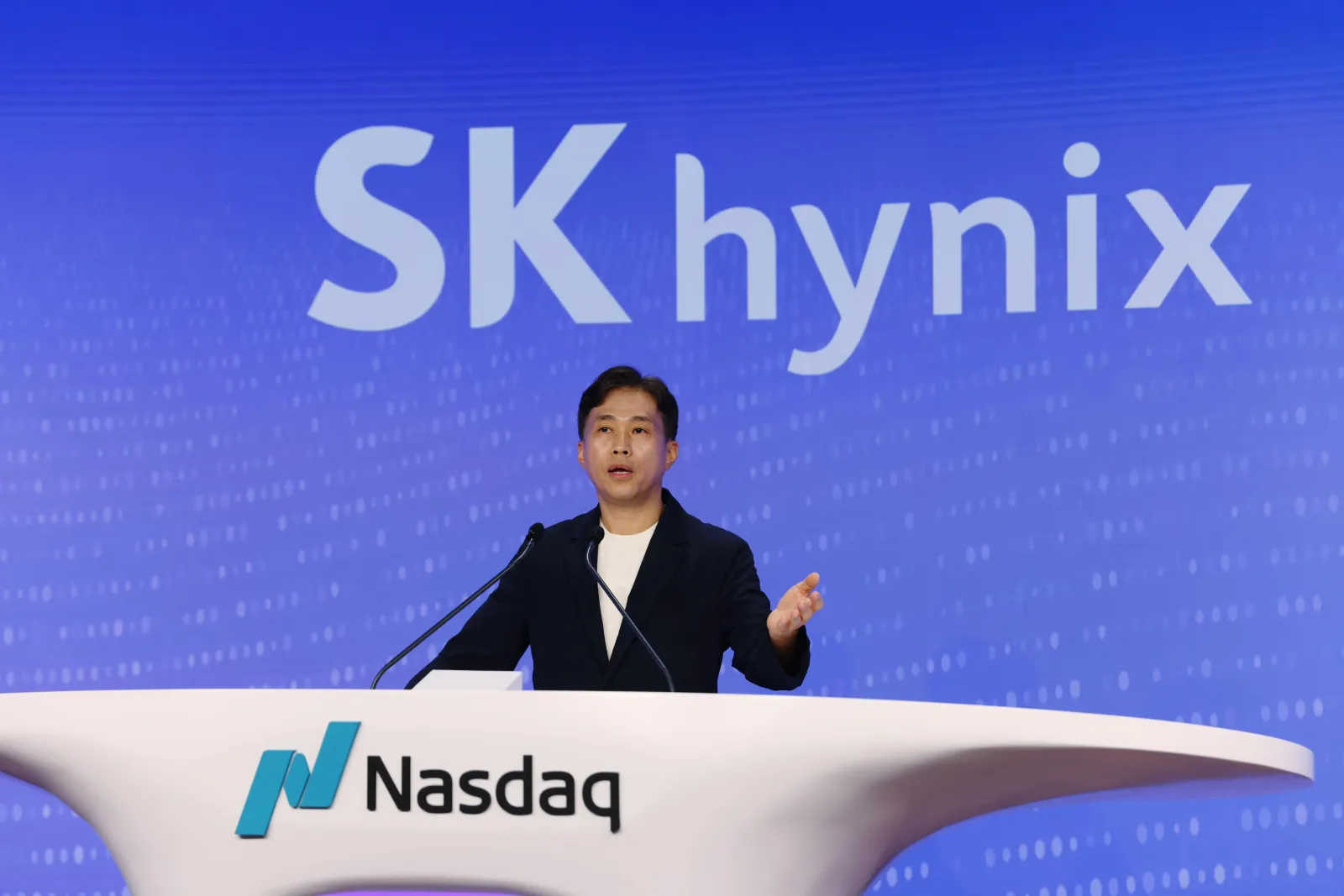
SK Hynix opens at $170, raises $26.5B, and tops foreign IPO records
In Friday's Wall Street debut, SK Hynix turns AI RAM demand into a $26.5B fundraising moment that rewrites comps.