
Warner Bros. revives Dark Shadows as adult animated series, with Lisa Holdsworth running point
The Gothic cult soap returns in animation, aiming at adult viewers and betting on a new delivery format for old IP.
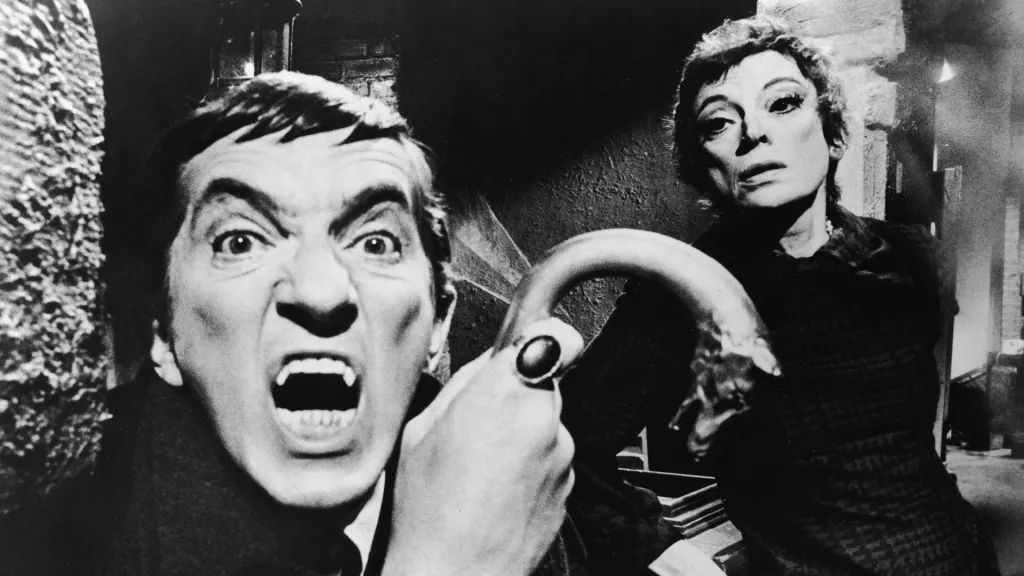
Warner Bros. is bringing Dark Shadows back as an adult-aimed animated series, with A Discovery of Witches vet Lisa Holdsworth serving as showrunner. For decision-makers, the move is a live case study in how legacy IP gets re-packaged to reach new audiences without relying on the same production playbook.
Warner Bros. is dragging the Gothic soap opera Dark Shadows back out of its grave, and it is doing it in adult animated form. The series, announced at the Annecy International Film Festival, will be showrun by Lisa Holdsworth, an A Discovery of Witches veteran, and is framed as a blend of gothic, horror, and supernatural genres, plus “all the dark twists and romantic intrigue” associated with the original run.
This is the kind of revival decision that usually comes with a quiet question from the boardroom: do we have a new route to viewers, or are we just dusting off an old brand and hoping the audience shows up? Dark Shadows is an especially interesting test case because its original run already proved the core appetite for witchy melodrama. Back in the 1960s and 1970s, it delivered 1,200-plus episodes, centered on Maine’s Collins family and repeatedly interrupted by supernatural threats. The new version signals that Warner Bros. believes the property has enough gravitational pull to be re-launched, even after earlier attempts failed to fully catch fire.
Why is animation the lever here? In general, adult animation can function like a distribution hedge. It leans into stylization and tone control, and it often helps productions target a clearer audience segment than broad, family-friendly formats. In this case, the adult aimed framing matters because Dark Shadows itself was not just “spooky.” It was melodrama with gothic texture, romance, and horror, which is exactly the mix the new adaptation says it wants to preserve.
The logline also gives a hint about the creative strategy: it is explicitly promising a genre blend and the emotional beats fans associate with the show. The source notes that the adaptation aims to combine “gothic, horror, and supernatural genres,” then adds that it will deliver the “dark twists and romantic intrigue” that defined the original. That phrasing is doing more than marketing work. It suggests Warner Bros. is treating Dark Shadows as a world and a tone, not merely a checklist of characters. When legacy IP gets revived, companies can easily over-index on recognizability and under-index on mood. Here, the production is telegraphing that it intends to keep the mood.
For context, Dark Shadows has never lacked a storyline engine. The Collins family story is built to generate endless interruptions: witches, vampires, and other supernatural threats keep forcing the plot forward. The series also has a character arc that shaped its cultural imprint, especially Barnabas Collins. Barnabas did not actually appear on the original series until about two years in, but quickly became its most famous character. That matters because it highlights how revivals can succeed when they remember what the audience actually latched onto, not what the original plan assumed.
The animated reboot is also not the franchise’s first second chance. The source points out attempted TV revivals in 1991 and 2004, with the 2004 version co-starring a young Jessica Chastain. Even with that kind of talent gravity, those efforts did not become the kind of long-lasting, must-watch cultural return that executives dream about when they greenlight an IP bounce-back. So why now, and why this format? The likely answer is that studios have learned to treat legacy content as flexible material. Instead of restarting the same machine, they repackage the IP in a format that better matches current viewer habits and production dynamics.
A key variable for decision-makers is the timing and the target audience. There is no word yet on when the animated series is expected to arrive on TV. That uncertainty is not trivial. In a media environment where attention is fragmented and scheduling windows are competitive, “sometime later” can be both opportunity and risk. Warner Bros. is effectively asking the market to stay tuned while it figures out the right lane for distribution. For executives, the question becomes less “will adults watch gothic horror?” and more “which adults, where, and under what timeline?”
Finally, there is the broader strategic stake for anyone watching Warner Bros. make this bet. Dark Shadows is the kind of well-known enough brand that triggers revival instincts, but not necessarily the kind of property that guarantees instant viewership just because it returns. If the adult animated approach lands, it reinforces a playbook: classic genre IP can be re-authored for modern audiences without requiring the same live-action constraints or the same level of casting reliance. If it misses, it still offers a data point, but one that costs time and capital. Either way, the Annecy announcement is a clear signal that Warner Bros. thinks there is still money and audience interest in the gothic, horror, supernatural lane. The only real mystery left is whether viewers want a new chapter, or just a nostalgic visit to the old one.
This story's Key Insights and Take-aways are locked.
Create a free account to unlock Executive Actions for one credit.
Register to UnlockAlways free for Executives Club members. Join the Club
More in Entertainment

Russell Brand's accuser 'bewildered and confused' as he denies 7 sex charges
The criminal case against the comedian is a live test of how media companies manage talent risk when serious allegations go public.

'It's a Magic Trick': Ballet Experts Say Rosalía's SNL Pose Is Impossible
Three ballet experts tell Rolling Stone Rosalía's gravity-defying SNL stillness shouldn't be possible - and why the debate is now part of the show.

Activision CMO: GTA 6 Will Boost Call of Duty, Not Bury It
Activision's top marketer says Rockstar's blockbuster will drive players back to consoles and into Modern Warfare 4, even as the company admits its recent strategy failed.